

Birding guides · Colour
Grey feathers hide hunters against the sky, blend birds into bark and dry bush, and show a raptor’s age.
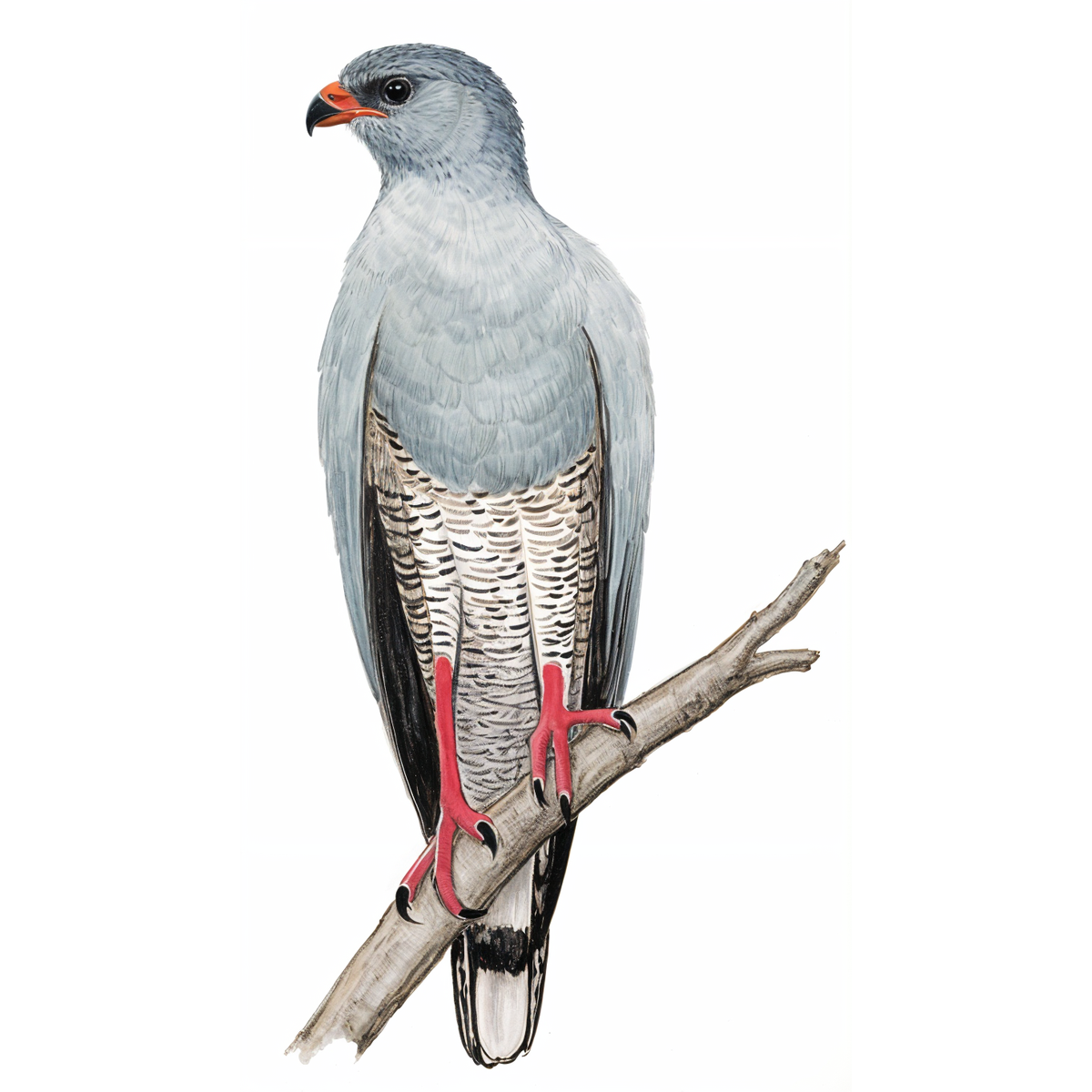
Few birds in our region are completely grey, but many have grey backs, heads or wings, or grey combined with other colours. The Grey Heron, Grey Go-away-bird, Southern Grey-headed Sparrow and Blue Crane all use grey in different ways.
In the field
Be careful with the word “grey”. Birds described as grey are often grey-brown or dull brown. The Hadada Ibis is a good example: in poor light it looks grey, but in good light it’s clearly brown with a green-bronze sheen on the wings. Checking which colour you’re really seeing is one of the most useful habits in bird identification.
Where grey comes from
There is no grey pigment in feathers. Grey comes from melanin, the same pigment that makes birds black, laid down more thinly. Less melanin gives lighter shades of grey, and more gives darker ones. The feather’s structure also scatters some light, which softens the colour.
Some birds, including herons and pigeons, also have powder down: special feathers that crumble into a fine dust. It gives their plumage a soft, silvery bloom and helps waterproof it.
How grey plumage helps a bird
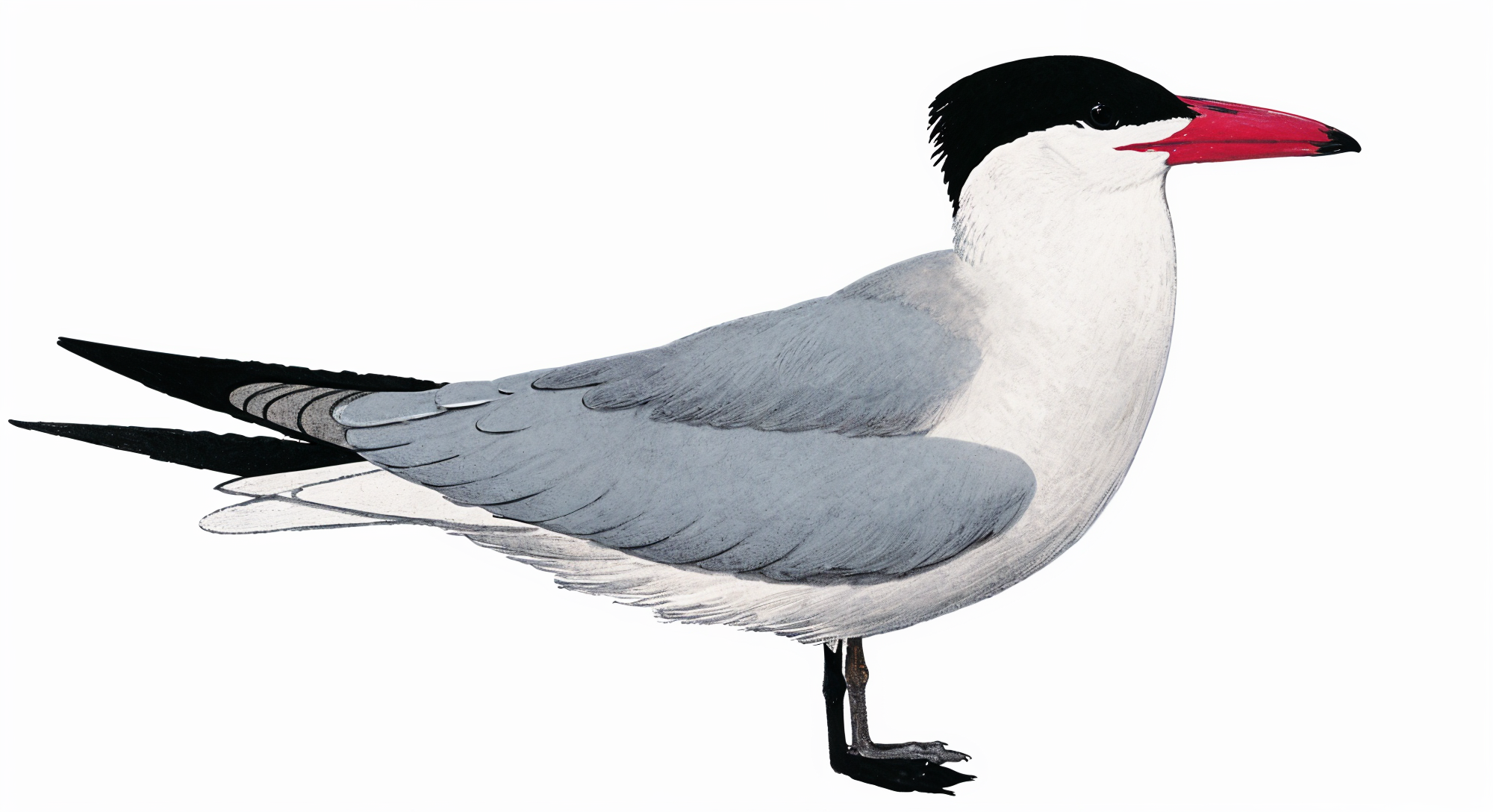
Hiding from above and below. Gulls, terns such as the Caspian Tern, and many raptors are grey above and pale below. Seen from above against water or land, the grey back blends in. Seen from below against a bright sky, the pale underside does. This pattern, called countershading, helps them avoid predators and approach prey unseen.
Blending into bark and dry bush. In the dry savanna of the Kalahari and Karoo, grey matches bark, dead twigs and dusty ground. Small grey birds such as tits and the Southern Grey-headed Sparrow can be very hard to pick out as they move through a thornbush.
Hunting in plain sight. A Pale Chanting Goshawk perched on a pole or treetop is surprisingly easy to miss against a pale sky. That helps a predator that hunts by watching and waiting.
Showing age. Many raptors are brown as immatures and grey as adults. For birders, it means a brown hawk and a grey hawk may be the same species at different ages, which leads to the trickiest grey birds of all.
The grey hawks: sparrowhawks, goshawks and chanting goshawks
The sparrowhawks and goshawks are small to medium-sized hawks of woodland and forest. They have short, rounded wings and long tails, and they chase small birds through cover. The larger species are called goshawks and the smaller ones sparrowhawks. As a rough guide, sparrowhawks have long, slender legs and a longer middle toe, but this is hard to see in the field.
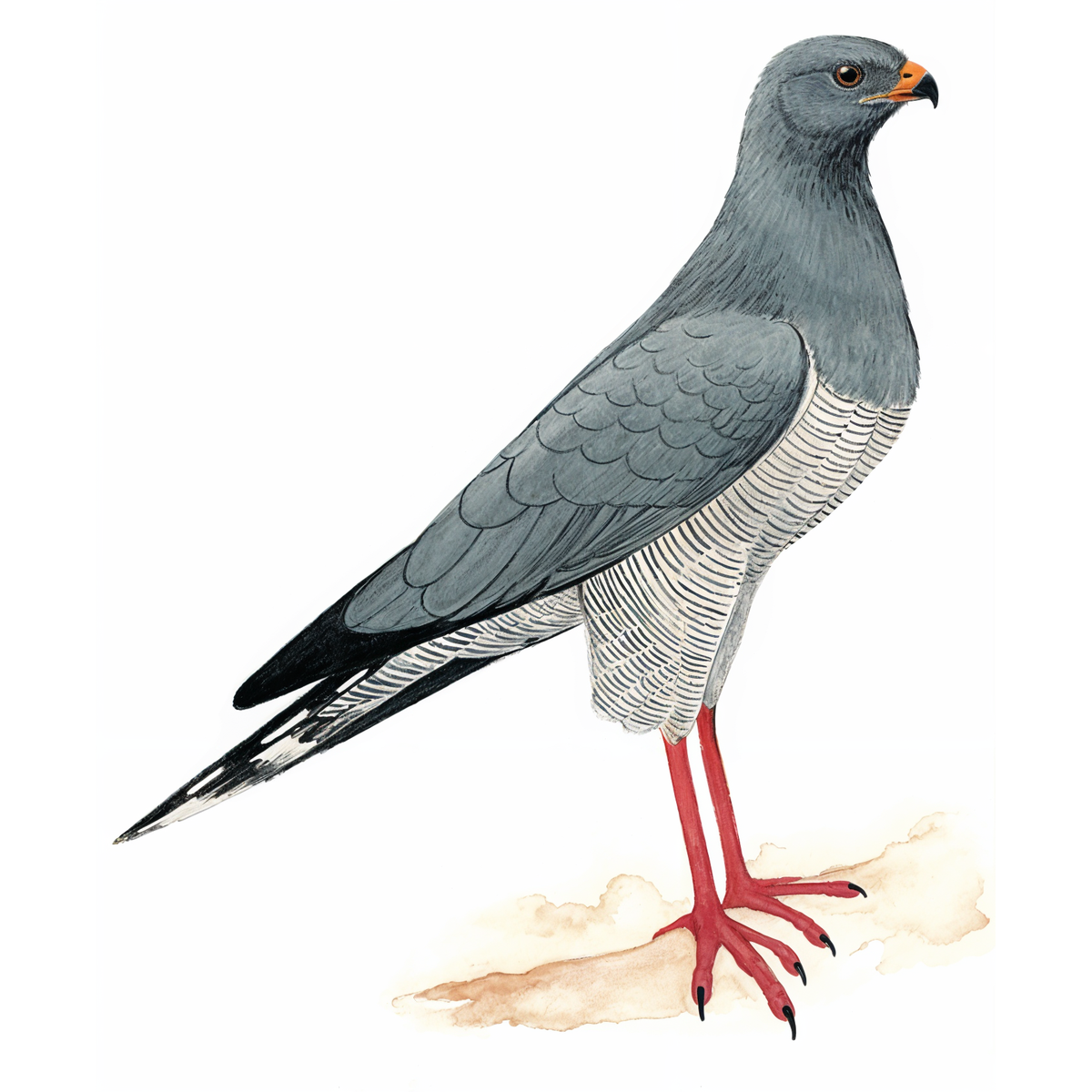
The chanting goshawks (genus Melierax) are related to them but more distant. They are larger, long-legged hawks of open, dry country. Southern Africa has two:
- Pale Chanting Goshawk: pale grey. Found in the arid west (Kalahari, Karoo and Namibia). In flight it shows a white rump and whitish secondaries.
- Dark Chanting Goshawk: darker grey. Found in the wetter savanna of the north and east. Its rump is finely barred grey, not plain white.
The Gabar Goshawk is a close relative, but it is smaller and has its own genus.
Why these hawks are hard to identify
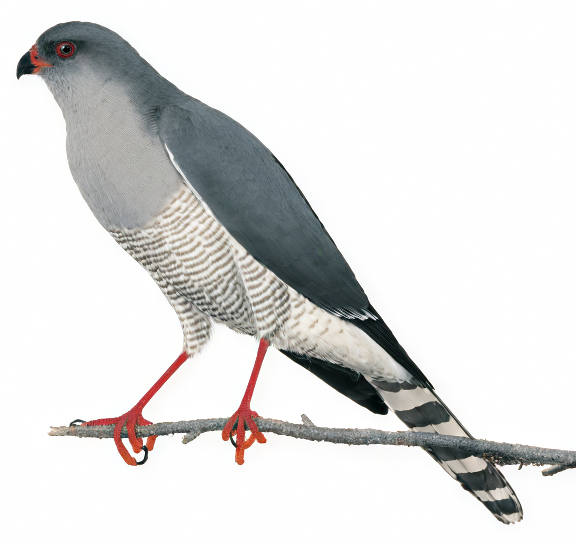
Their upperparts are grey or dark brown depending on age and sex, so the back alone rarely settles it. Look instead at the eye, cere (the bare skin at the base of the bill) and legs, and at the pattern on the underparts.
Eye, cere and legs
- The eye may be yellow, deep red or dark brown. The cere may be yellow, red or grey.
- A red cere with red legs is found in adult Gabar Goshawks and in both chanting goshawks. Among the sparrowhawks and goshawks, only the adult Gabar has this combination.
- Yellow is the most common leg colour in the group. Orange legs are typical of adult goshawks and the Ovambo Sparrowhawk, with two exceptions: the adult African Goshawk and Black Sparrowhawk have yellow legs.
Underparts: barring, streaking or spots
- Adults: most adult sparrowhawks and goshawks have fine rufous or grey barring below. Some also have a plain grey upper breast.
- Streaked breast, barred belly: immature Shikra and Gabar Goshawk.
- Heavy spots or drop-shaped blotches: immature Little Sparrowhawk and African Goshawk.
- Plain rufous underparts: the Rufous-breasted Sparrowhawk, and some immature Ovambo Sparrowhawks.
A quick field checklist for grey birds
- Is it really grey? Check in good light that it isn’t grey-brown.
- Where is the grey? Back only, head only, or the whole bird?
- What’s the habitat? Open arid country, woodland, coast or wetland?
- For raptors, look at the bare parts: eye, cere and leg colour.
- Then the underparts: barred, streaked, spotted or plain.
- Think about age: could a brown bird nearby be the immature of the same species?
Grey is one of the colour groups in Newman’s Birds by Colour, which groups species by their most obvious colour so you can narrow down an ID quickly in the field.

The book
Newman’s Birds by Colour, 5th edition
Southern Africa’s common birds arranged by colour and size, now with QR codes to hear each bird’s call.
Sources
- Newman’s Birds by Colour, 5th edition (grey plumage section).
- Tachyspiza minulla (Little Sparrowhawk), Avibase.