
African Goshawk

Accipiter tachiro

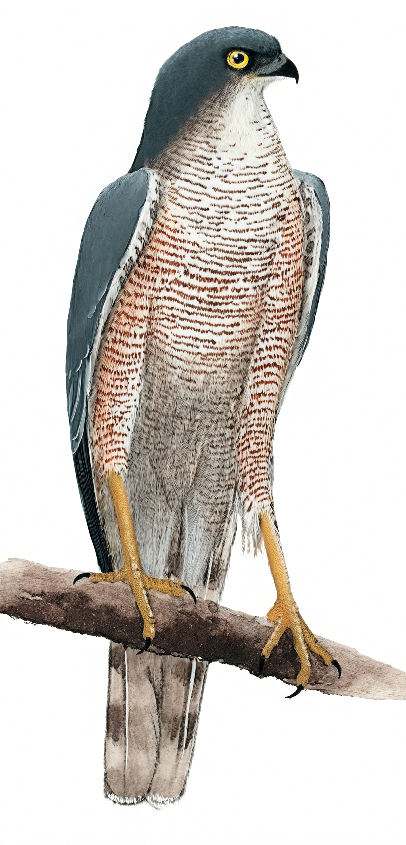
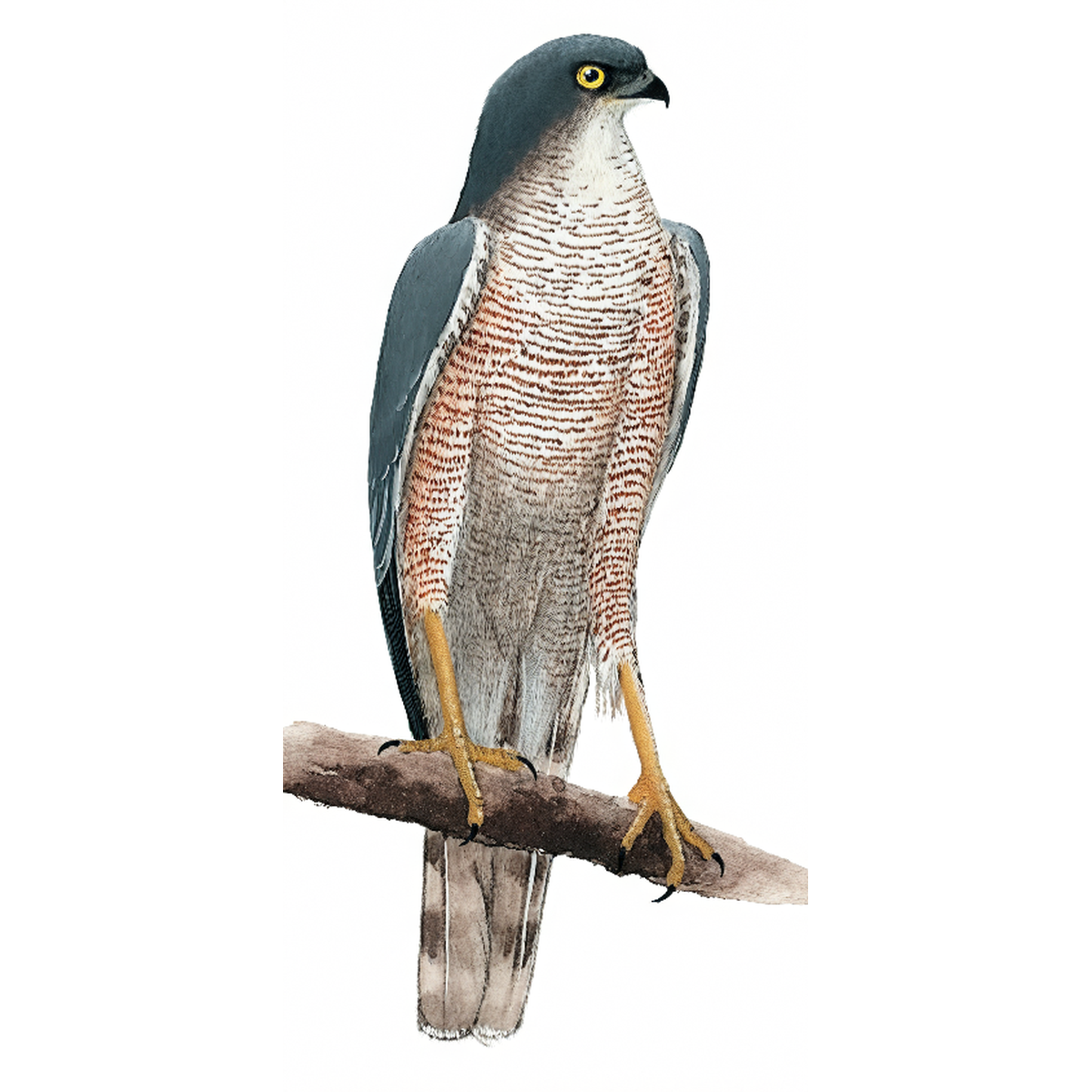
Forests. All grey above; banded rufous below; cere grey; eyes and legs yellow.
Goshawks, Sparrowhawks
LC
Not Endemic
African Goshawk AI

Description

Fairly common resident. A medium-sized goshawk (female much larger than male) easily confused with other similar accipiter. upper parts slate-grey with a ‘hood-like’ appearance to head and upper parts in male, dark brown ‘hood’ in female; underparts barred rufous, finely in male, broadly in female. Small white spots on upper tail of male, absent in female. Eyes and legs are yellow and the cere and mandible base is grey-blue unlike all other accipiter’s. Immature browner above, the underparts well marked with dark-brown drop-shaped spots, noticeable brown throat strip and supercilium; cf. much smaller immature [Little Sparrowhawk]. Territorial male displays prominently in the mornings by flying high with bouts of fast wing beats followed by glides while calling ‘krit’ at two- or three-second intervals. May also utter same call from cover while perched. Unobtrusive in montane, lowland and riparian forest, wooded valleys, exotic plantations and suburban fringes. Partially crepuscular, still hunting from cover feeding on small birds, nestlings, small mammals. 200 g – 500 g.

Quick Facts

size

Size

40 cm - M

behaviour

Names

A: Afrikaanse Sperwer
Z: usomheshe
Ss: Fiolo Y Afrika
G: Afrikanischer Sperber, Tachirosperber

Bird Family

True hawks, characterised by their secretive nature. They have slender bodies, short, rounded wings, long tails, small, sharp bills and long, bare, often slender legs and toes. They catch their prey (usually small birds) in a low, rapid aerial pursuit from the cover of a leafy tree. Females are larger than males.


Grey
Savanna Bushveld

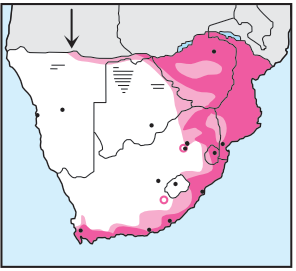
Distribution

Gallery

behaviour

Behaviour

Breeding

Breeding

Habitat

Habitat

behaviour

Best Locations

0 Cart