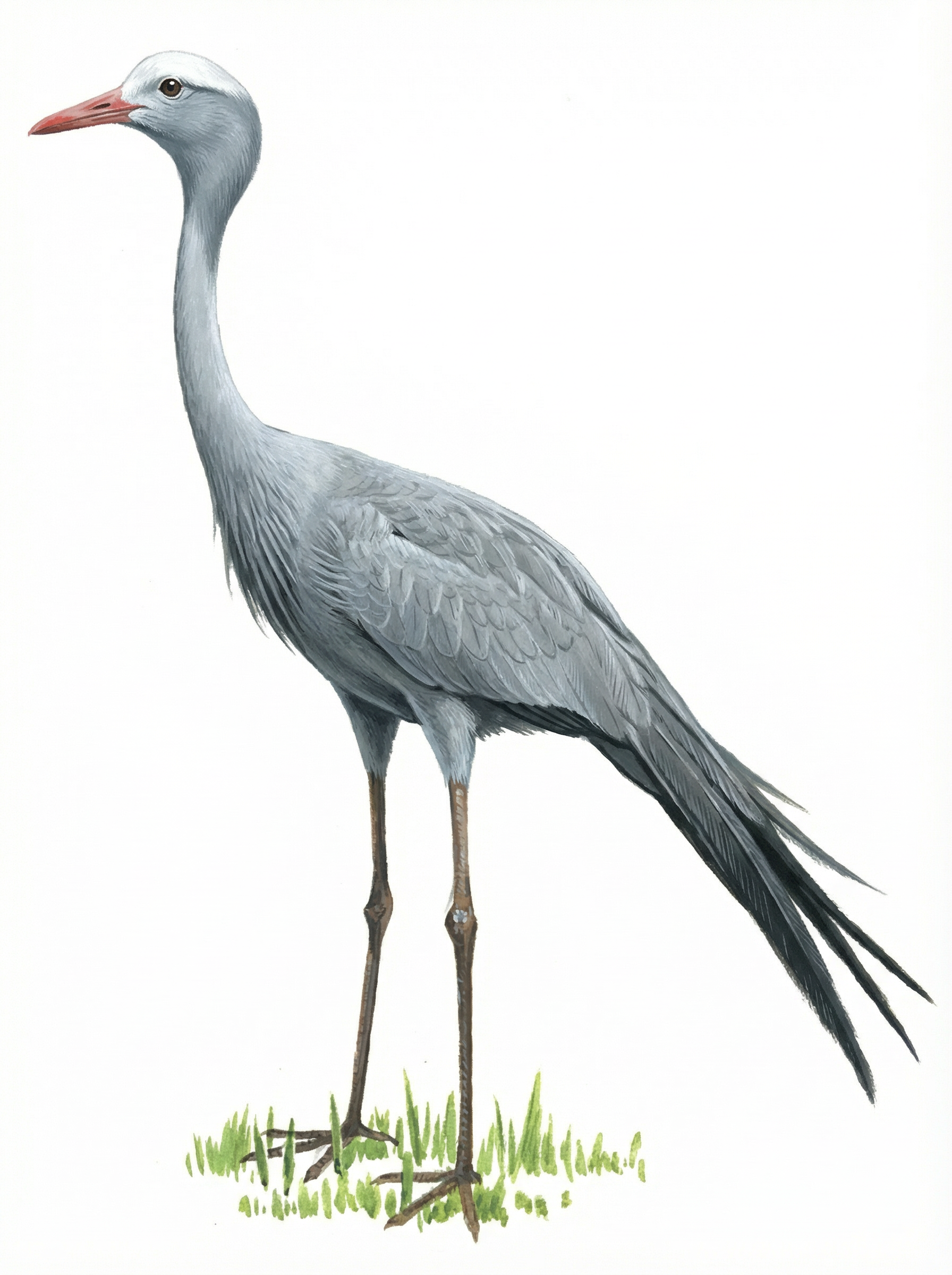

105 cm - VL
A: Bloukraanvoël
Z: iNdwe
Ss: Moholodi
G: Paradieskranich

Large, long-legged terrestrial birds, differing from storks in having short bills and being quite vocal. Like storks, they fly with heads and necks outstretched. They indulge in elaborate dancing displays with wings outstretched when courting, sometimes involving more than two birds. The South African populations of all three crane species have declined markedly in recent years. Whereas these cranes may be fairly common in some parts of southern Africa, their numbers have become very reduced in South Africa and all three species should be regarded as vulnerable.


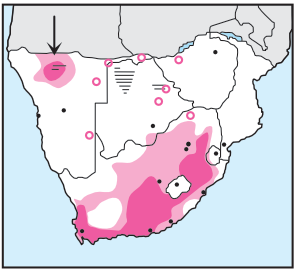


Occurs in pairs and 'flocks' in the Cape wheatfields and the 'Karoo'; in hilly 'grassland', moist valleys, farmlands and lakesides elsewhere.