
Black Sparrowhawk

Accipiter melanoleucus

Tall trees. White form blackish above, white below. Long yellow legs.
Goshawks, Sparrowhawks
LC
Not Endemic
Black Sparrowhawk

Description

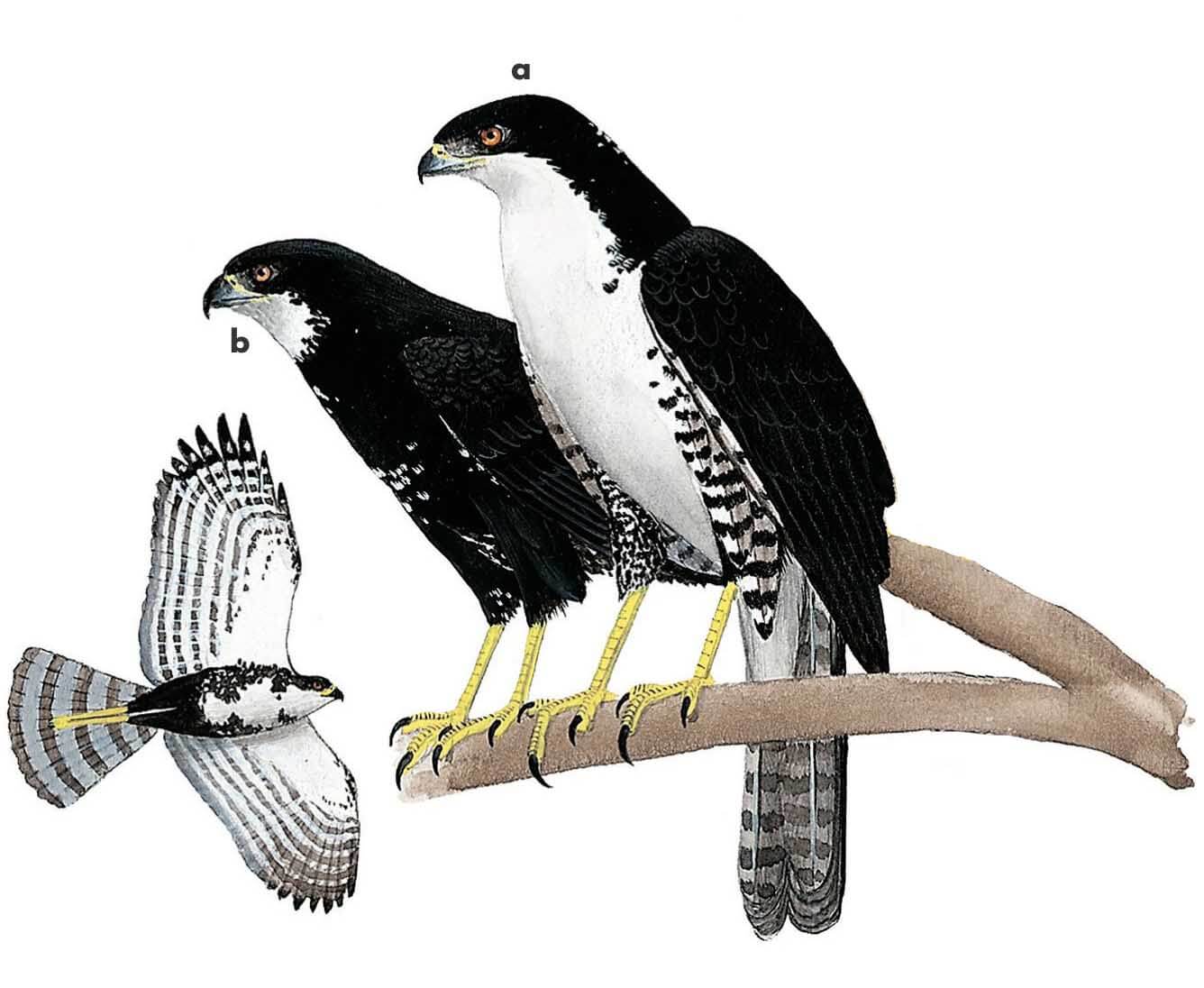
Fairly common resident. Large black-and-white hawk, normally with white or partially white underparts (a), thighs and vent either speckled black and white or entirely black. Eyes are orange or red, the cere and legs dull yellow. Melanistic morph (b) only has white throat and some white feathers on the flanks. Immature buffy below streaked with dark brown (may be more streaked than shown) and yellow eye; cf. immature [African Hawk-Eagle], which is larger and has fully feathered legs. Usually silent but may call ‘weeeeeaa’ or ‘kew-kew-kew-kew-kew’ near its nest. Occurs singly or in pairs in well-developed riverine forests, tall woodland or, more commonly, Eucalyptus plantations. Though retiring and difficult to see, frequently breeds near human habitations. Feeding mainly on pigeons, doves and game fowl, sometimes small mammals. Hunting from concealed perch in a fast strike, even pursuing prey for some distance. 450 g- 980 g .

Quick Facts

size

Size

46-58 cm - L

behaviour

Names

A: Swartsperwer
`
Ss: Fiolo E Ntsho
G: Mohrenhabicht, Trauerhabicht

Bird Family

True hawks, characterised by their secretive nature. They have slender bodies, short, rounded wings, long tails, small, sharp bills and long, bare, often slender legs and toes. They catch their prey (usually small birds) in a low, rapid aerial pursuit from the cover of a leafy tree. Females are larger than males.


Black & White
Savanna Bushveld

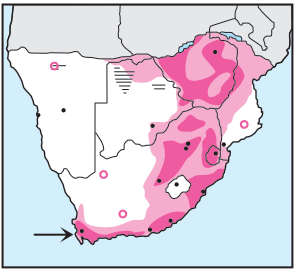
Distribution

Gallery

behaviour

Behaviour

Breeding

Breeding

Habitat

Habitat

Occurs singly or in pairs in well-developed riverine 'forest's, tall woodland or, more commonly, 'Eucalyptus' plantations. Though retiring and difficult to see, frequently breeds near human habitations.

behaviour

Best Locations

0 Cart