
Dark Chanting Goshawk

Melierax metabates

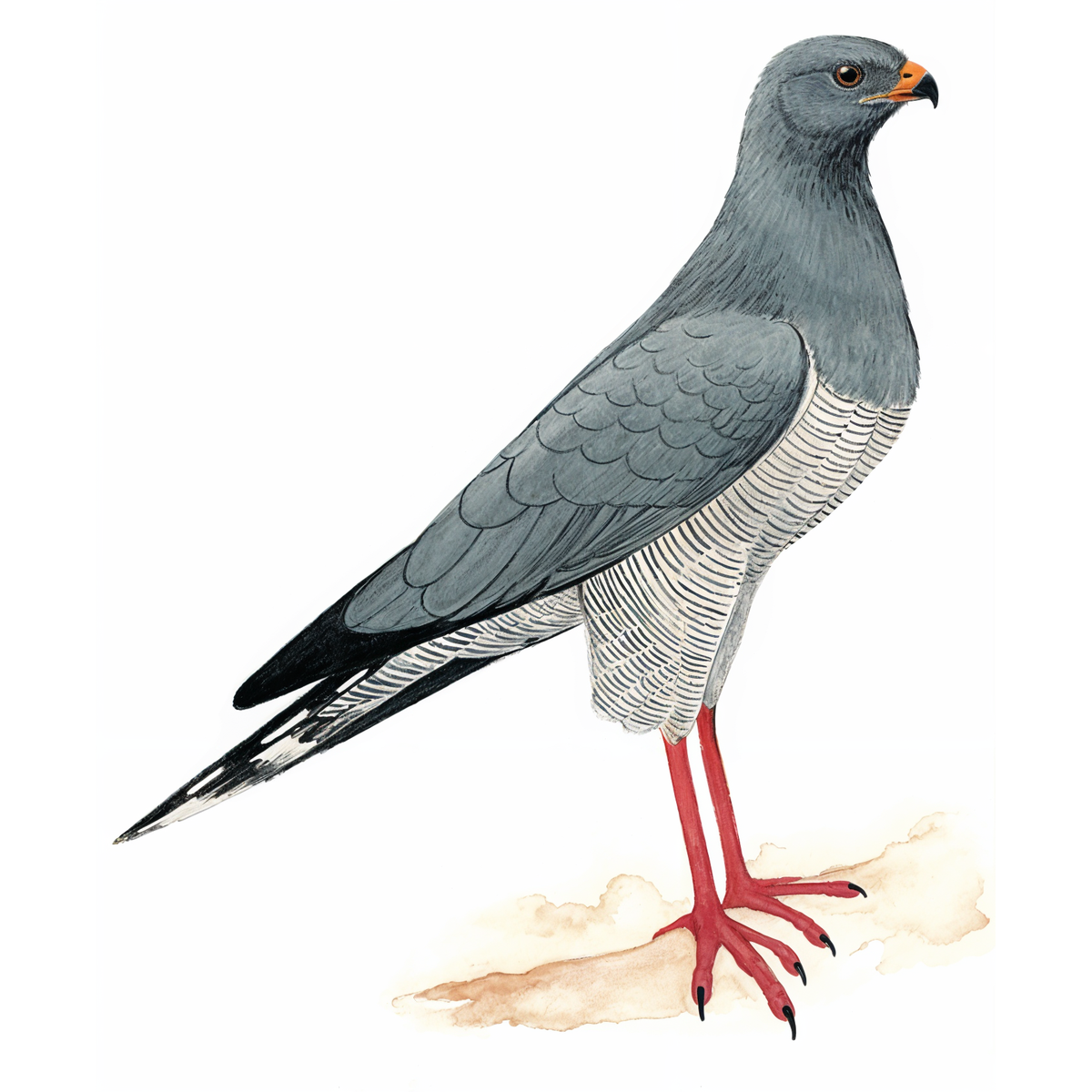
Woodland. Dark grey above; rump white barred grey; primaries and tail black; dark grey breast and finely barred underparts; coral-pink cere and legs.
Goshawks, Sparrowhawks
LC
Not Endemic
Dark Chanting Goshawk AI

Description

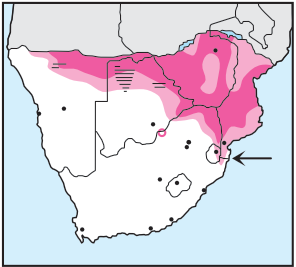
Fairly common resident. Very similar but smaller than [Pale Chanting Goshawk] with slightly darker grey. In flight, the upper wings appear more uniformly grey, the rump finely barred (not pure white). Black on wing tips more restricted to primaries. Immature browner, the soft parts initially yellow, becoming orange or coral red while still in immature plumage. In breeding season, adults call from a perch for long periods ‘phaleeoophwe-phwe-phwe-phwe…’, the last sound often repeated up to 30 times , giving the name ‘chanting’. Higher pitched than Pale Chanting. Frequents broad-leaved woodland and mixed bushveld; usually perches within the canopy on the top of a tree. South of the Limpopo River its range is mostly east of [Pale Chanting Goshawk]. Feeds on reptiles, game birds, rodents and insects often hunting on foot. 600 g – 850 g.

Quick Facts

size

Size

50-56 cm - L

behaviour

Names

A: Donkersingvalk
Ss: Mmankokonono Wa Lepheoputswa
G: Graubürzel-Singhabicht, Dunkler Grauflügelhabicht

Bird Family

True hawks, characterised by their secretive nature. They have slender bodies, short, rounded wings, long tails, small, sharp bills and long, bare, often slender legs and toes. They catch their prey (usually small birds) in a low, rapid aerial pursuit from the cover of a leafy tree. Females are larger than males.


Grey
Savanna Bushveld

Distribution

Gallery

behaviour

Behaviour

Breeding

Breeding

Habitat

Habitat

Frequents 'broad-leaved woodland' and mixed bushveld; usually perches within the canopy on the top of a tree.


behaviour

Best Locations

0 Cart