

Inland water shorelines. Small plover told by white underparts with two black breast-bands; above dark brown; bill and eye-rings red.
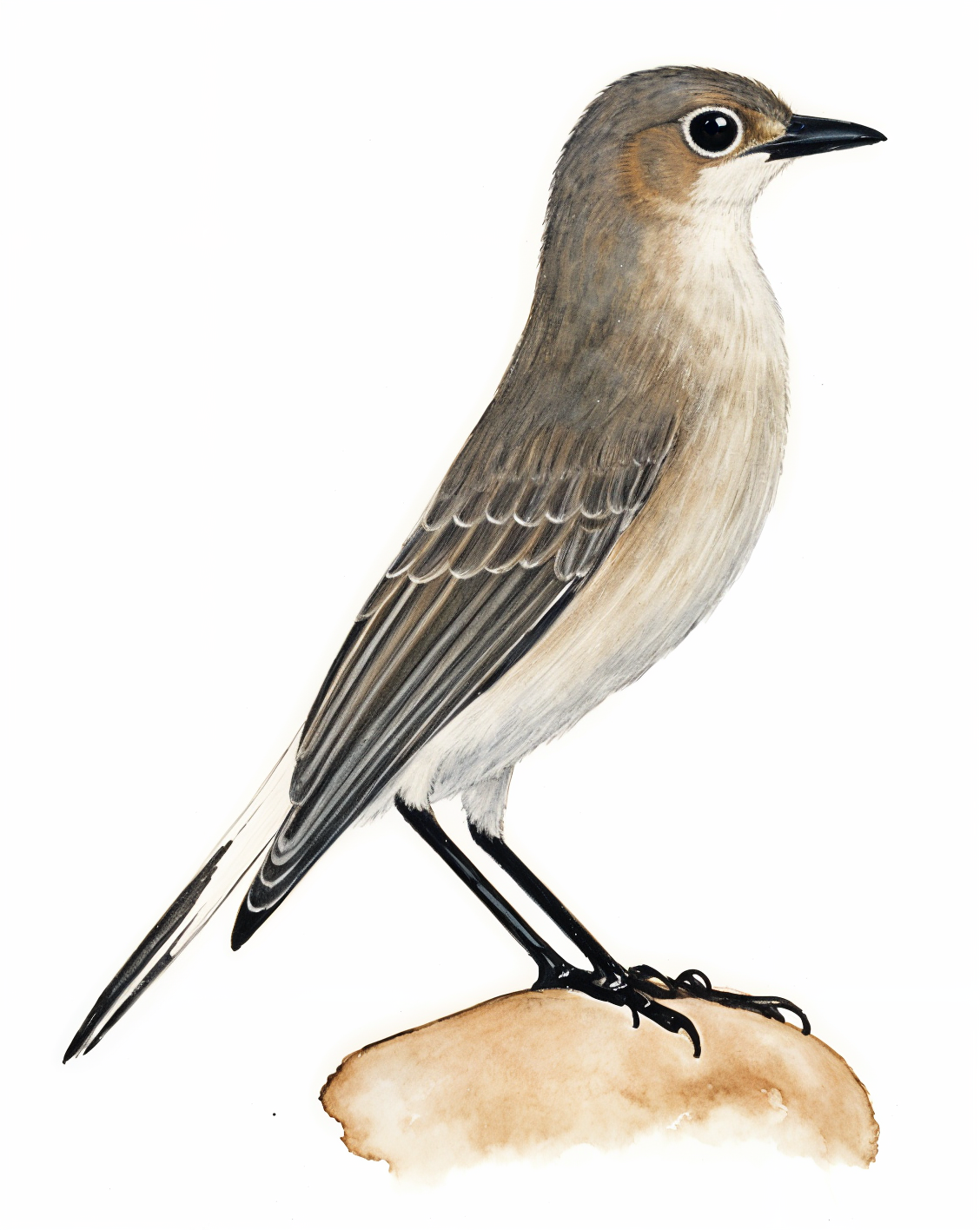
Arid plains. Southern race is light grey-brown above; Namibian race very pale brown, almost white above; both races white below; rump buff or white.
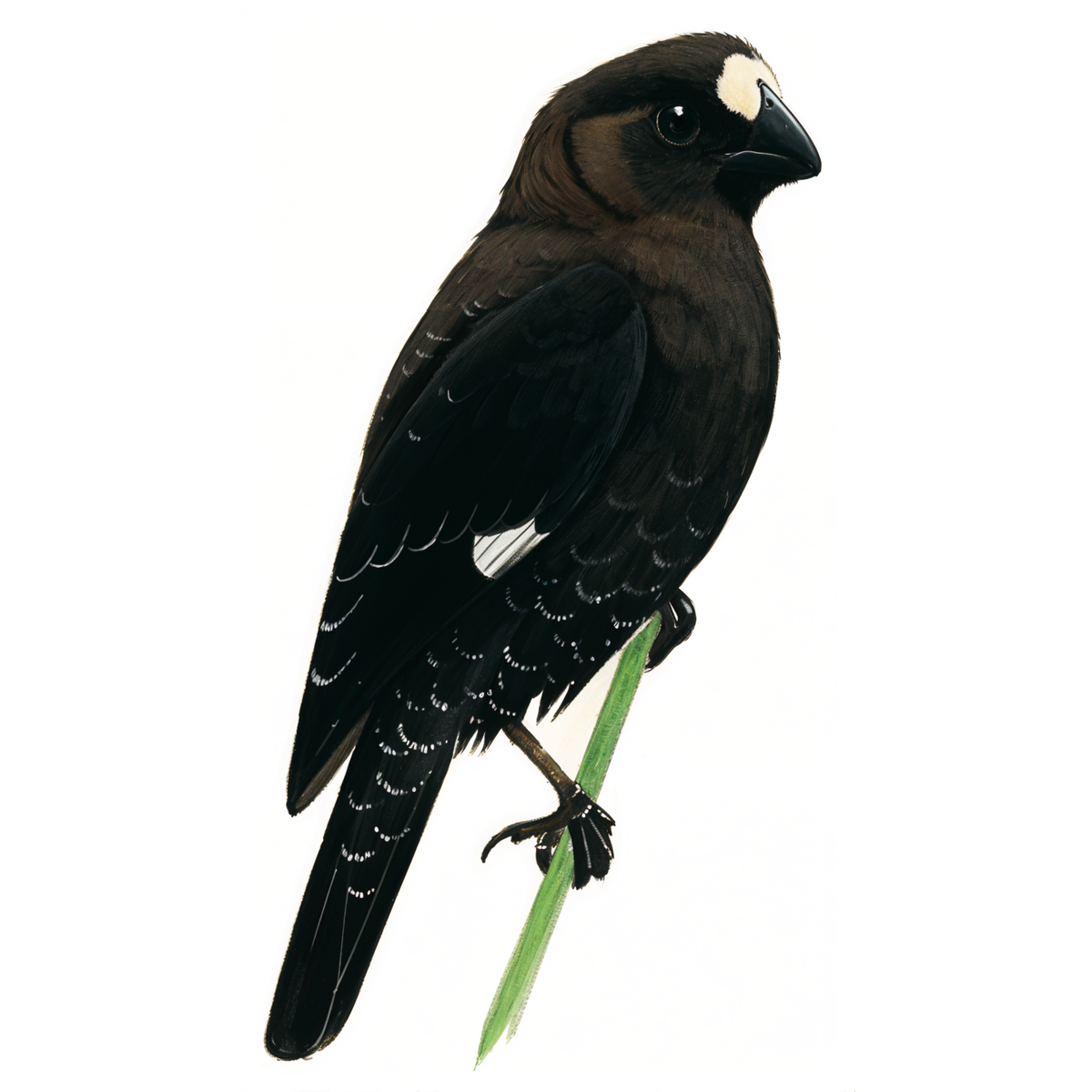
Reedbeds and adjacent bush. Male blackish-brown all over, with a white wing-spot and white forehead when breeding; bill black; female dark brown above, whitish below, heavily streaked dark brown; bill horn-coloured.

Dry woodland. The white throat has a chestnut V-shaped collar; the upper breast has a dark brown breast-band extending to the shoulders, and a chestnut lower breast-band.
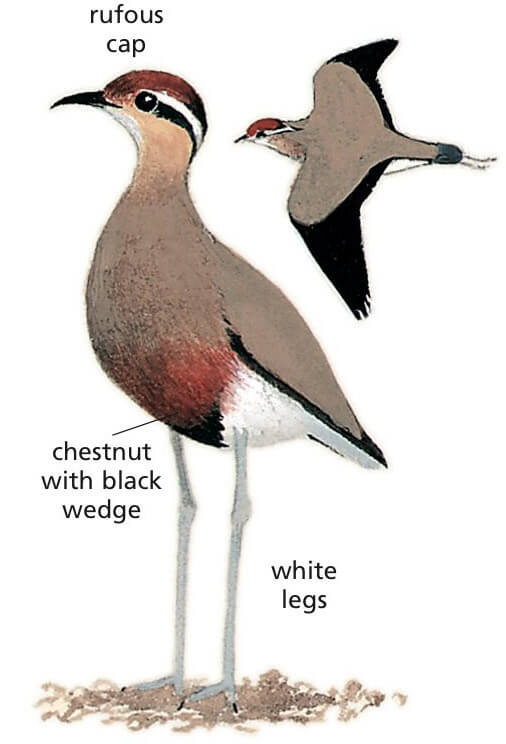
Short grasslands. Rufous cap and lower breast; white underbelly and legs.
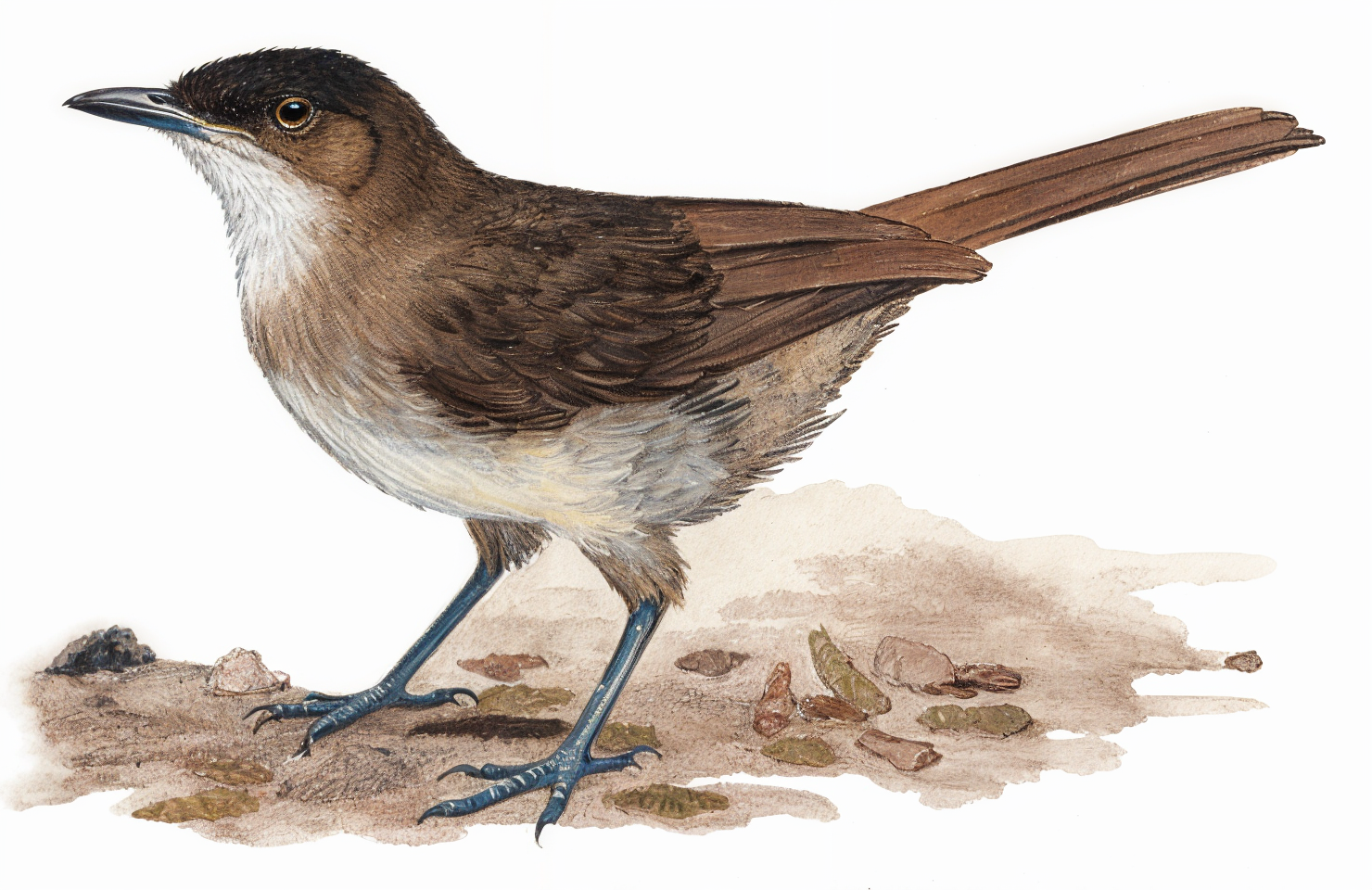
Forests and thickets. Dark brown above; white throat contrasts with dusky breast and flanks.
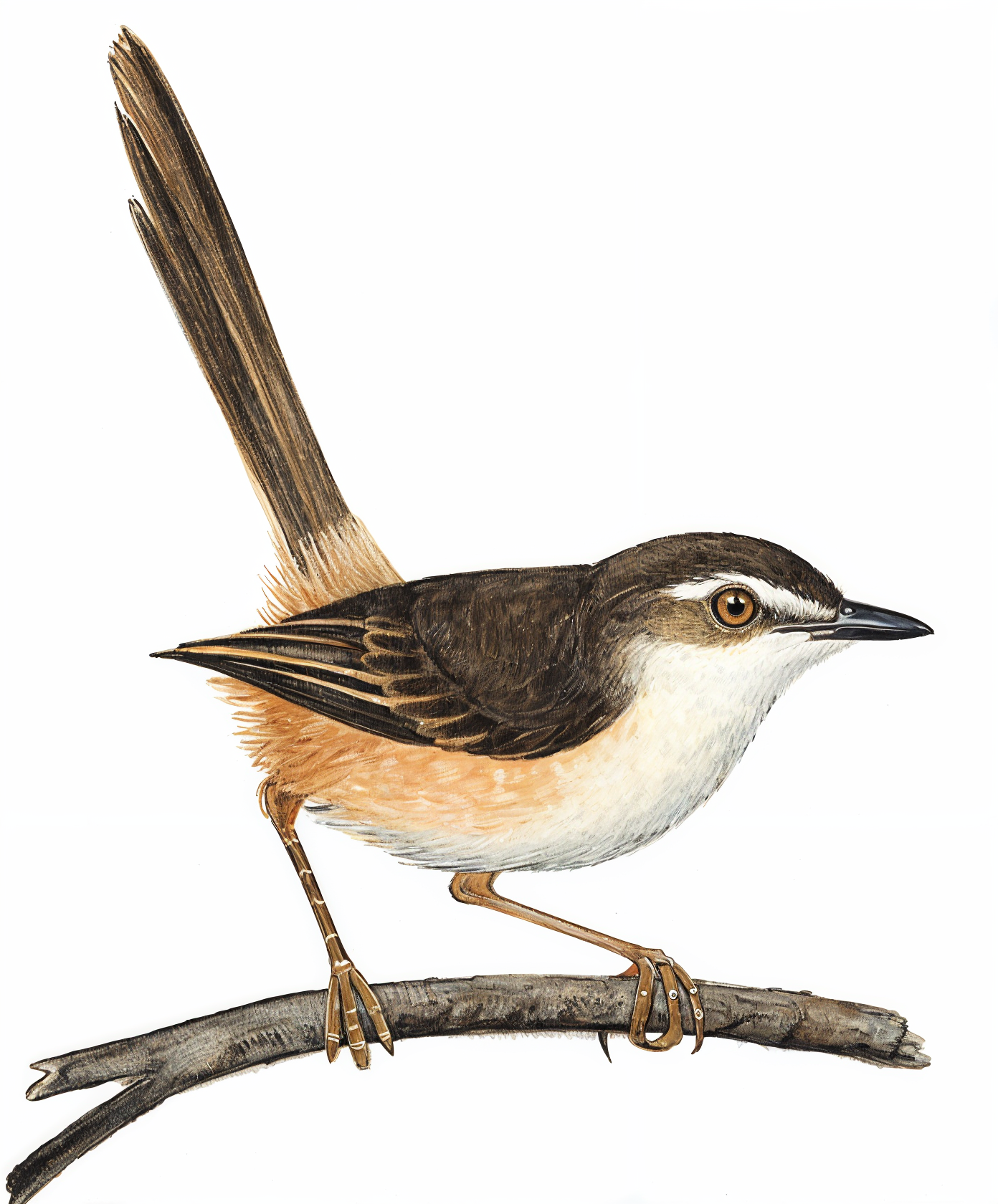
Riverine vegetation and gardens. Dark brown above with white eyebrows and dark eye-stripe; white below; flanks, vent and rump tawny.
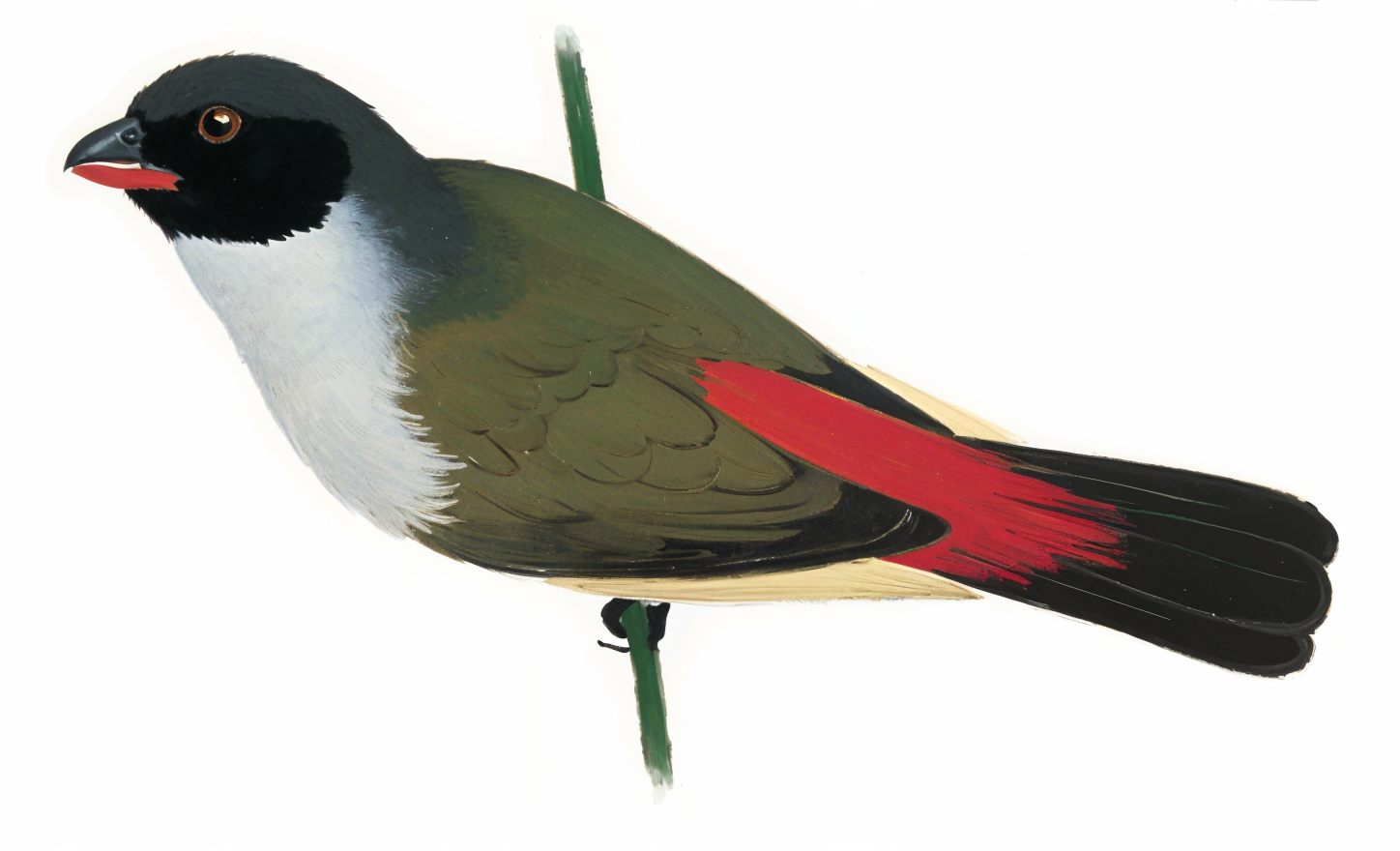
Wooded streams. Yellow belly and vent in both sexes; breast whitish; dark green above; red rump and tail coverts; male has black mask.