

Trumpeter Hornbill

Bycanistes bucinator

Riverine forest. Large pied hornbill with huge bill and casque.
LC
Not Endemic
Trumpeter Hornbill Newman's Birds

Description

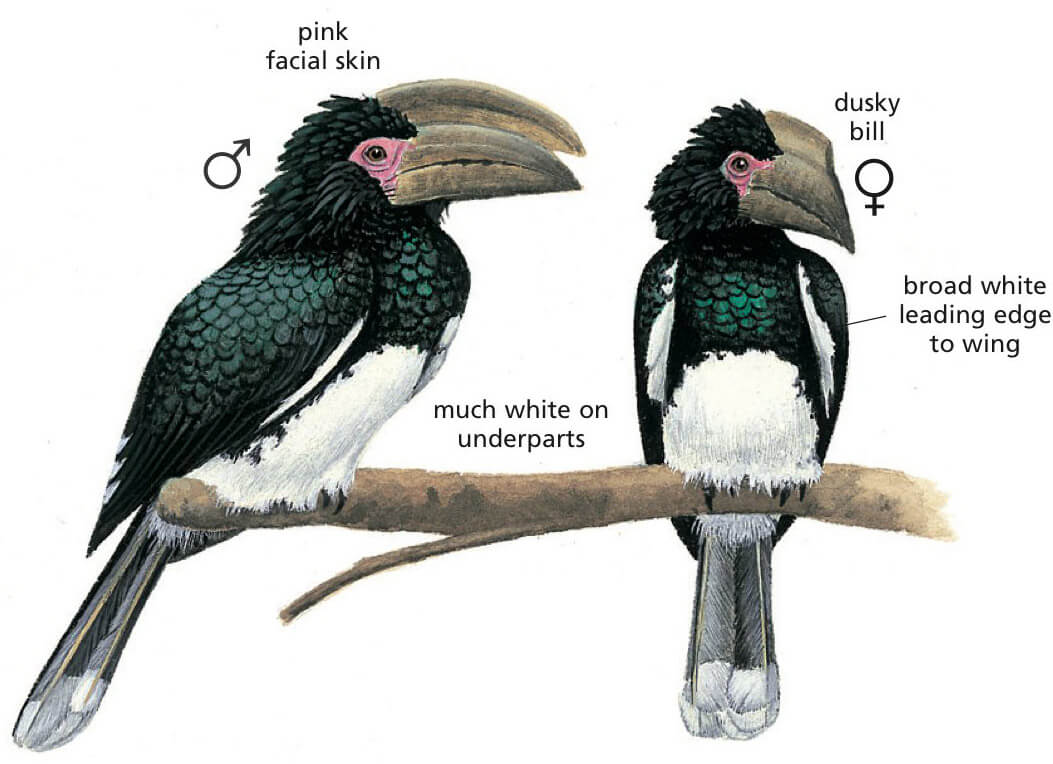
Common lowland resident. Distinguished from [Silvery-cheeked Hornbill] by smaller size, dusky (not yellow) bill, pink (not blueish) facial skin, white edges on underwings and more white on the underparts. The characteristic call resembles the crying of a baby, a loud and far-carrying ‘waaaa-aaa-aaa-aaa-aaaaaa’ often uttered by several birds at once. Small flocks frequent well-developed riverine forests, lowland forests and moist woodland, feeding in the canopy of large fruiting trees.

Quick Facts

size

Size

58-65 cm - L

behaviour

Names

A: Gewone Boskraai
Z: imemela
Ss: Koro Ya Leramasweu
G: Trompeter-Hornvogel

Bird Family

Insectivorous and frugivorous birds with large, decurved bills, sometimes with a horny casque on the upper mandible. Arboreal or terrestrial feeders, or both, they nest in holes in trees (among rocks in a few species) and, in most species, the female seals herself in during incubation. Their flight is heavy and undulating with periods of gliding.


Black & White
Forest

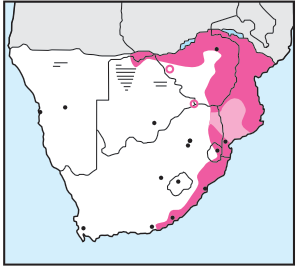
Distribution

Gallery

Trumpeter Hornbill Newman's Birds
behaviour

Behaviour

Breeding

Breeding

Habitat

Habitat

Small 'flocks' frequent well-developed riverine forests, lowland forests and moist woodland, feeding in the canopy of large fruiting trees.


behaviour

Best Locations

0 Cart