

Thick-billed Weaver

Amblyospiza albifrons

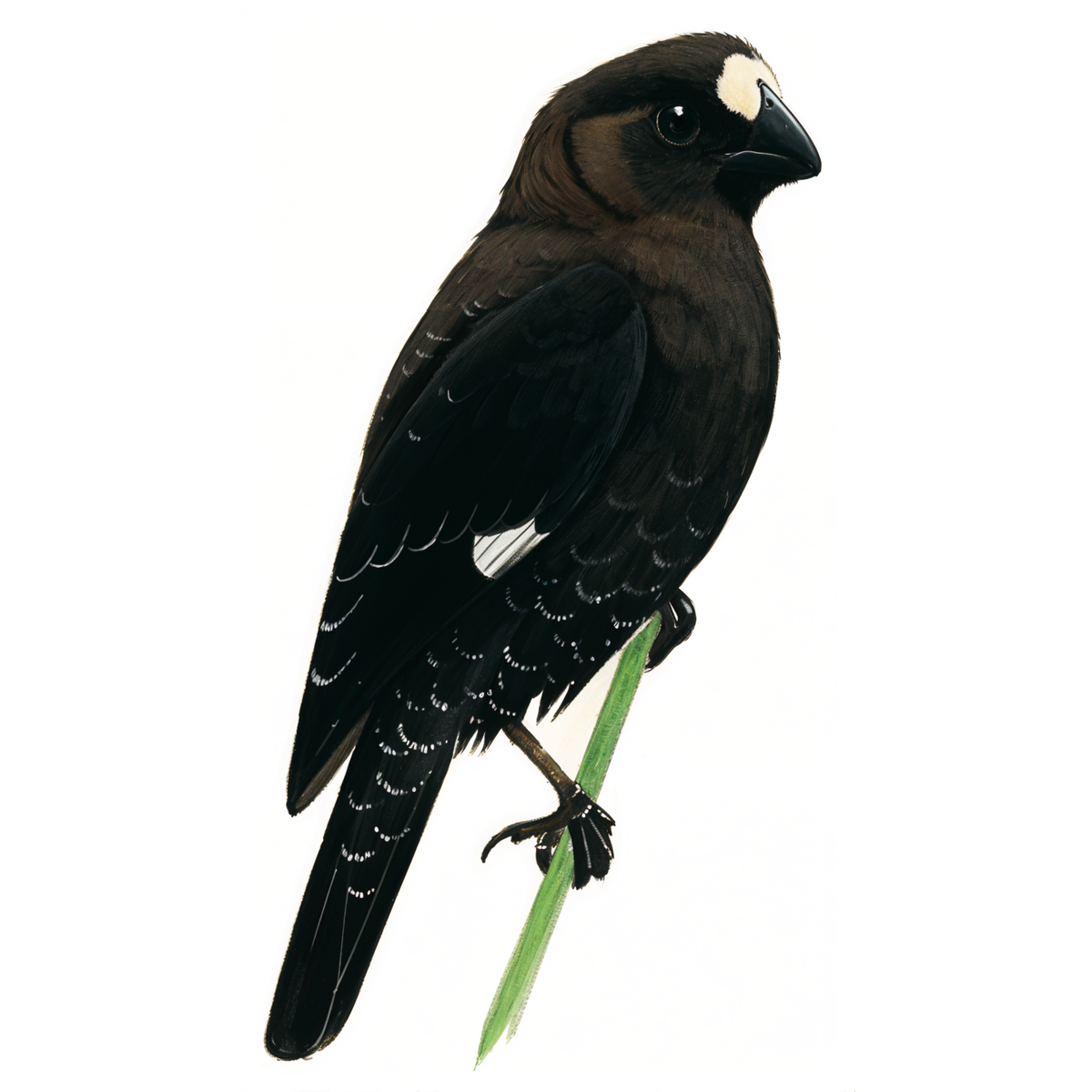
Reedbeds and adjacent bush. Male ­blackish-brown all over, with a white ­wing-spot and white forehead when ­breeding; bill black; female dark brown above, whitish below, heavily streaked dark brown; bill horn-coloured.
Queleas, Sparrows, Weavers
LC
Not Endemic
Thick-billed Weaver

Description

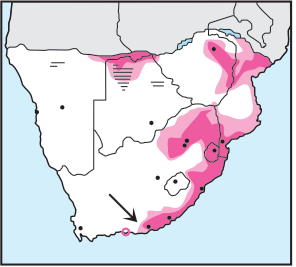
Common resident. Heavy bill diagnostic; the male’s white frontal patches present in the breeding season only. Female recognised by thick bill and heavily streaked underparts. The immature resembles the female but the bill is yellower. Nesting birds (summer) utter a monotonous chattering; male occasionally sings an almost musical song. Pairs and small parties occur in reed beds and the bush adjacent to rivers, pans and swamps when breeding; at other times found in coastal bush, riverine forests and wooded valleys. Flocks frequently seen flying slowly overhead between feeding and roosting sites while giving high-pitched calls. Currently expanding its range westwards, and now common in Gauteng and surrounds.

Quick Facts

size

Size

18 cm - S

behaviour

Names

A: Dikbekwewer
Z: usiqhophokezi
G: Weißstirnweber

Bird Family

A very large group of conical-billed, mainly seed-eating birds. Many breed colonially and weave complicated nests that aid identification.


Dark Brown
Wetlands

Distribution

Gallery

behaviour

Behaviour

Breeding

Breeding

Habitat

Habitat

Pairs and small parties occur in reed beds and the bush adjacent to rivers, pans and swamps when breeding; at other times found in coastal bush, riverine 'forest's and wooded valleys.


behaviour

Best Locations

0 Cart