

Swee Waxbill

Coccopygia melanotis

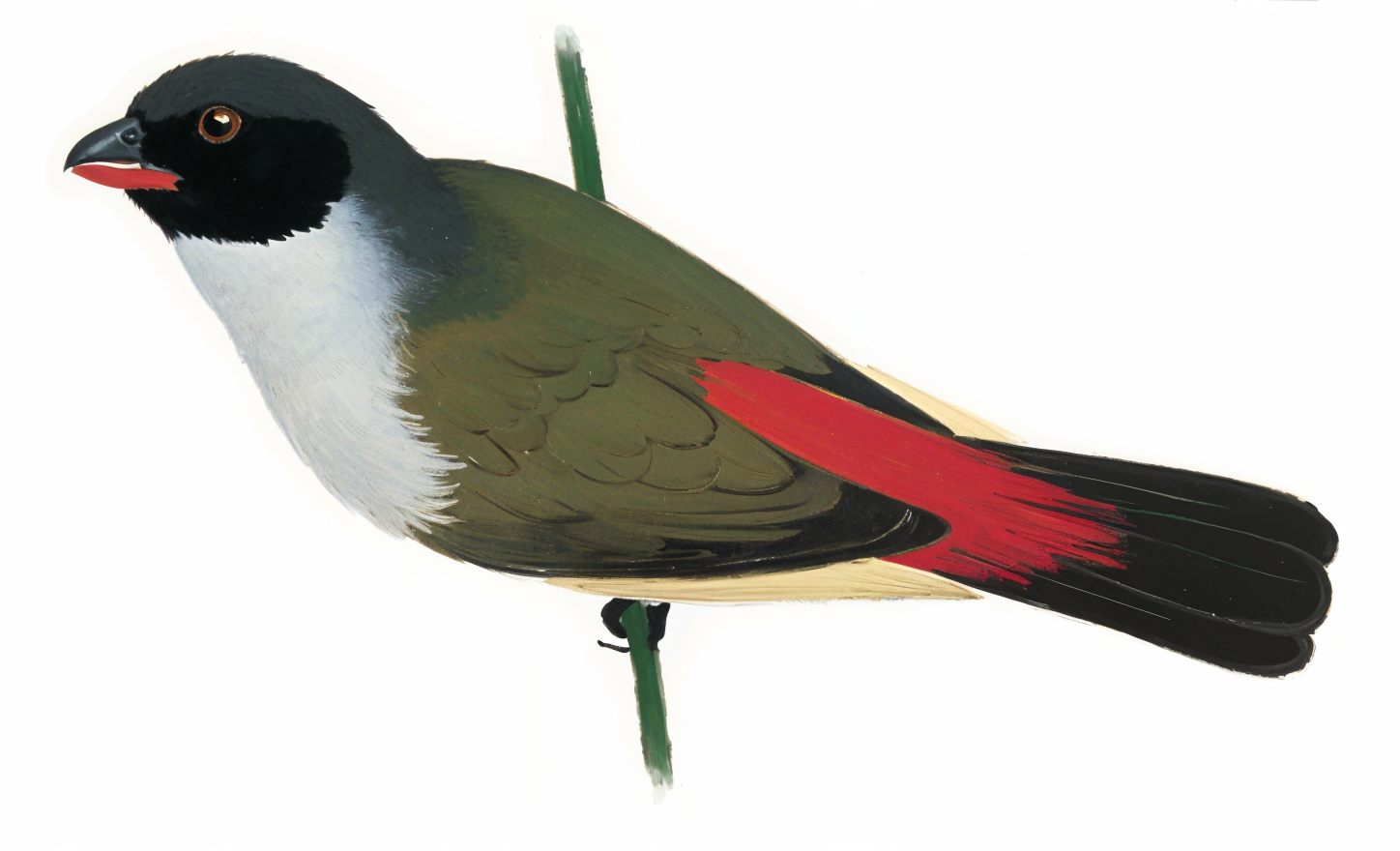
Wooded streams. Yellow belly and vent in both sexes; breast whitish; dark green above; red rump and tail coverts; male has black mask.
LC
Endemic
Swee Waxbill Newman's Birds

Description

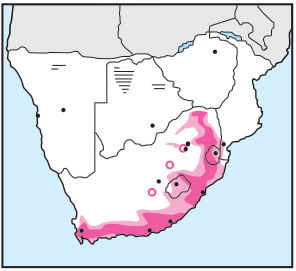
Common, endemic resident. The ranges of this species and [Yellow-bellied Waxbill] are mutually exclusive. The crimson rump and upper tail coverts and the yellow belly of both sexes are distinctive in the field. Adult male easily identified by black face. Usual call is a soft ‘swee-swee’. An inconspicuous little bird that occurs in flocks, feeding in tall grass near forest fringes and thick bush, and in montane regions usually near wooded streams. When flushed the flocks makes off, calling, and settles briefly in a bush before again flying to feed in the grass.

Quick Facts

size

Size

9-10 cm - S

behaviour

Names

A: Suidelike Swie
Z: ubuSukuswane
Ss: Borane-Swaswi
G: Gelbbauchastrild

Bird Family

Small, conical-billed, ground- or grass-feeding seed-eaters, although some will also eat insects. They usually have colourful plumage, although females are usually more drab than males. They generally occur in pairs, or are gregarious when not breeding.


Grey
Forest

Distribution

Gallery

Swee Waxbill Newman's Birds
behaviour

Behaviour

Breeding

Breeding

Habitat

Habitat

An inconspicuous little bird that occurs in 'flocks', feeding in tall grass near 'forest' fringes and thick bush, and in montane regions usually near wooded streams.


behaviour

Best Locations

0 Cart