

Shaft-tailed Whydah

Vidua regia

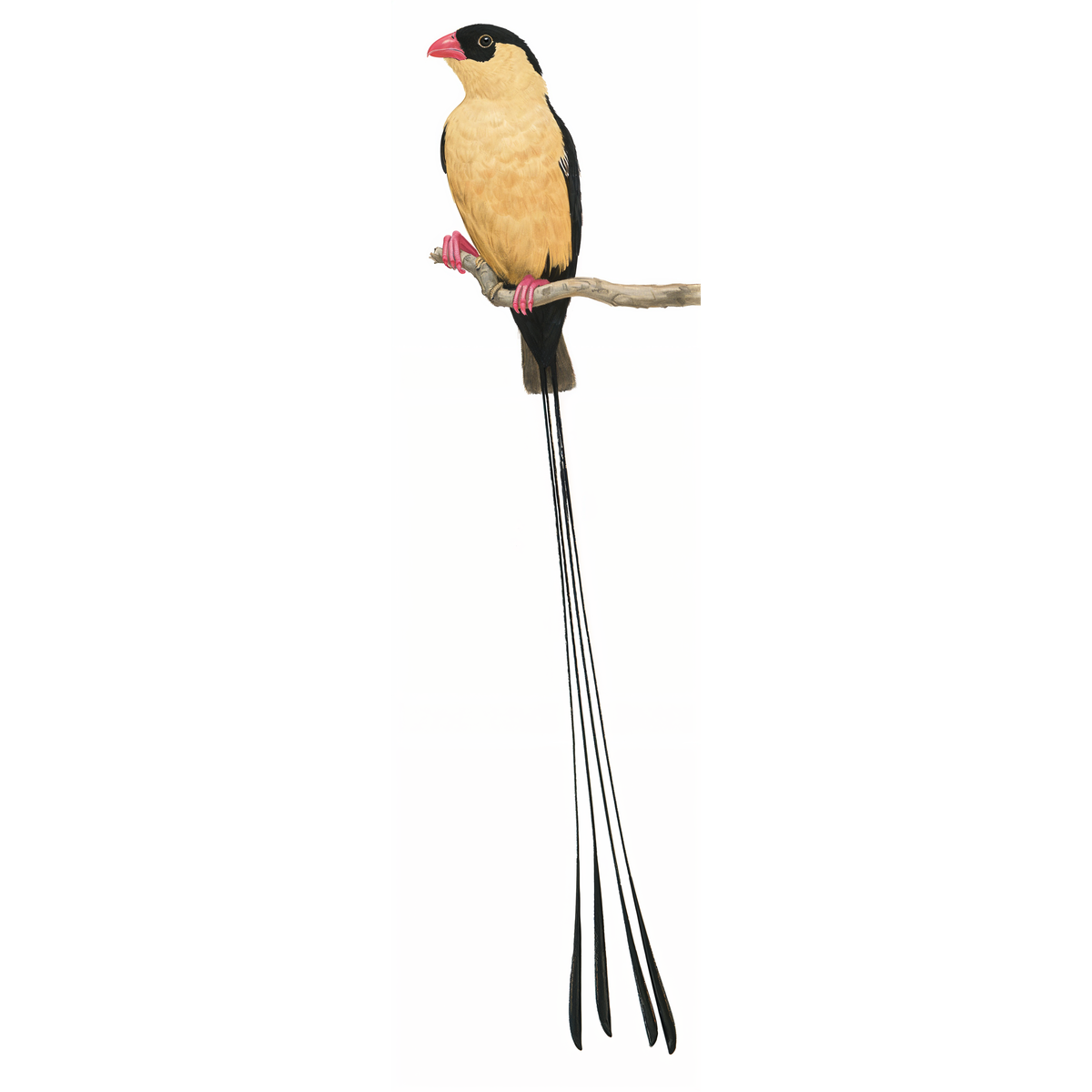
Thornveld. Red bill and legs; black above; buffy below; very long tail-shafts.
Whydahs
LC
Near Endemic
Shaft-tailed Whydah

Description

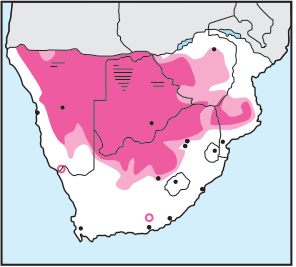
Common, near-endemic resident. Breeding male distinguished by creamy buff underparts plus thin tail-shafts with broadened ends. Female and non-breeding male have less distinctive head markings than other whydahs. The voice is ‘chit-chit-chit…’; male has a scratchy song like that of an indigobird. Occurs singly or in small flocks, females predominating, in dry thornveld, sandveld with sparse vegetation and grassland with scattered thorn bushes. Male chases other small birds at feeding assemblies. Parasitises [Violet-eared Waxbill].

Quick Facts

size

Size

#VALUE!

behaviour

Names

A: Pylstertrooibekkie
G: Königswitwe

Bird Family

Small, ground-feeding, seed-eating finches that are brood parasites, laying their eggs in waxbill, firefinch, twinspot and pytilia nests. Male whydahs in breeding plumage have very long tails, different in all species, but when not breeding they resemble the confusingly similar females. At times males may be seen in transient plumage with traces of the breeding colours visible. Immatures are very plainly coloured and are probably indistinguishable.


Light Brown
Savanna Bushveld

Distribution

Gallery

behaviour

Behaviour

Breeding

Breeding

Habitat

Habitat

Occurs singly or in small 'flocks', females predominating, in dry thornveld, sandveld with sparse vegetation and 'grassland' with scattered thorn bushes.


behaviour

Best Locations

0 Cart