

Birding guides · Colour
Red is borrowed from food, worn as a signal and, in turacos, made from copper.
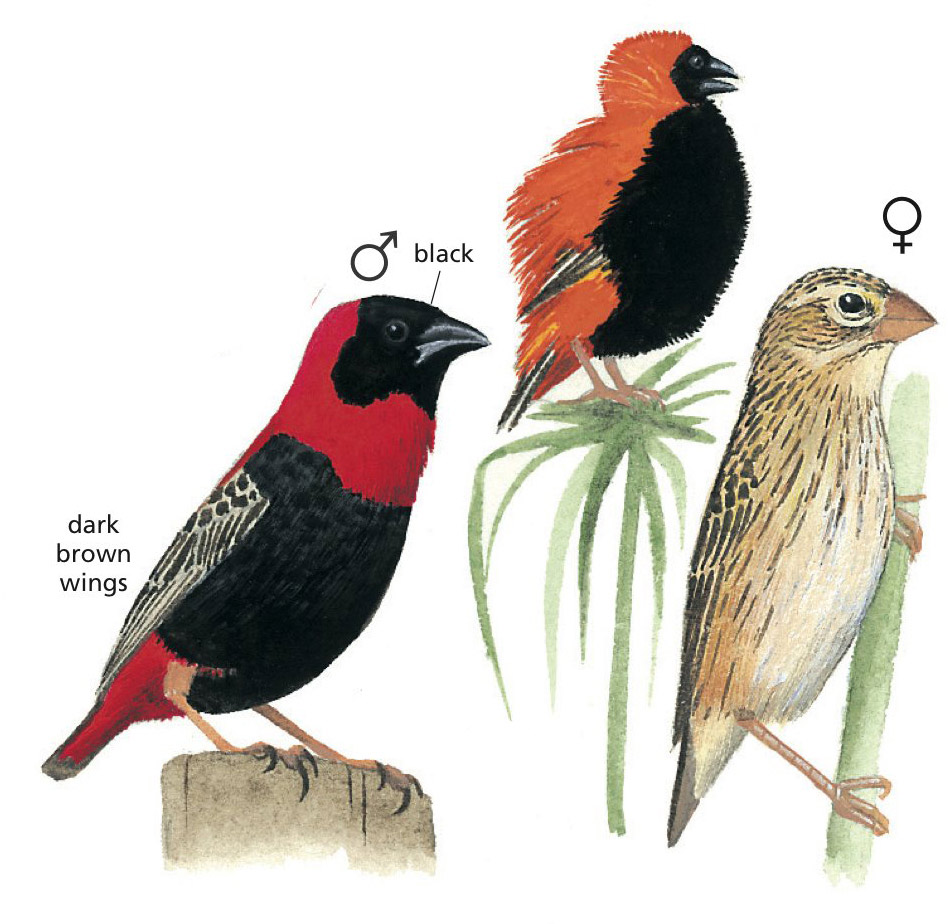
Colour is what most people remember about a bird they saw for a second, and red is hard to forget. It’s also easy to misremember. Look again and the red is often only a bill, a cap or a tail.
That makes red worth understanding. It’s one of the hardest colours for a bird to make. Here’s where it comes from, what it tells you, and one family of birds that makes it in a way no other bird does.
1. Red is borrowed from food
Most red feathers get their colour from carotenoids, the same family of pigments that colours carrots and tomatoes. Birds can’t make carotenoids. They have to eat them, either in plants or in the insects and other animals that have eaten plants.
Most of the carotenoids in food are yellow. To turn them red, a bird changes them inside its own body. Studies of canaries and zebra finches found an enzyme, made by a gene called CYP2J19, that does this job.
Not every red is a carotenoid. Rusty and chestnut reds come from melanin, the pigment behind the black feathers in our article Why are some birds black?
2. You are what you eat
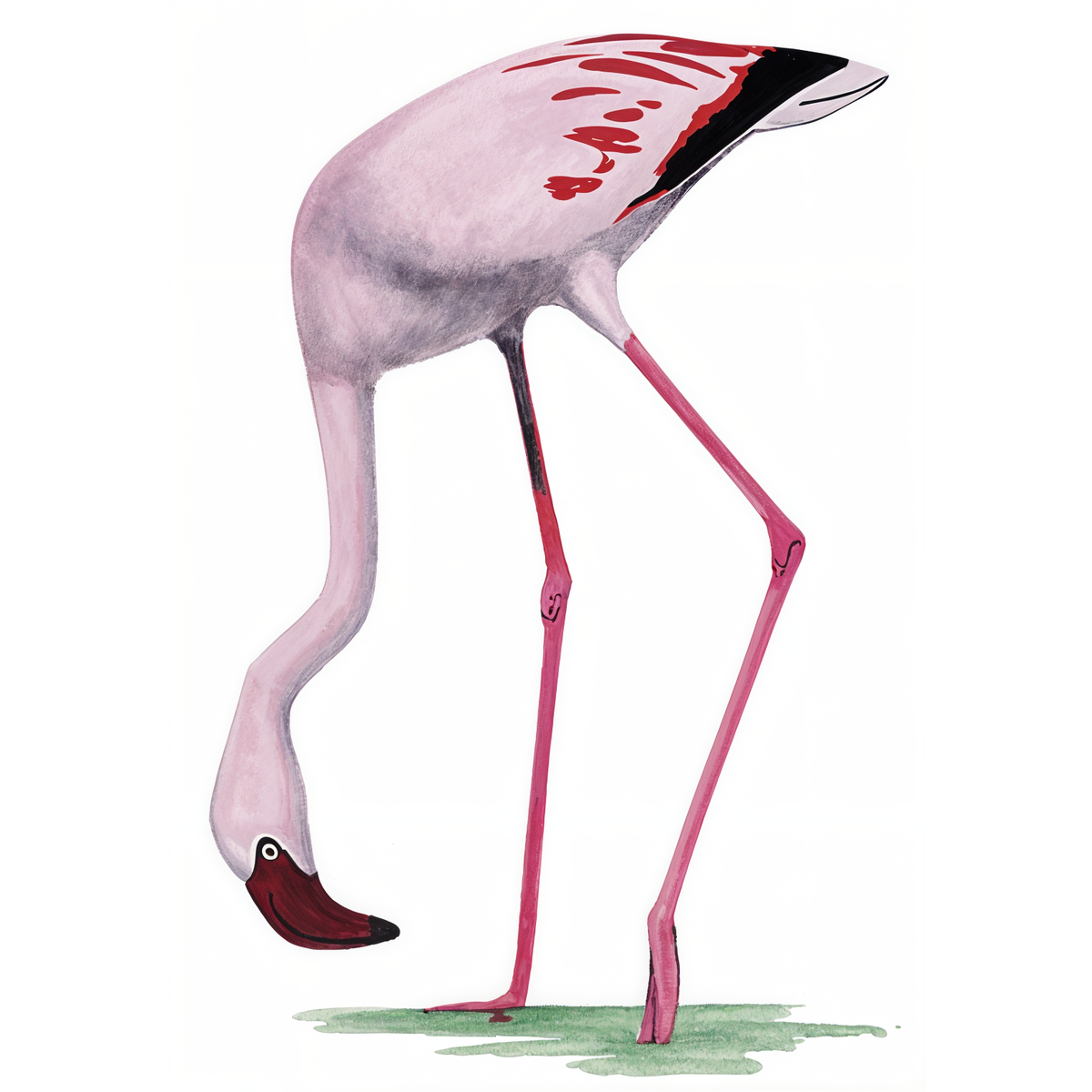
Flamingos are the clearest example. Chicks hatch grey. The pink comes later, from carotenoids in the algae, cyanobacteria and small crustaceans that the birds filter from the water.
Take those foods away and the colour fades. Zoos add carotenoids to their flamingos’ food for exactly this reason.
Experiments on House Finches, a North American bird, showed the same thing. Males fed food without carotenoids grew pale yellow feathers. Males fed a red carotenoid grew bright red ones.
In the field
In winter, look at the streaky brown birds in a reedbed before you skip them. Some are Southern Red Bishops out of breeding plumage. Check the size and the habitat before you write them off.
3. Red is a message
Carotenoids are hard to come by, so a bright red bird is showing off. The best-studied case is the House Finch. Females prefer redder males, and a male’s redness is thought to reflect how well he was fed when he grew his feathers. Biologists call this an honest signal, because only a bird in good condition can afford to look that good.
You can watch red being used as a display in our own reedbeds. Breeding male Southern Red Bishops turn red and black, then go back to streaky brown after breeding. Each male builds several nests and displays to females with his rump feathers fluffed out.
Whether every red bird works like the House Finch is less clear, and scientists are still testing it. Treat it as a good explanation for many species, not a rule for all of them.
4. The red that’s made from copper
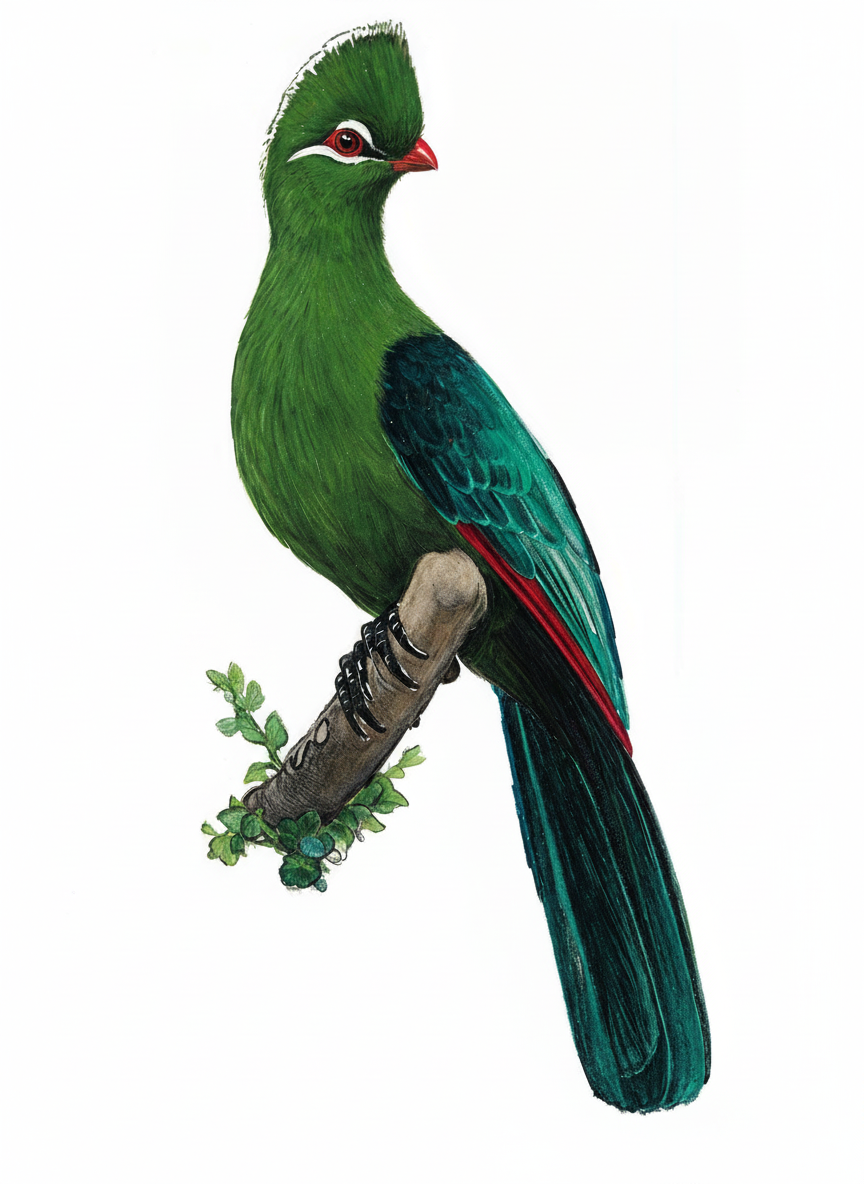
Turacos, the loeries, break the rules. The crimson in the flight feathers of the Knysna Turaco and its relatives is turacin, a pigment built around copper. As far as anyone knows, it’s found only in turacos.
The green of many turacos is a copper pigment too, called turacoverdin. The crimson is easiest to see when a turaco flies from tree to tree and its wings flash open.
Try it on your next outing
When red catches your eye, ask where it is. On the bill, the cap, the chest, the wings or the tail? Then look for it in the red tab of Newman’s Birds by Colour, which groups birds by the colour you remember first. Red is one of the best clues you can get.

The book
Newman’s Birds by Colour, 5th edition
Southern Africa’s common birds arranged by colour and size, now with QR codes to hear each bird’s call.
Sources
- Newman’s Birds by Colour, 5th edition (red plumage section).
- Female house finches prefer colourful males: sexual selection for a condition-dependent trait (Hill, 1990), Animal Behaviour 40: 563–572.
- Astaxanthin in the American Flamingo (Fox, 1955), Nature 175: 942.
- Researches on turacin, an animal pigment containing copper (Church, 1869), Philosophical Transactions of the Royal Society of London.