
Birding guides · Colour
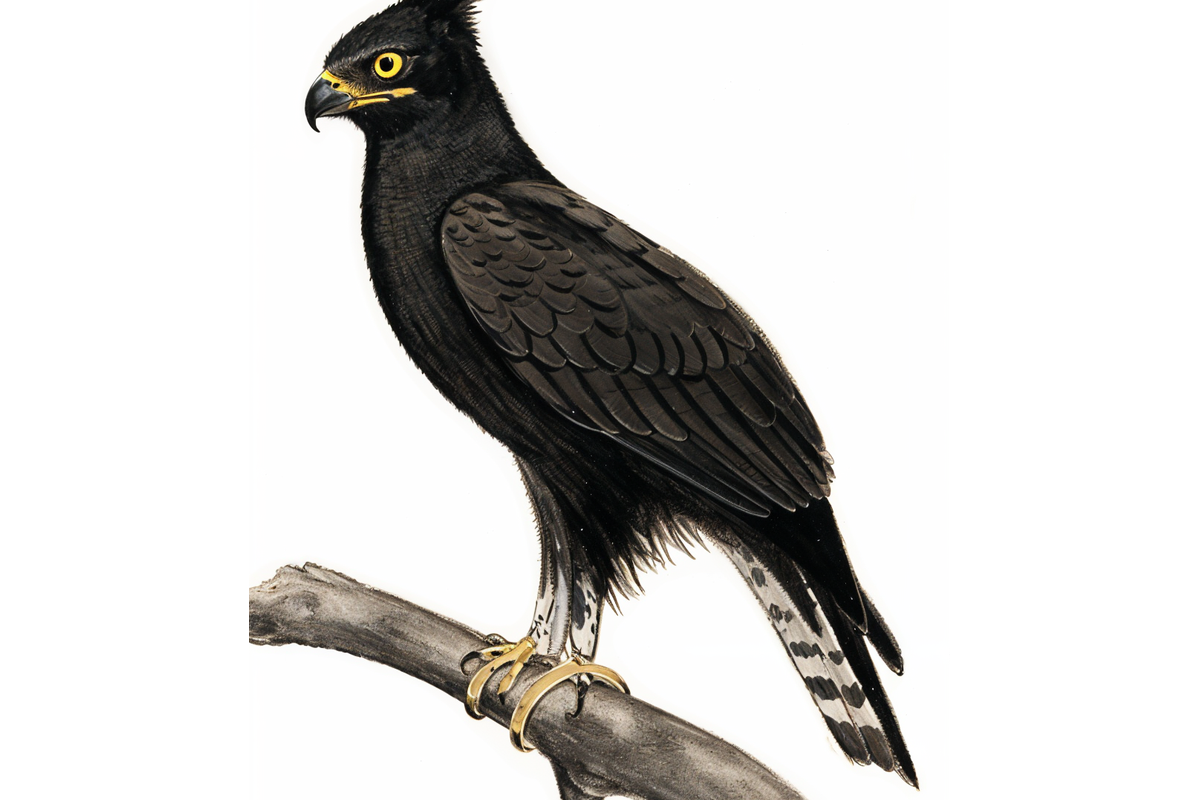
Black feathers aren’t just a colour. They hide birds, keep them warm and help them fly.

On a birding outing, black birds are easy to overlook. They can seem like the least interesting birds on the list, with none of the flash of a sunbird or a bee-eater. But black is one of the hardest-working colours in nature. For many birds it’s camouflage, armour and a heater all at once.
Where black feathers come from
Black feathers get their colour from melanin, the same pigment that colours our skin and hair. One form of melanin produces black and grey, and another produces browns and rusty reds. So a Fork-tailed Drongo, a Cape Turtle Dove and a Hamerkop all owe their colours to the same pigment.
1. Camouflage in shadow and on rock
Dark plumage helps a bird disappear into shade. The African Black Oystercatcher is hard to see when it feeds on black, mussel-covered rocks. It’s almost invisible when it sits on its nest among dried kelp on the high-tide line.
Many smaller birds use the same trick in a more limited way. Their upperparts are dark, which hides them in the dim interior of thick bushes, trees and rocky outcrops.
2. Keeping warm

Dark surfaces absorb more sunlight. Verreaux’s Eagle breeds in winter and often nests on shaded cliff faces, and its black plumage helps it hold on to heat in the cold.
3. Tougher feathers
Melanin makes feathers more resistant to wear, and studies suggest it may also help them resist bacteria that break feathers down. That’s why so many birds that are otherwise pale, such as gulls, terns and storks, have black wingtips. The wingtips take the most punishment in flight.
In the field
Watch a flock of gulls or terns overhead and look at the wingtips. The black is where the feather takes the most wear.
4. Better flight performance
This is the most recent idea. Research on seabirds and gulls has found that dark upper wings heat up more in the sun than pale ones. The warmer surface appears to reduce drag and may make flight more efficient. That could help explain why so many long-distance fliers have dark wings.

Swifts and swallows show how much this matters. Hunting insects in open sky, they have little need for camouflage, but they depend completely on their flight feathers. Tracking studies have shown that Common Swifts can stay in the air for up to 10 months without landing, feeding and even sleeping on the wing.
What about drongos?
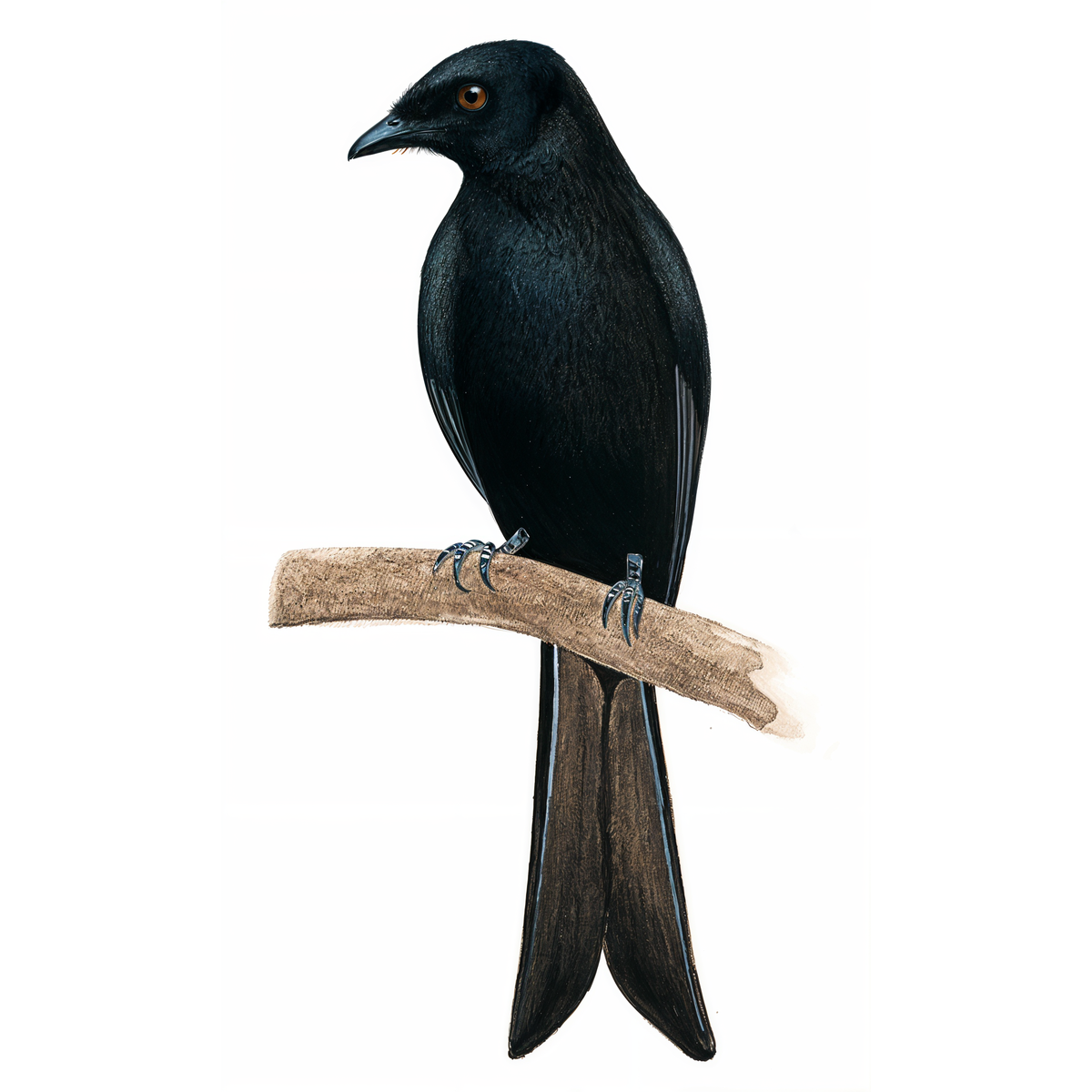
Anyone who has watched a Fork-tailed Drongo dive-bomb an eagle has wondered why it gets away with it. An older theory suggested black birds taste unpleasant, so predators leave them alone. The evidence for that is thin. The simpler explanation is that drongos are fast, agile and fiercely defensive. An eagle can’t catch a bird that’s far more agile than it is.
Try it on your next outing
Next time you’re out birding, notice how often black shows up exactly where it’s useful: on wingtips, on backs and on the birds that live in the air. When you use colour as your first clue, black stops being a boring colour and starts telling you how the bird lives.

The book
Newman’s Birds by Colour, 5th edition
Southern Africa’s common birds arranged by colour and size, now with QR codes to hear each bird’s call.