

Yellow Canary

Crithagra flaviventris

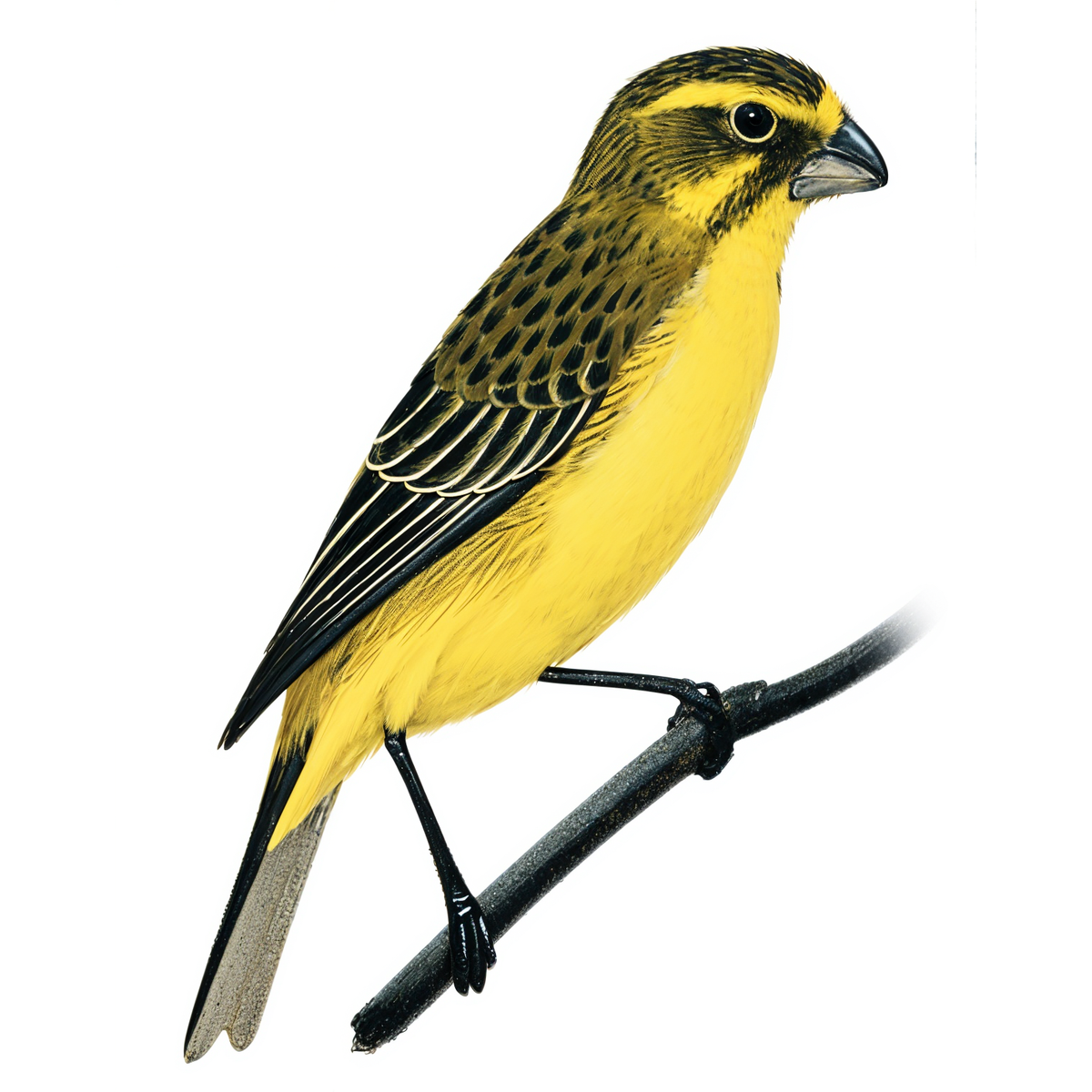
Dry bush. Eyebrows, cheeks and underparts yellow; upperparts ­olive-green,paler in W, darkest in SE.
LC
Near Endemic
Yellow Canary Race b AI

Description

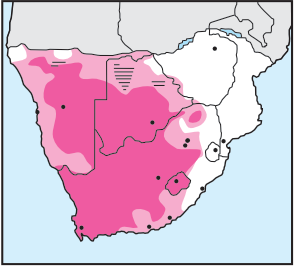
Common, near-endemic resident. Shows marked differences between the sexes. Palest, yellowest males with bright yellow rumps (a) occur in the northwest cf. [Brimstone Canary], darkest males with greenish rumps (b) in the southeast, with intergrading elsewhere. Females of (b) duskier about the breast, streaking less obvious than in females of (a). Immature are like females, upper parts greener. Males sing well and vigorously from tree tops. Small parties and flocks occur in semi-arid regions, frequenting low-growing bushes of mountain sides, and Karoo and coastal scrub, especially along watercourses; they also enter small towns. Nomadic in some regions.

Quick Facts

size

Size

13-14 cm - S

behaviour

Names

A: Geelkanarie
Ss: Tswere-Tshehla
G: Gelbbauchgirlitz

Bird Family

Sparrow-sized or smaller songbirds. Canaries and siskins have strong conical bills, usually notched tails and undulating flight. Buntings are strongly terrestrial and have weaker, narrower bills. Many species are nomadic.


Yellow
Nama Karoo

Distribution

Gallery

Yellow Canary Race b AI
behaviour

Behaviour

Breeding

Breeding

Habitat

Habitat

Small parties and 'flocks' occur in semi-arid regions, frequenting low-growing bushes of mountain sides, and 'Karoo' and coastal scrub, especially along watercourses; they also enter small towns.


behaviour

Best Locations

0 Cart