
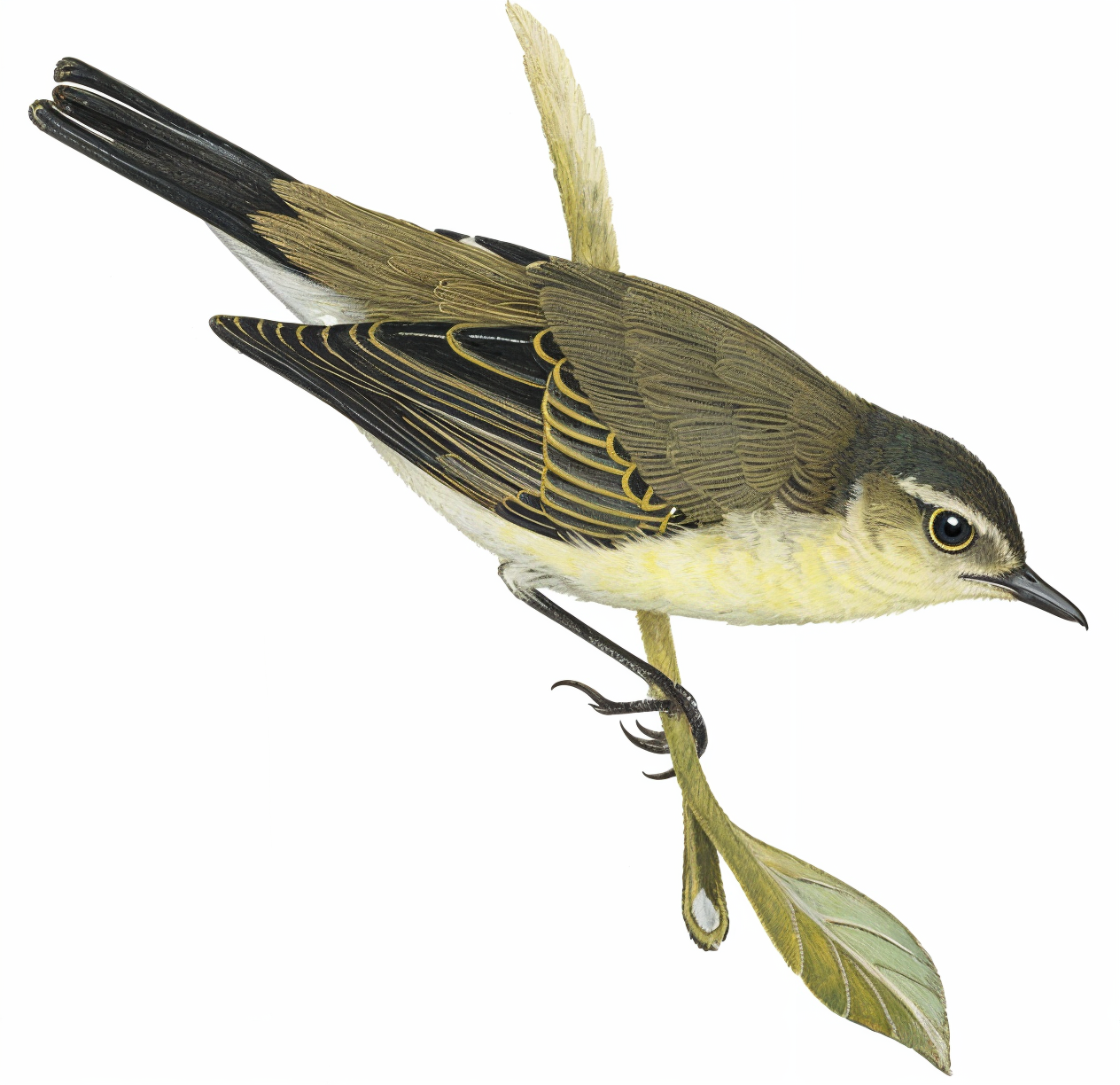


Willow Warbler

Phylloscopus trochilus

Diverse bushy habitats; summer visitor. Upperparts olive-green with darker tail and flight feathers; pale yellow underparts. Distinctive yellowish eyebrow and notch in tail.
LC
Not Endemic

Description

Common summer visitor. Variable; occurs in much paler morph and also with brown upper parts and white underparts. Identified by distinct eyebrows (supercilium) and notched tail-tip. Small, with a fine bill and weak legs. While feeding calls a querulous, quiet ‘foo-wee’. Sings, usually in the mornings, especially upon arrival and before departure to breeding grounds, a descending jumble of notes ‘tee-tee-tee-tee-tu-tu-tu-twee-twee-sweet-sweet-sweet-sweet’. Occurs singly in almost any bush habitat, including suburbia. Busily works its way through the canopy and mid stratum, inspecting leaves for insects. Occasionally darts out to hawk a flying insect or hover momentarily at the canopy edge.

Quick Facts

size

Size

12 cm - S

behaviour

Names

A: Hofsanger
Z: isicagogwane
Ss: Pidipidi-Sa-Mabelete
G: Fitis

Bird Family

Small, insectivorous birds of mostly sombre colouring. Many have attractive warbling songs and short calls that aid identification to the practised ear, but sound confusingly similar to the inexperienced. Several species visit southern Africa from Europe during summer. Sexes are alike.


Yellow
Savanna Bushveld

Distribution

Gallery

behaviour

Behaviour

Breeding

Breeding

Habitat

Habitat

Occurs singly in almost any bush habitat, including suburbia.

behaviour

Best Locations

0 Cart