
White-backed Vulture

Gyps africanus

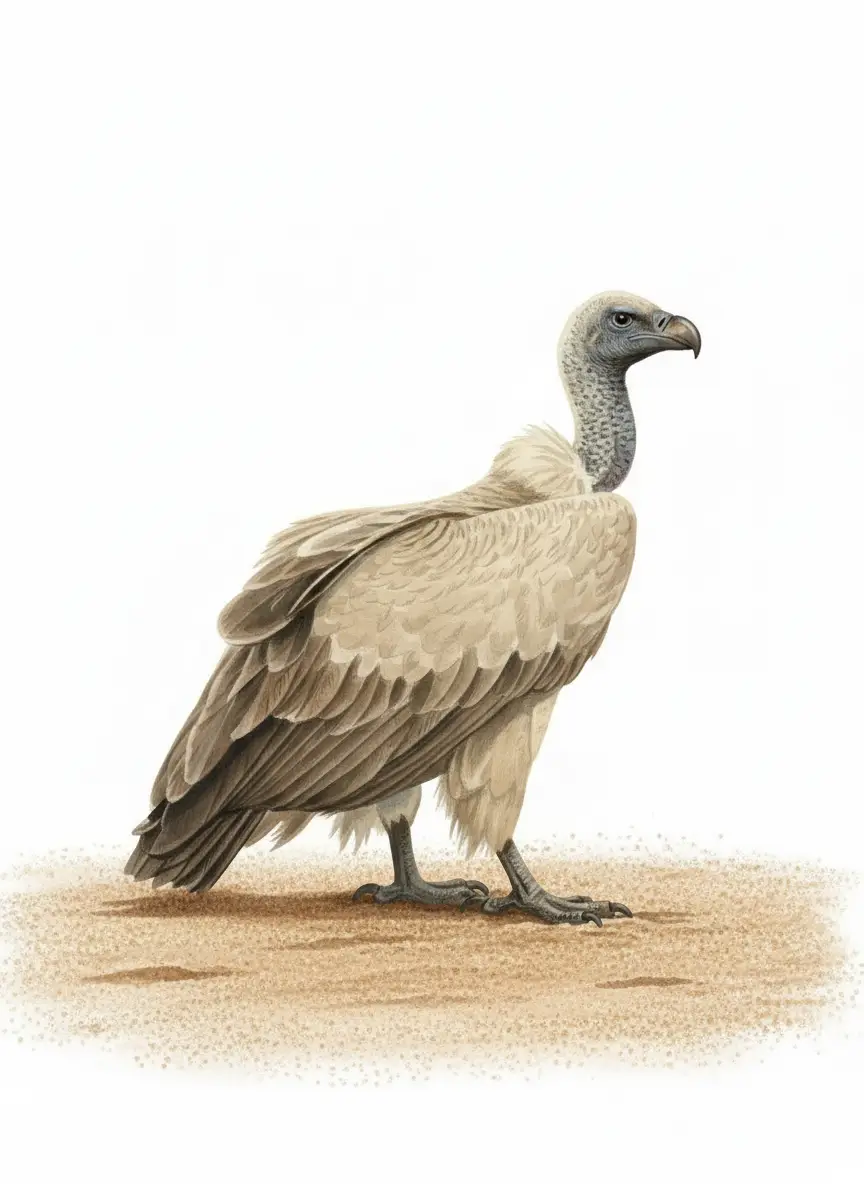
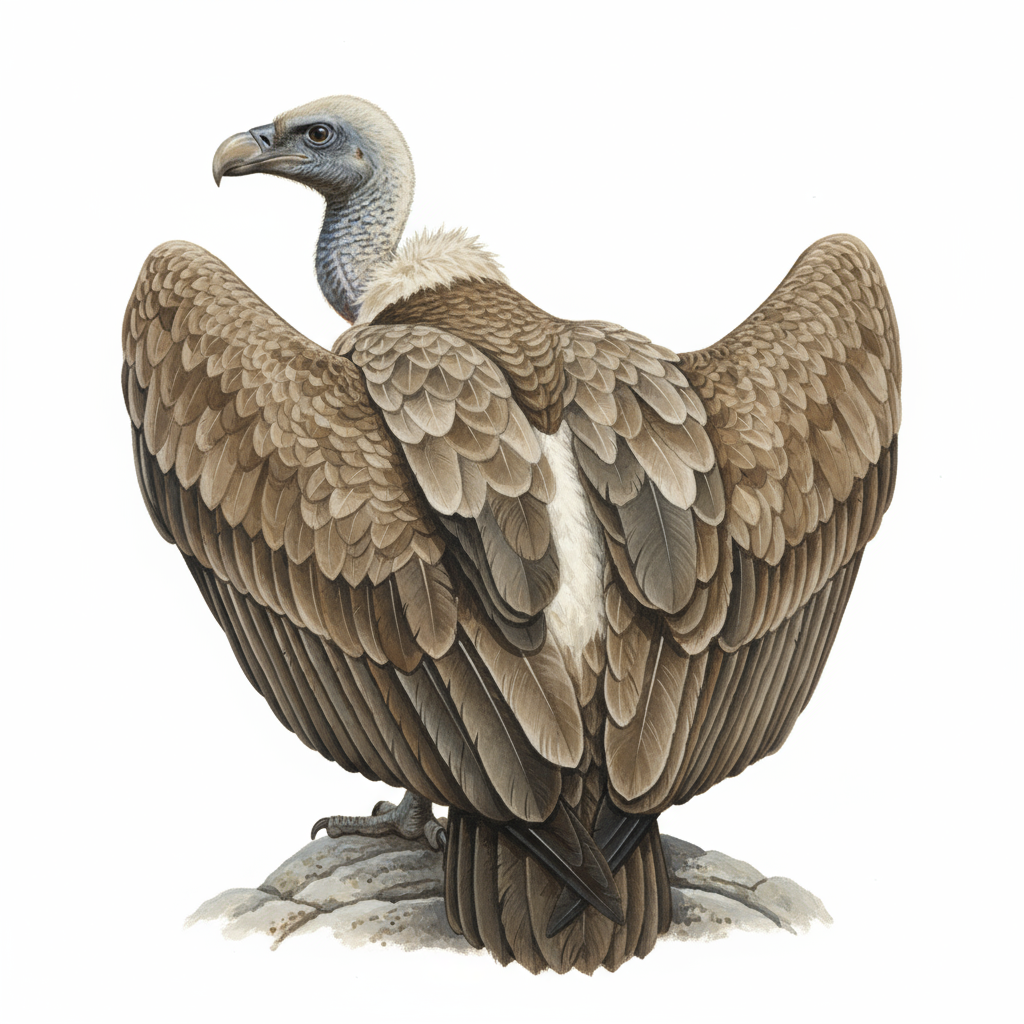
Game regions. Grey-brown above and below; back white; flight ­feathers, neck skin and soft parts black.
CR
Not Endemic
White backed Vulture from behind

Description

Common resident. Adult difficult to distinguish from [Cape Vulture] unless white back is seen; smaller size not always apparent. At close range, the dark (not honey-coloured) eye is seen. Old birds (5yr+) become very pale. In flight and seen from below, all flight feathers equally dark. Immature lacks white rump but differs from immature of [Cape Vulture] in darker, less rufous plumage, black (not pink) skin on neck and lack of white collar feathers. A bushveld vulture, it normally outnumbers all others in this habitat and gathers regularly in considerable numbers at carrion sites. In good weather soars all day at a great height. Roosts and nests in trees; cf. [Cape Vulture]. 4-7kg

Quick Facts

size

Size

90-98 cm - VL

behaviour

Names

A: Witrugaasvoël
Z: inqe lehlanze
Ss: Leaka
G: Weißrückengeier

Bird Family

Vultures are diurnal birds and, like other birds of prey are characterised by hooked bills suited to a mainly carnivorous diet. Vultures are typified by their large size, heavy, hooked bills, necks wholly or partially devoid of feathers (the exception being the aberrant Bearded Vulture) and, for birds of prey, relatively weak feet not suited to grasping prey. Vultures feed on carrion, soar with ease during much of the day and bathe in ponds and rivers. They are normally silent, but hiss and squeal when squabbling over food.


Light Brown
Savanna Bushveld

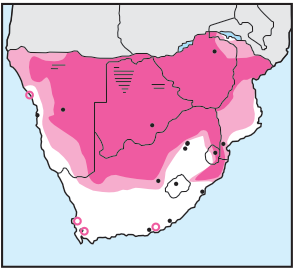
Distribution

Gallery

White backed Vulture from behind
behaviour

Behaviour

Breeding

Breeding

Habitat

Habitat

behaviour

Best Locations

0 Cart