

Scaly-throated Honeyguide

Indicator variegatus

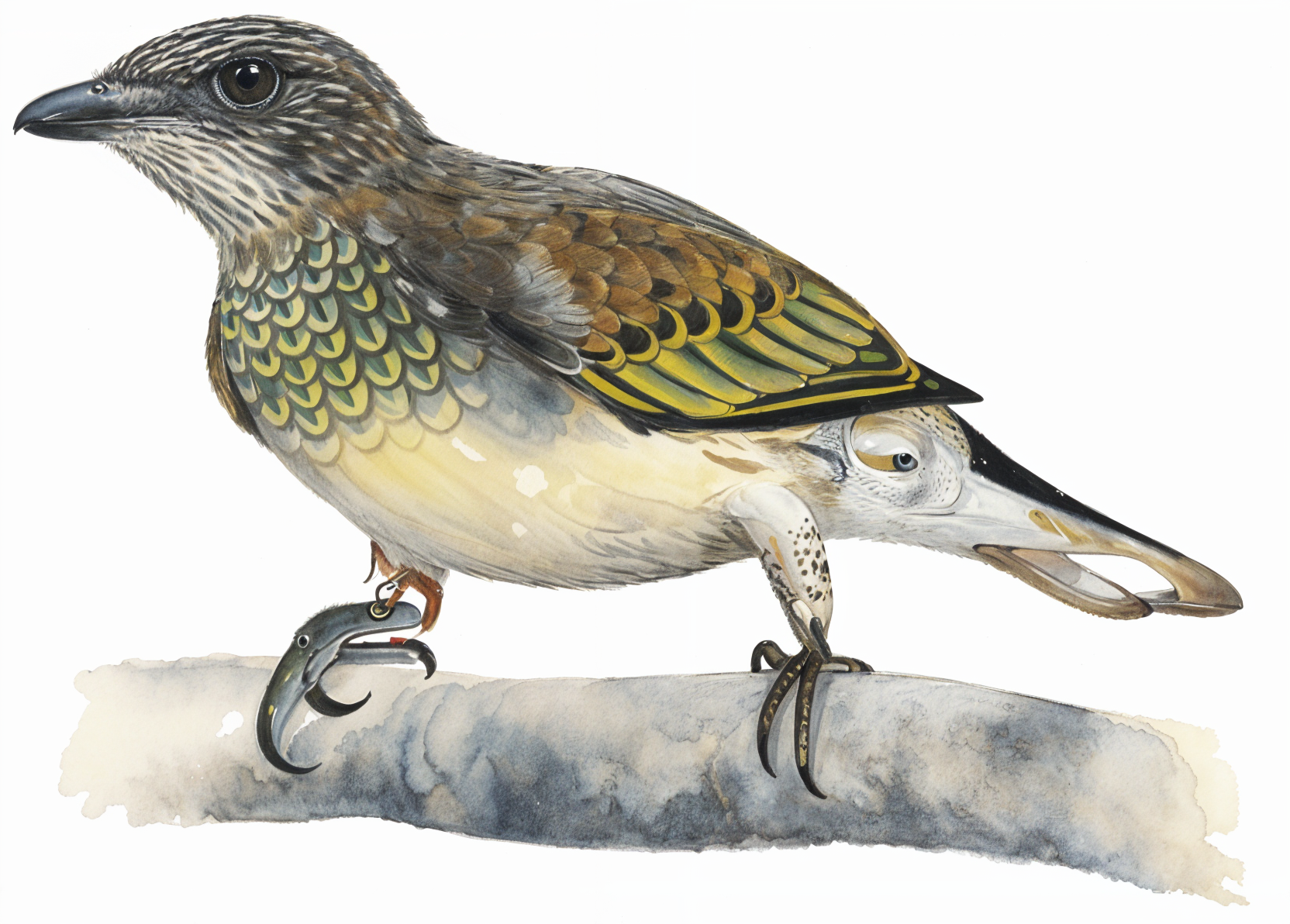
Forest, bush. Streaky head, scaly throat with yellowish tinge; grey back with yellow bars on wings, paler underparts.
Honeybirds, Honeyguides
LC
Not Endemic
Scaley throated Honeyguide Newman's birds

Description

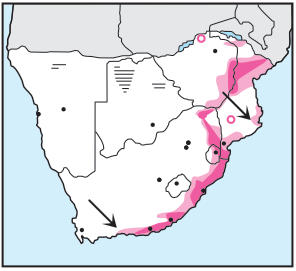
Fairly common resident. Told by streaky head and scaly breast, usually with yellow wash. Utters a high-pitched ‘foyt-foyt-foyt’ or, from a call-site, a purring ‘trrrrrrrr’ (like Crested Barbet but rising at the end). A bird of forest fringes, riverine forests and valley bush; usually solitary. Has been known to guide to bees’ nests, otherwise hawks insects like a flycatcher.

Quick Facts

size

Size

19 cm - S

behaviour

Names

A: Gevlekte Heuningwyser
Z: iNhlavana
Ss: Tsetlo Ya Dirothi
G: Gefleckter Honiganzeiger

Bird Family

Small, inconspicuous birds that show white outer tail-feathers in flight. Some species have distinctive calls and regular call-sites; others have weak, sibilant calls, which are seldom heard. They are mostly insectivorous, but a few species have developed the habit of leading people to wild bees' nests (as suggested by their genus name, *Indicator*) by continually chattering and fluttering conspicuously in the desired direction. When the bees' nest is broken open, the honeyguide feeds on the wax and grubs. Like cuckoos, they build no nests but parasitise various other small birds. The smaller species of the genus *Prodotiscus* are now called honeybirds.


Grey
Forest

Distribution

Gallery

behaviour

Behaviour

Breeding

Breeding

Habitat

Habitat

behaviour

Best Locations

0 Cart