
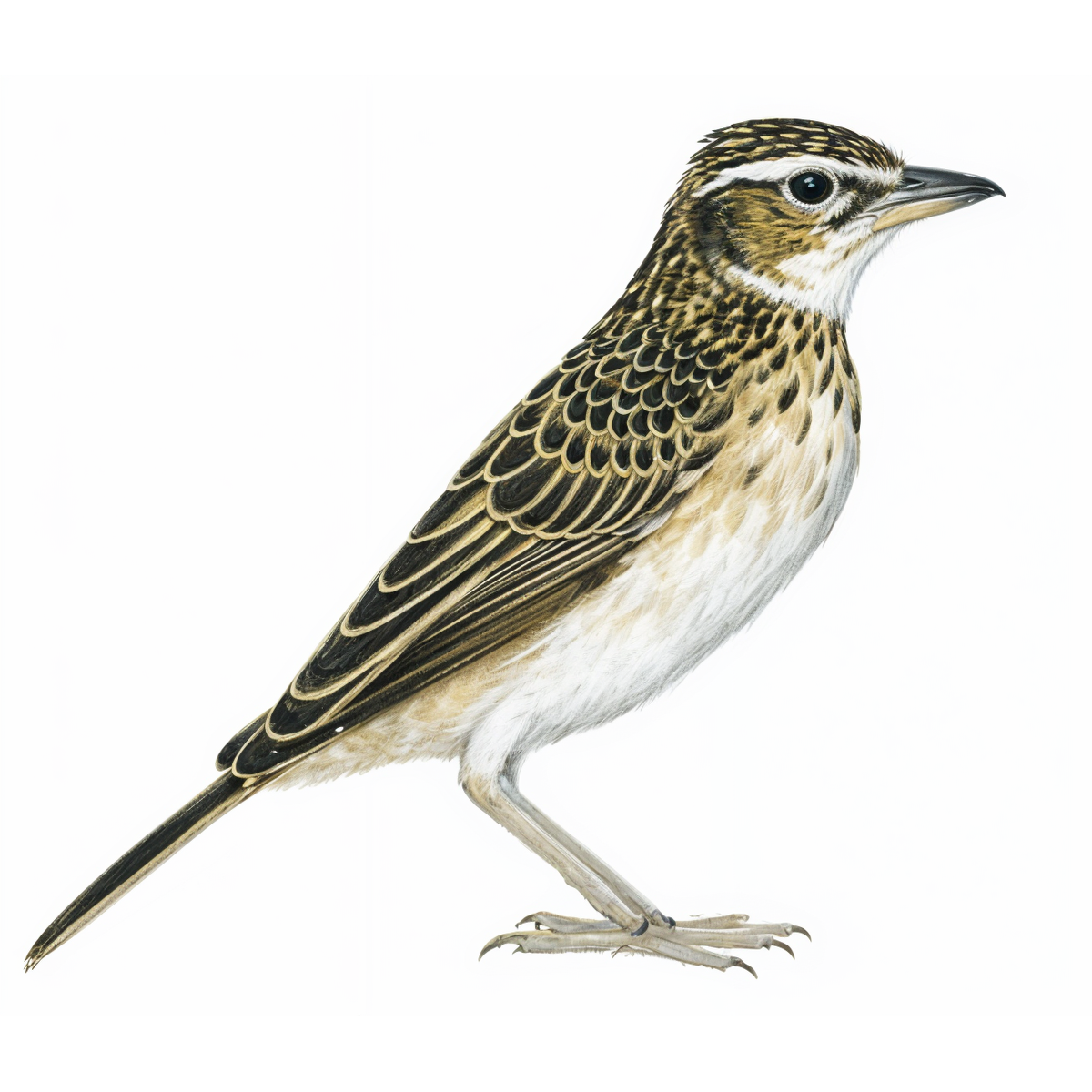


Sabota Lark

Calendulauda sabota

Bushveld. Well-streaked dark grey and buff upperparts, distinctive white eyebrow, and pale outer tail feathers.
Larks
LC
Near Endemic
Sabota LArk Race a AI

Description

Common, widespread, near-endemic resident. Variable plumage throughout its distribution, but always well streaked above and on the breast. Brownest and slender-billed in the east (a), becoming paler and thicker-billed in the west (b); bill thickest (c) in central Namibia. The white eyebrow is distinctive in all races; the wings have no rufous edges and the outer tail-feathers are white to pale buff. The song is high-pitched, melodious and variable, incorporating the song phrases of other birds. Uttered either from a tree perch or in hovering flight. Usually occurs singly in bushveld and woodland (especially mopane woodland) with sparse grass cover or stony ground.

Quick Facts

size

Size

15 cm - S

behaviour

Names

A: Sabotalewerik
Z: unqothi
Ss: Nketsisane-Otonala
G: Sabotalerche

Bird Family

Small, sombrely coloured terrestrial birds with confusingly similar, nondescript plumage patterns consisting of greyish speckled upperparts and pale underparts, usually with some streaking or spotting on the breast. Many species show regional plumage variations, palest or greyest in the north or west. Immature birds resemble adults but are generally more speckled. They are best identified by the male's call as well as behaviour and habitat. Most species tend to run rather than fly away when approached; males of many species have prolonged aerial display flights.


Light Brown
Savanna Bushveld

Distribution

Gallery

Sabota LArk Race a AI
behaviour

Behaviour

Breeding

Breeding

Habitat

Habitat

Usually occurs singly in bushveld and woodland (especially 'mopane' woodland) with sparse grass cover or stony ground.


behaviour

Best Locations

0 Cart