

Palm-nut Vulture

Gypohierax angolensis

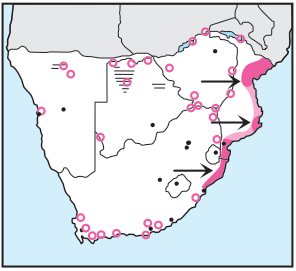
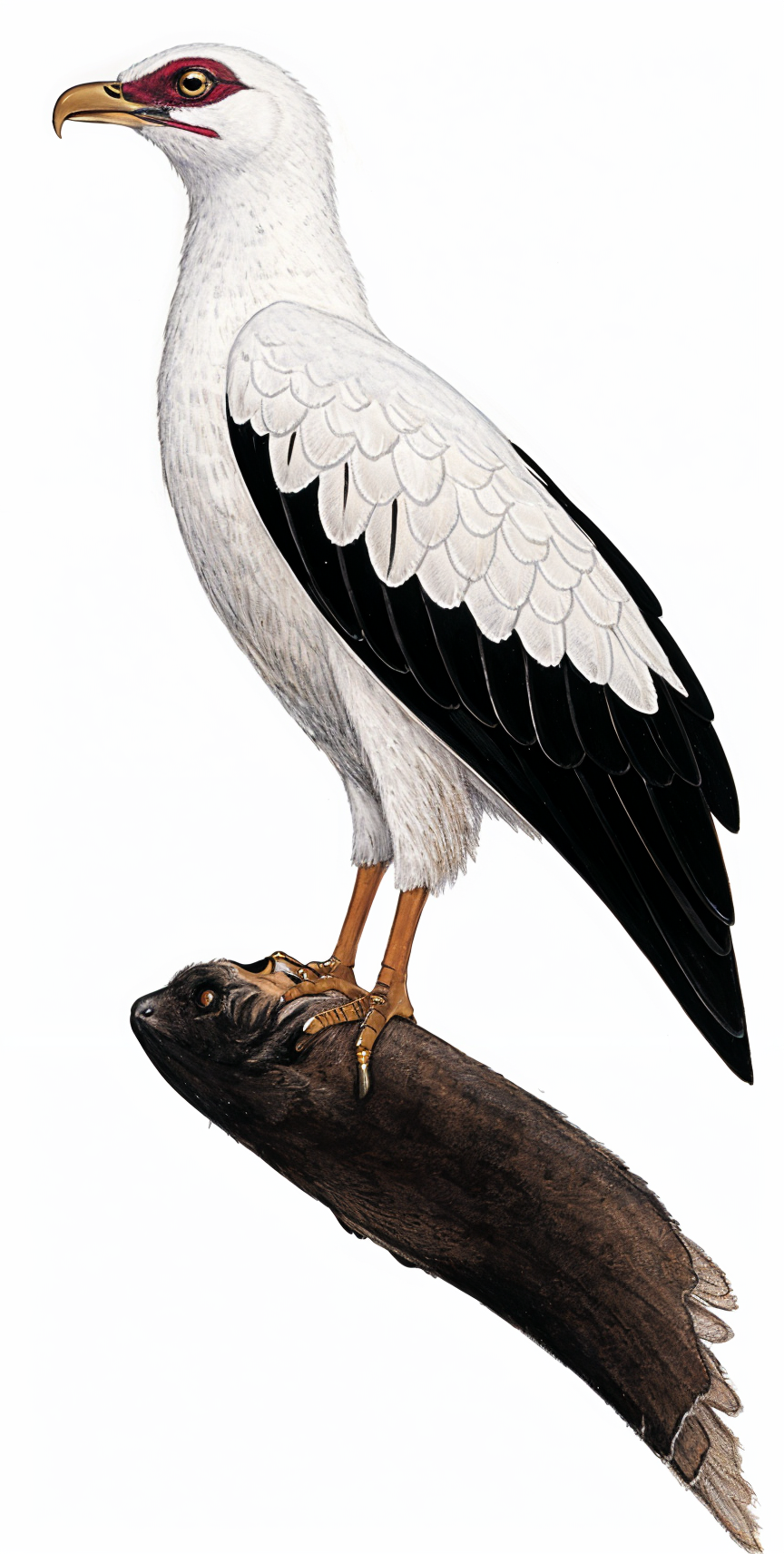
East coastal regions. White with black wings and tail; horn-coloured bill and legs.
Vultures
LC
Locally Rare
Palm-nut Vulture

Description

Rare visitor and localised resident to the KZN coast. Adult and immature differ from [Egyptian Vulture] in lack of loose feathers on the head, pink facial skin, heavier, more aquiline bill and, in flight, squarish (not diamond-shaped) tail. Adult distinguished by entirely white head, neck and body, black wing feathers and tail; cf. [African Fish-Eagle]. Occurs singly or in pairs most regularly in Mozambique and further south along the east coast; also in northern Botswana and northern Namibia. A vagrant to other scattered northerly points, particularly immature birds. At the coast, frequents stands of oil palms (on which it feeds and in which it breeds), forages on beaches and the shores of lagoons and pans, or catches its own fish. Spends long periods each day perched but, unlike other vultures, flies at any time regardless of thermals. 1-1,8 kg.

Quick Facts

size

Size

60 cm - L

behaviour

Names

A: Witaasvoël
Z: inqemvuma
Ss: Lenong La Palema
G: Palmengeier

Bird Family

Vultures are diurnal birds and, like other birds of prey are characterised by hooked bills suited to a mainly carnivorous diet. Vultures are typified by their large size, heavy, hooked bills, necks wholly or partially devoid of feathers (the exception being the aberrant Bearded Vulture) and, for birds of prey, relatively weak feet not suited to grasping prey. Vultures feed on carrion, soar with ease during much of the day and bathe in ponds and rivers. They are normally silent, but hiss and squeal when squabbling over food.


Black & White
Savanna Bushveld

Distribution

Gallery

behaviour

Behaviour

Breeding

Breeding

Habitat

Habitat

Occurs singly or in pairs most regularly in Mozambique and further south along the east coast; also in northern Botswana and northern Namibia. At the coast, frequents stands of oil palms (on which it feeds and in which it breeds), forages on beaches and the shores of lagoons and pans, or catches its own fish.


behaviour

Best Locations

0 Cart