

Orange-breasted Waxbill

Amandava subflava

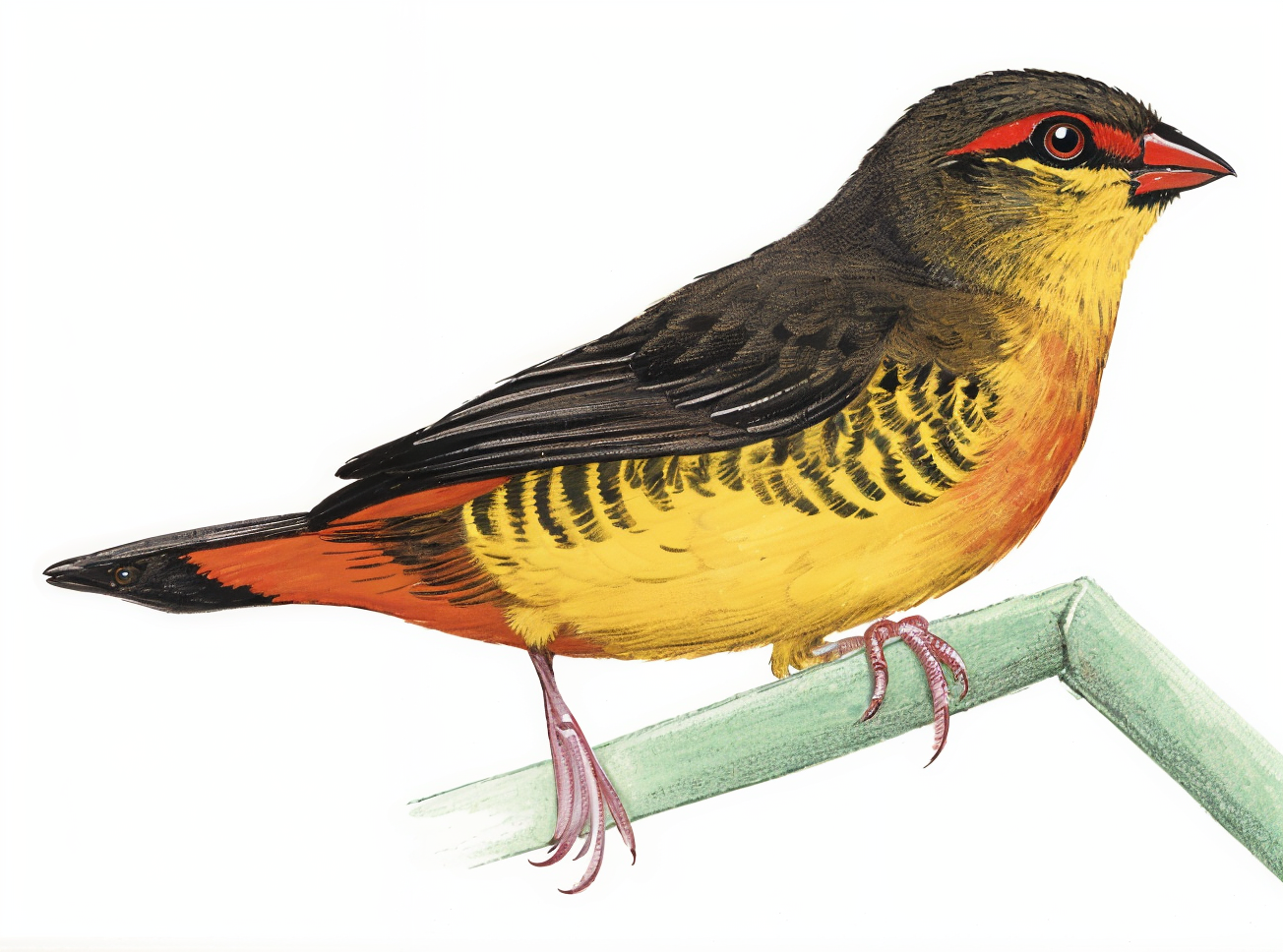
Reedbeds. Yellow below with barred flanks; male with red mask, breast-patch and vent; above grey-brown.
Finches, Mannikins, Twinspots, Waxbills
LC
Not Endemic
Orange breasted Waxbill Newman's Birds

Description

Common resident. The male’s orange breast is variable, sometimes absent. Both sexes recognised by barring on yellowish background, orange undertail, red rump and red bill and face mask. Immature like female but has black bill. Call is a quiet, metallic tinkling often made in flight. Pairs and small flocks occur in waterside grass and reeds, especially in vleis and other marshy regions plus cultivated fields. Very active, mobile little birds that make off in straggling sequence at low height, then suddenly drop down again. A secondary host to the parasitic [Pin-tailed Whydah].

Quick Facts

size

Size

8.5-9 cm - S

behaviour

Names

A: Rooiassie
Z: isabhonsi
Ss: Borane-Mpatshehla
G: Goldbrüstchen

Bird Family

Small, conical-billed, ground- or grass-feeding seed-eaters, although some will also eat insects. They usually have colourful plumage, although females are usually more drab than males. They generally occur in pairs, or are gregarious when not breeding.


Yellow
Wetlands

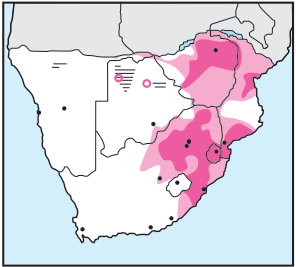
Distribution

Gallery

behaviour

Behaviour

Breeding

Breeding

Habitat

Habitat

Pairs and small 'flocks' occur in waterside grass and reeds, especially in vleis and other marshy regions plus cultivated fields.


behaviour

Best Locations

0 Cart