

Mountain Wheatear

Oenanthe monticola

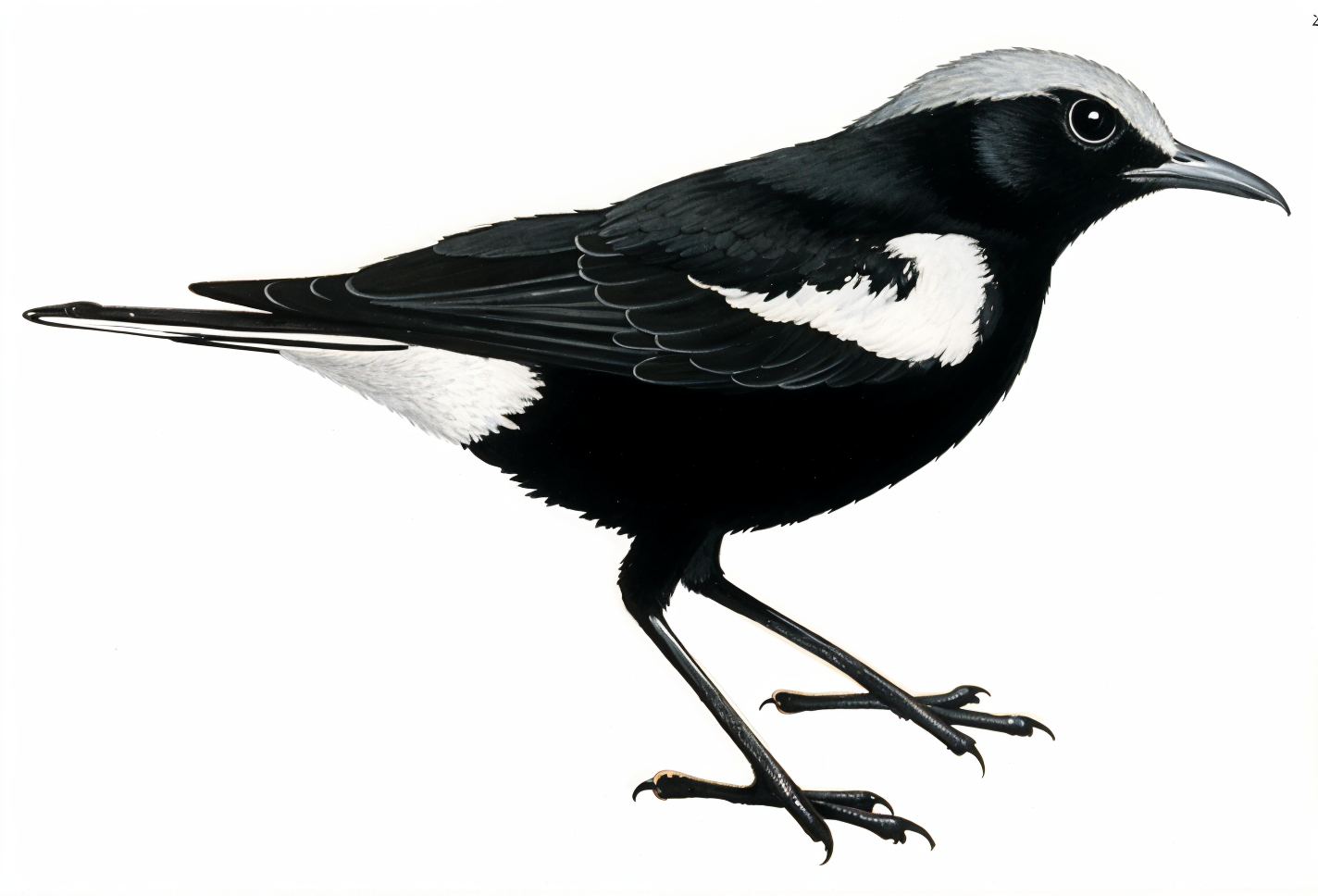
Rocky koppies, dry gullies. Whitish cap; white vent and shoulders; rest black
Chats, Robins, Thrushes
LC
Near Endemic
Mountain Wheatear Newman's birds

Description

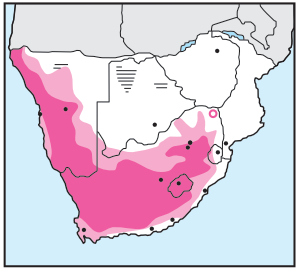
Fairly common near-endemic resident. Male variable, usually as (a) or (b); in Namibia may have white underparts from lower breast to vent as (c). Female rather nondescript; best identified by white rump and outer tail-feathers (conspicuous in flight). Immature resembles female. Similar to [Arnot’s Chat] but occurs in totally different habitat: boulder-strewn slopes, grassland with rocks or anthills, and farmyards. Especially common in new townhouse developments in peri-urban areas. One of earliest songsters (often starting to sing just after midnight); also sings late in the day, mainly Sep–Jan, the song a loud jumble of flute-like notes. May fly upwards a short distance, then drop down and fly low to another perch. Occurs singly or in small groups, perching conspicuously on rocks, anthills and, in suburbia, roofs.

Quick Facts

size

Size

17-20 cm S

behaviour

Names

A: Bergwagter
Z: ikhwelentabeni
Ss: Kgalodi
G: Bergschmätzer

Bird Family

Largely terrestrial, insectivorous or frugivorous birds that sing from trees, some robins rating as among our finest songsters. The sexes are alike unless otherwise stated, while immatures usually have the feathers of the upperparts pale-edged, the underparts spotted.


Black & White
Rocky Areas

Distribution

Gallery

behaviour

Behaviour

Breeding

Breeding

Habitat

Habitat

Similar to [Arnot's Chat] but occurs in totally different habitat: boulder-strewn slopes, 'grassland' with rocks or anthills, and farmyards.


behaviour

Best Locations

0 Cart