

Marabou Stork

Leptoptilos crumeniferus

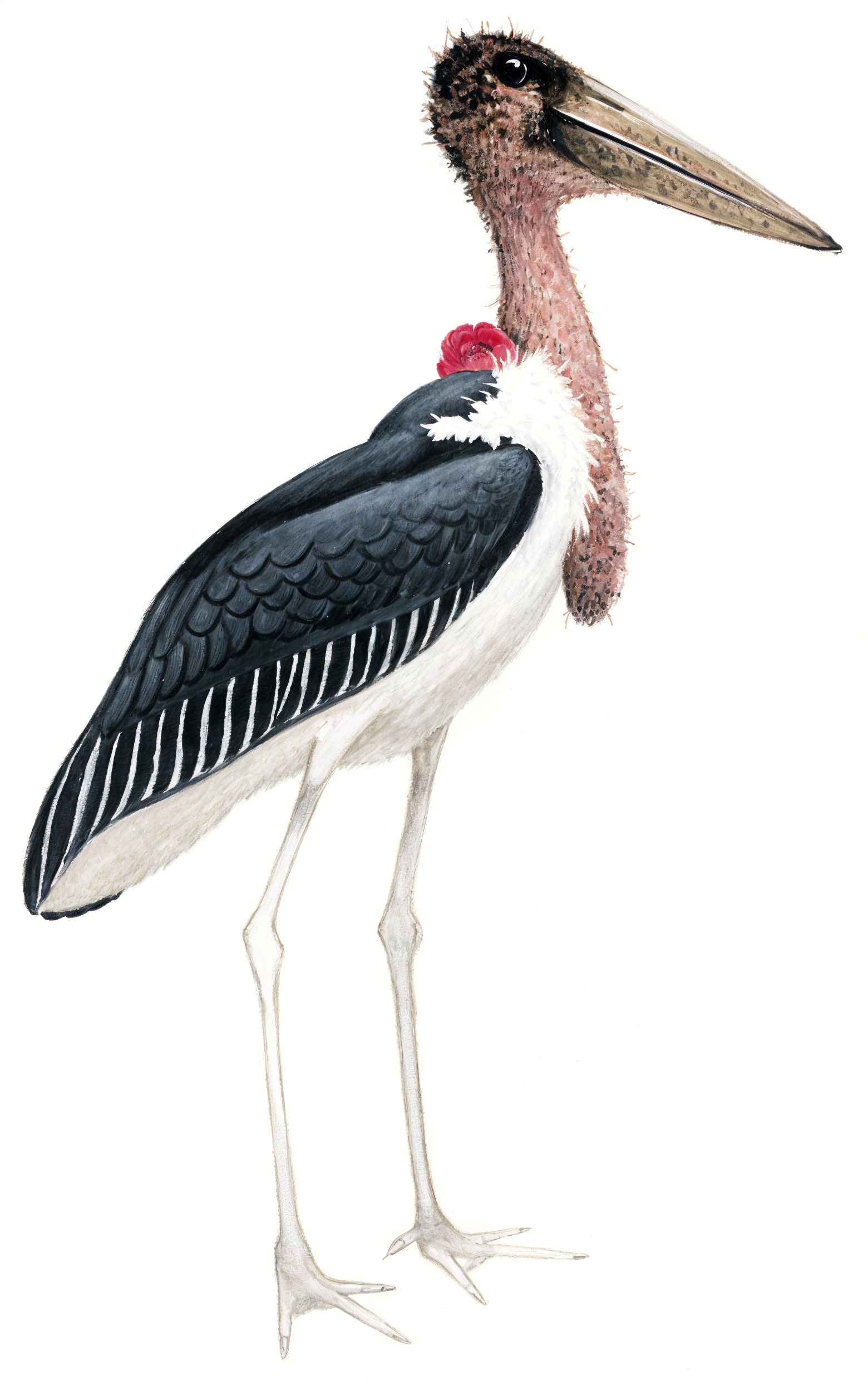
Bushveld and wetlands. Massive bill, bare head and neck
Storks
NT
Not Endemic
Marabou Stork AI

Description

Uncommon to locally common visitor and resident. A huge, bareheaded, bare-necked stork with a distensible fleshy pouch on the lower foreneck. Unlike other storks, flies with the neck tucked in. Immature has a woolly covering to the head. Generally occurs in groups, numbering from a few individuals to larger flocks, frequently associating with vultures at animal carcasses and refuse dumps. Mostly found in wildlife sanctuaries where many congregate at kills or around camps. Groups also gather on river sandbanks to bathe and rest. Sometimes soars to great heights. Otherwise spends much time standing inactive or perched.

Quick Facts

size

Size

152 cm - VL

behaviour

Names

A: Maraboe
Z: inqelendlovu
Ss: Ghube
G: Marabu

Bird Family

Large to very large long-legged and long-necked birds with straight, stout bills. Plumage mostly black and white; bills and legs whitish, reddish or dark. Storks walk with a stately gait and frequently rest on the ground with the lower parts of their legs stretched forward. In flight, the neck is stretched out (unlike herons, which fly with retracted necks) and the legs may trail down at a slight angle to the body. Most storks sometimes soar to great heights during the heat of the day; many are communal in habit and most frequent water or damp places to some extent. Diet ranges from large insects, reptiles, frogs and other waterlife to carrion in one species. They make guttural sounds and hisses at nests, and bill-clapping is used as a greeting between pairs. The nests are large stick structures placed in trees or on rocks, cliffs or the ground.


Black & White
Savanna Bushveld

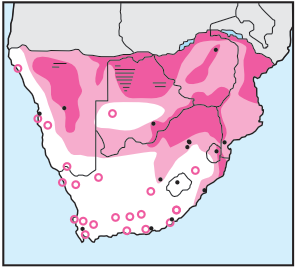
Distribution

Gallery

behaviour

Behaviour

Breeding

Breeding

Habitat

Habitat

behaviour

Best Locations

0 Cart