

Little Swift

Apus affinis

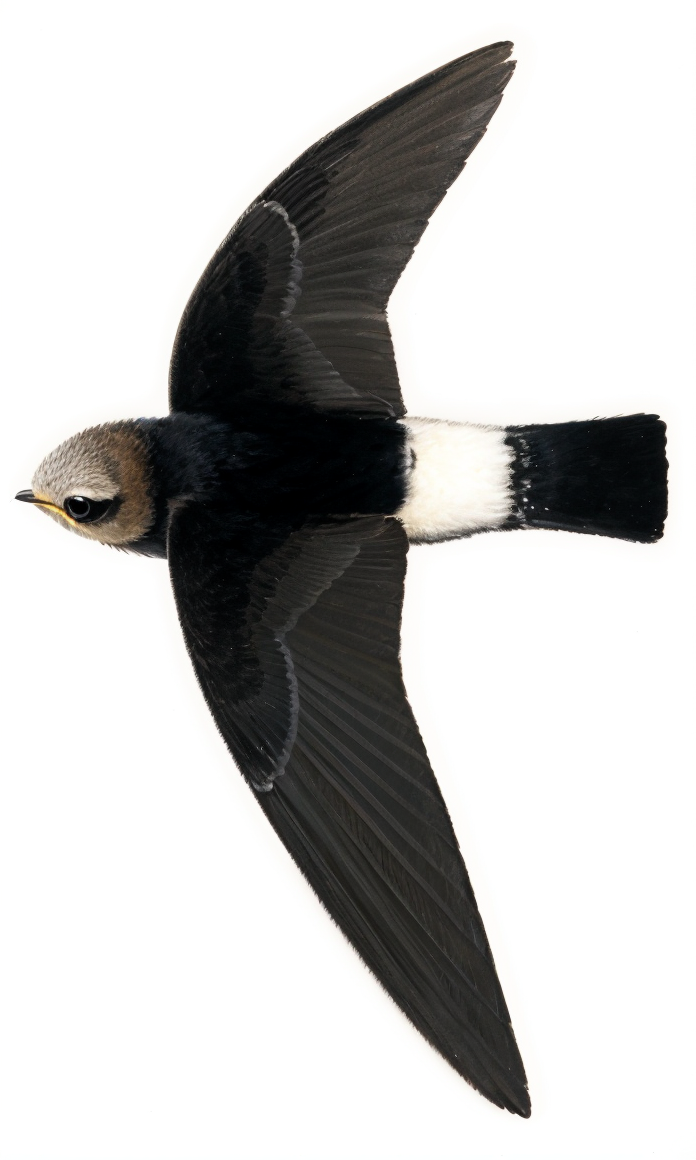
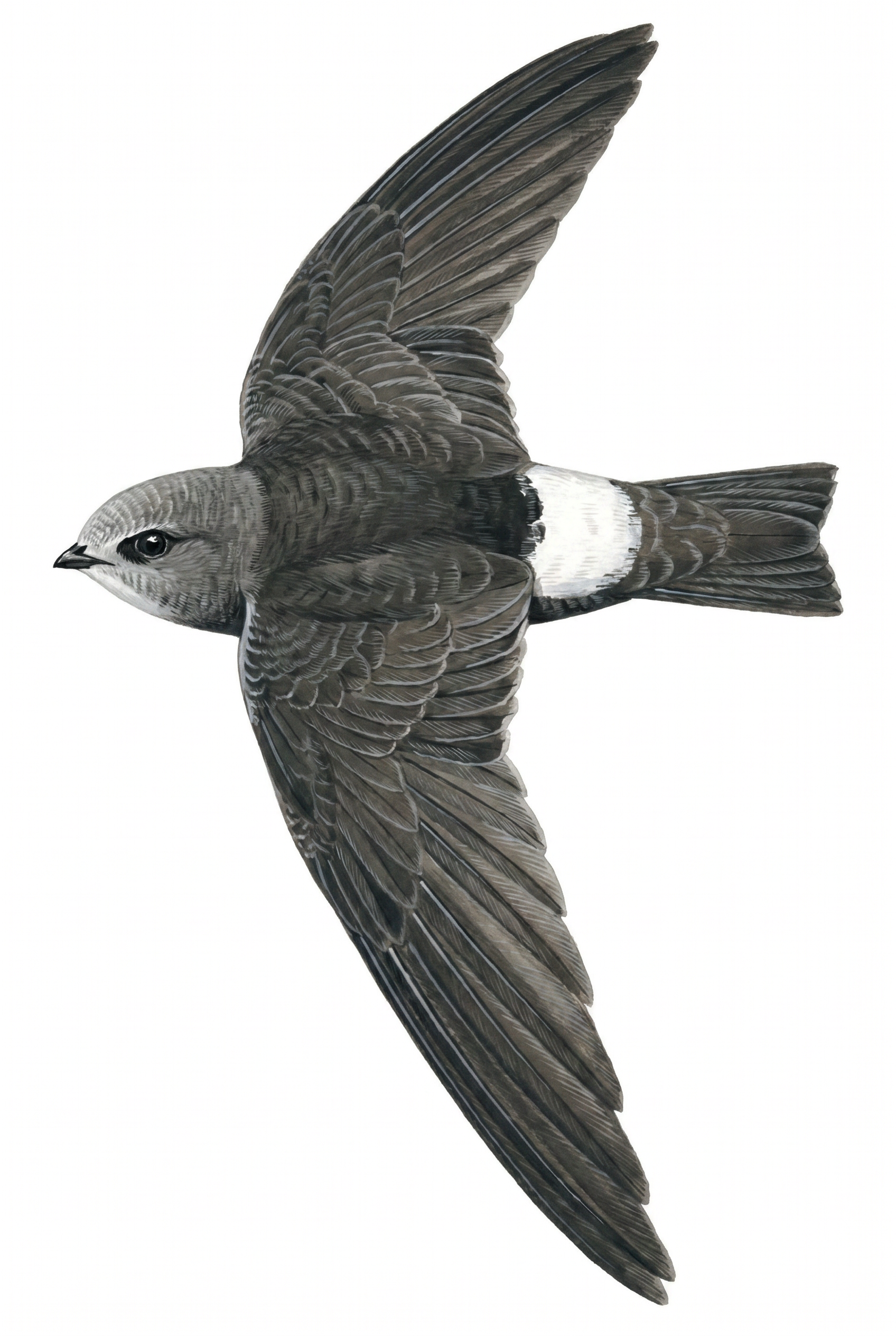
Common in towns. Nesting under bridges. Square tail. Large white patch on rump visible from side. Quite noisy “chittering” in flight.
Swifts
LC
Not Endemic
Little Swift AI

Description

Very common resident. Large white rump, which extends over the sides of the body, and square tail distinguish this species from all but the [Mottled Spinetail]. Differs from this species in clear white throat. Wings less pointed than those of other swifts. Often flies with wings angled steeply upwards, tail fanned. A noisy species, flocks making a high-pitched screaming in flight. During the day, feeds in flocks well away from its roost and regularly mixes with other swifts or swallows. Very common in towns, where it roosts and breeds under eaves and bridges, and on silos and tall buildings.

Quick Facts

size

Size

14 cm - S

behaviour

Names

A: Kleinwindswael
Z: umakhalelilanga
Ss: Lehaqasi Le Lenyenyane
G: Haussegler

Bird Family

All-dark birds, some with white markings. The sexes are alike, and immatures are similar to adults. They are entirely aerial in habit. They feed on airborne insects, never intentionally settling on the ground or a perch. They cling to vertical surfaces or scramble into crevices and their nests, which are glued into place with sticky saliva. Their calls are high-pitched screams. For comparison, see swallows and martins.


Black
Aerial

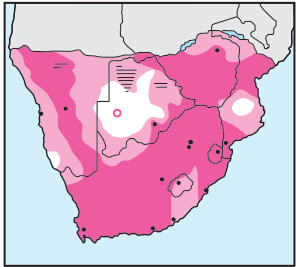
Distribution

Gallery

Little Swift AI
behaviour

Behaviour

Breeding

Breeding

Habitat

Habitat

behaviour

Best Locations

0 Cart