
Hooded Vulture

Necrosyrtes monachus

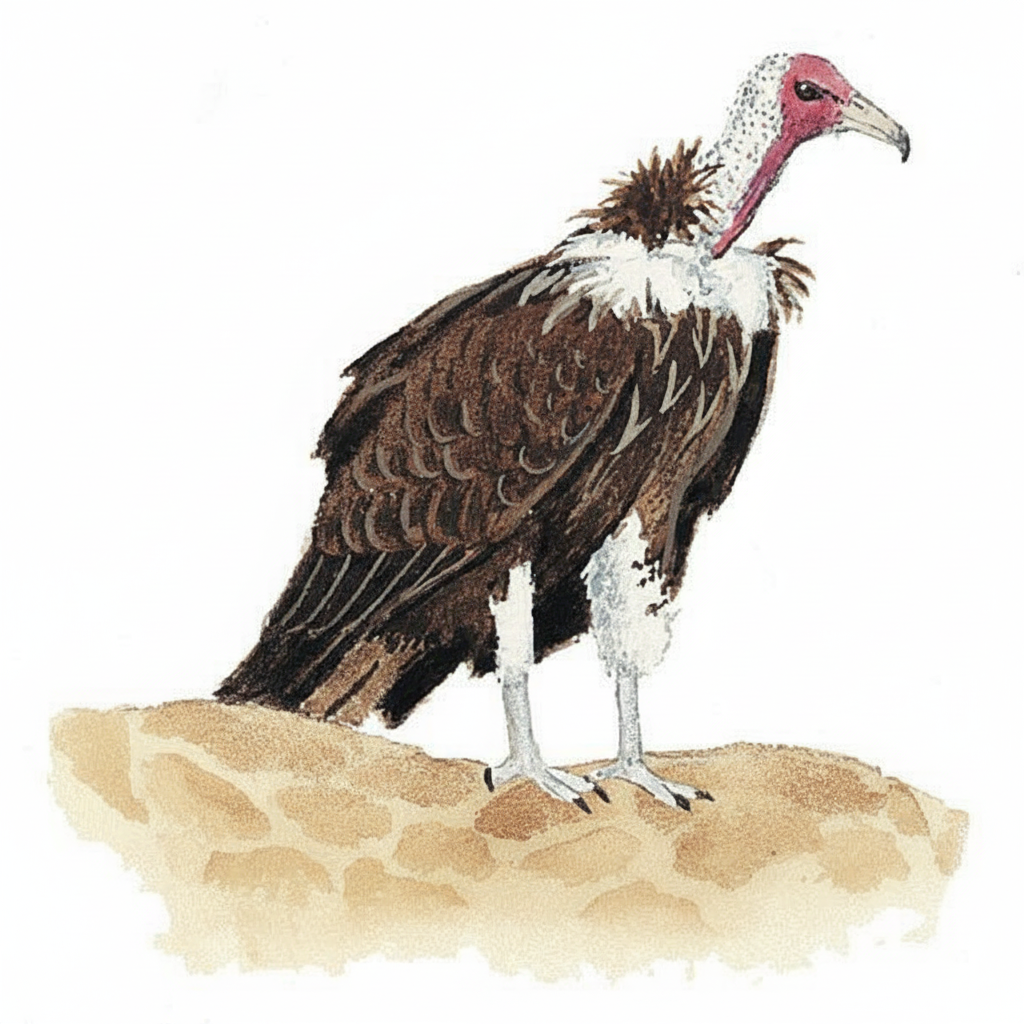
Game regions. Dark brown at all ages; adults have white legs, thighs, pectoral feathers and downy hood; neck and facial skin pink; bill slender.
Vultures
CR
Not Endemic
hooded vulture AD

Description

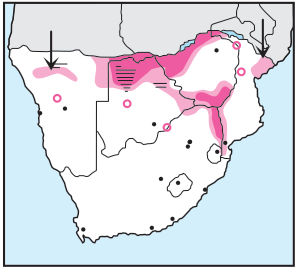
Fairly common localised resident. A small, slender-billed vulture [White-headed Vulture] and [Lappet-faced Vulture], which both have heavy bills). Rare [Egyptian Vulture] immature also has a slender bill but differs in having a well-feathered head. Adult’s white, downy feathers on the hindneck form a hood over the head. Also told by white ruff, ‘pants’ and legs. See underwing flight patterns. Immature is all-brown, including downy head and neck; only the face pink. Occurs in small numbers in protected game areas, the Okavango region and the Zambezi valley. Joins other vultures at carrion and offal sites but is submissive to all other vultures. Advantage of slender bill allows it to pick food from between bone of carcasses where other vultures can not. Most frequently seen where mammalian predators occur. 1,5-26,6 kg

Quick Facts

size

Size

70 cm - VL

behaviour

Names

A: Monnikaasvoël
Z: inqelincane
Ss: Kgonyaito
G: Kappengeier

Bird Family

Vultures are diurnal birds and, like other birds of prey are characterised by hooked bills suited to a mainly carnivorous diet. Vultures are typified by their large size, heavy, hooked bills, necks wholly or partially devoid of feathers (the exception being the aberrant Bearded Vulture) and, for birds of prey, relatively weak feet not suited to grasping prey. Vultures feed on carrion, soar with ease during much of the day and bathe in ponds and rivers. They are normally silent, but hiss and squeal when squabbling over food.


Dark Brown
Savanna Bushveld

Distribution

Gallery

behaviour

Behaviour

Breeding

Breeding

Habitat

Habitat

Occurs in small numbers in protected game areas, the Okavango region and the Zambezi valley.
behaviour

Best Locations

0 Cart