

Greater Honeyguide

Indicator indicator

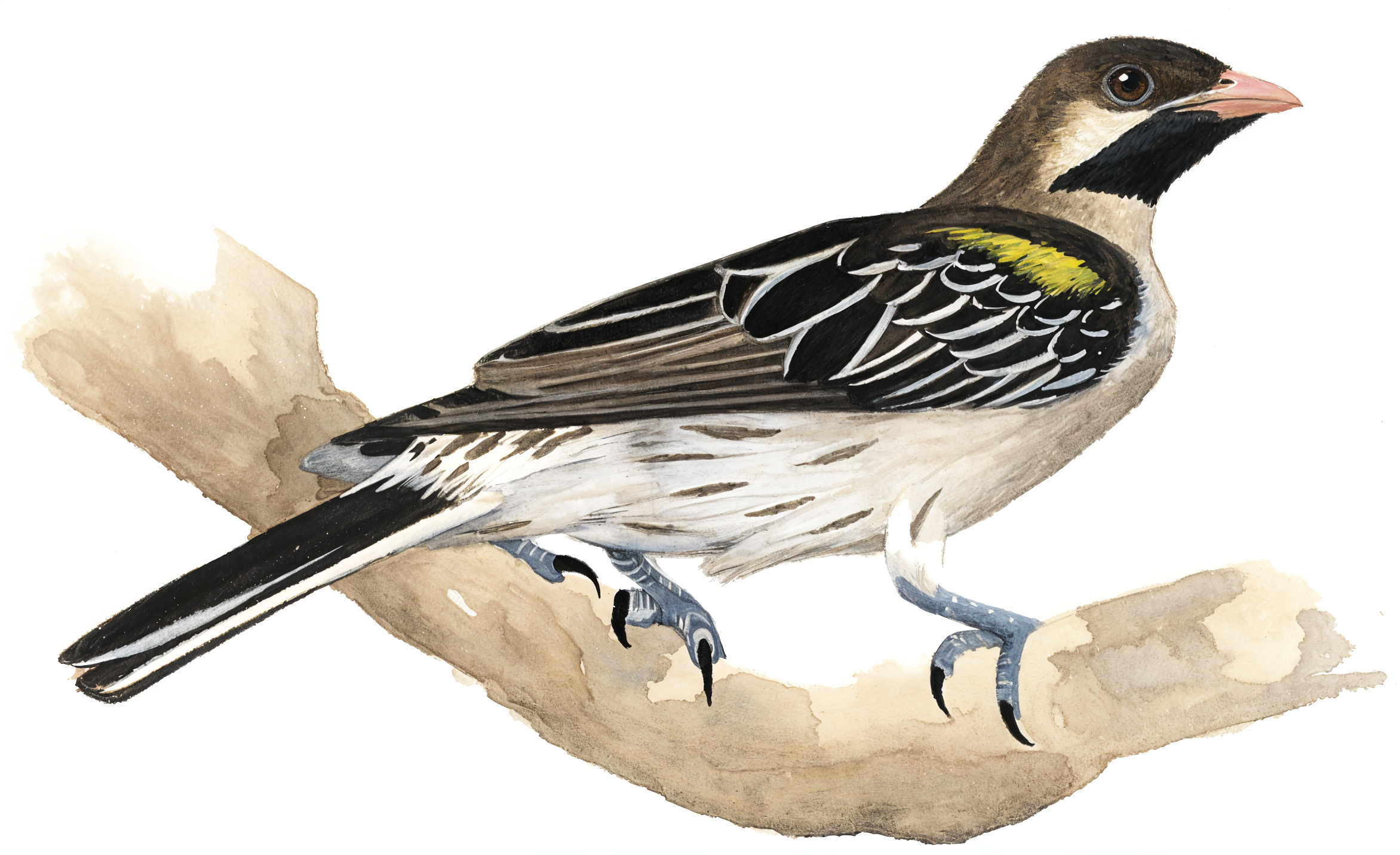
Woodland. Adult dark brown above with faint yellow shoulder; male has pink bill and dark throat-patch; female has black bill; below whitish in both sexes; white outer tail feathers; immature yellow below.
Honeybirds, Honeyguides
LC
Not Endemic
Greater Honeyguide

Description

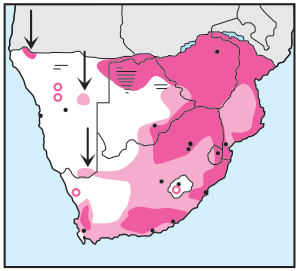
Common resident. In both sexes, yellow shoulder-patch is often vestigial or absent and the dark throat of the male incomplete; thus adults often appear as nondescript, bulbul-sized birds. However, white outer tail-feathers always present and ear coverts have a distinctive pale patch. Immature is distinctive with pink eye-surround and lemon-yellow underparts. Male calls frequently and for long periods in summer from a regularly used call-site ‘vic-terrr, vic-terrr…’, up to 11 times. Male performs a swooping display while making audible whirring sounds with its wings. Guides people to bees’ nests, the call then a high-pitched chattering while the bird flutters in an agitated manner. Occurs singly in woodland, bushveld, exotic plantations and suburbia.

Quick Facts

size

Size

19-20 cm - S

behaviour

Names

A: Grootheuningwyser
Z: iNgede
Ss: Tsetlo E Kgolo
G: Großer Honiganzeiger, Schwarzkehl- Honiganzeiger

Bird Family

Small, inconspicuous birds that show white outer tail-feathers in flight. Some species have distinctive calls and regular call-sites; others have weak, sibilant calls, which are seldom heard. They are mostly insectivorous, but a few species have developed the habit of leading people to wild bees' nests (as suggested by their genus name, *Indicator*) by continually chattering and fluttering conspicuously in the desired direction. When the bees' nest is broken open, the honeyguide feeds on the wax and grubs. Like cuckoos, they build no nests but parasitise various other small birds. The smaller species of the genus *Prodotiscus* are now called honeybirds.


Dark Brown
Savanna Bushveld

Distribution

Gallery

behaviour

Behaviour

Breeding

Breeding

Habitat

Habitat

Occurs singly in woodland, bushveld, exotic plantations and suburbia.

behaviour

Best Locations

0 Cart