
Cape Vulture

Gyps coprotheres

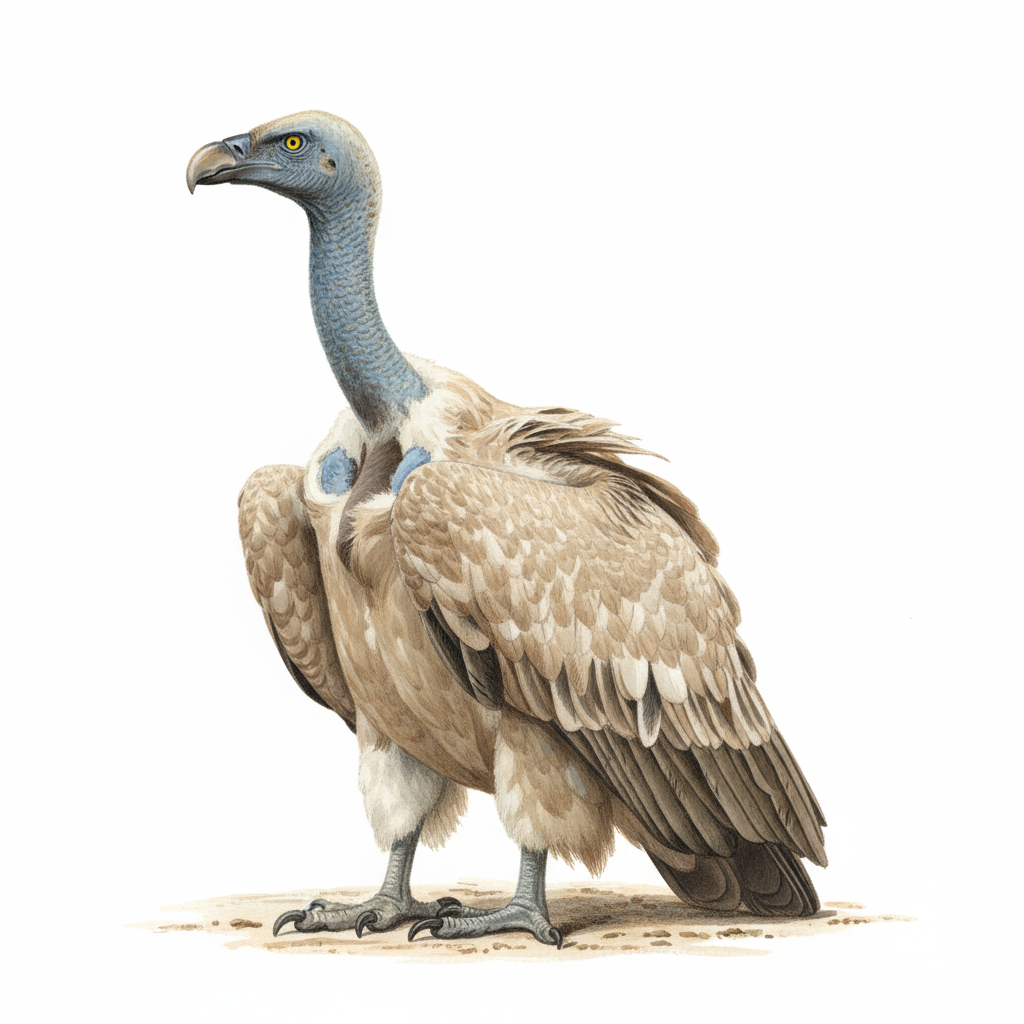
Wide ranging. Mature birds have wings and body feathers very pale brown; flight feathers and tail black; neck skin blue-grey; eyes honey-coloured.
Vultures
EN
Endemic
Cape Vulture

Description

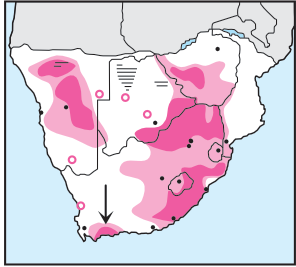
Common endemic resident but known to wander north. Similar to [White-backed Vulture], but larger. Adult (5yr+) is very pale in colour and may have an almost white back; at close range the eye is honey-coloured. In flight and seen from below, darker outer primaries contrast with paler inner flight feathers with row of spots along inner margin. Immature more rufous, warmer brown than immature of [White-backed Vulture], the neck pink with white feathers at the base. The common vulture of the central regions and ranging widely when not breeding. Often perches on pylons. Frequents and reliant on high cliffs when breeding (May–Oct); colonies then comprise dozens or hundreds of birds. Otherwise occurs singly or in groups anywhere, but rare in Zimbabwe and Mozambique. 7-10.5 kg

Quick Facts

size

Size

105-115 cm - VL

behaviour

Names

A: Kransaasvoël
Z: idlanga lentaba
Ss: Lening La Selomo
G: Kapgeier

Bird Family

Vultures are diurnal birds and, like other birds of prey are characterised by hooked bills suited to a mainly carnivorous diet. Vultures are typified by their large size, heavy, hooked bills, necks wholly or partially devoid of feathers (the exception being the aberrant Bearded Vulture) and, for birds of prey, relatively weak feet not suited to grasping prey. Vultures feed on carrion, soar with ease during much of the day and bathe in ponds and rivers. They are normally silent, but hiss and squeal when squabbling over food.


Light Brown
Savanna Bushveld

Distribution

Gallery

behaviour

Behaviour

Breeding

Breeding

Habitat

Habitat

Frequents and reliant on high cliffs when breeding (May–Oct); colonies then comprise dozens or hundreds of birds.

behaviour

Best Locations

0 Cart