

Cape Robin-Chat

Cossypha caffra

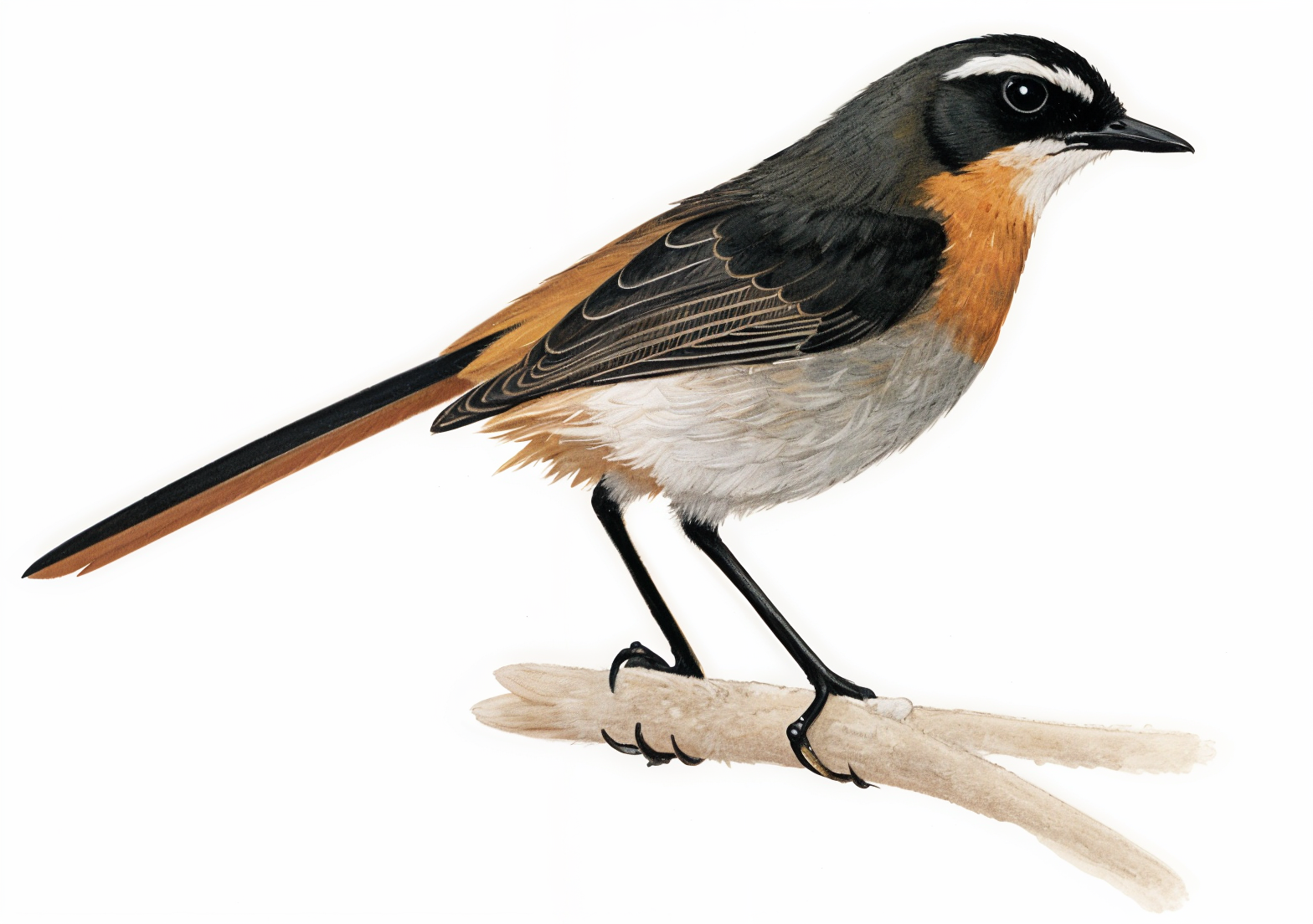
Forest fringes and ­gardens. Orange breast, rump, upper-tail coverts and tail fringes; white eyebrows; ­underbody grey-buff.
Chats, Robins, Thrushes
LC
Not Endemic
Cape Robin chat AI

Description

Common resident. Distinguished by white eyebrows, orange upper breast and greyish underparts. Like all robin-chats, shows orange tail-feathers and back in flight. Immature has a pale orange breast spotted with black. Has a pleasant and continuing song, each passage starting on the same note and with the phrase ‘Jan-Frederik’ often repeated (hence Afrikaans name). Jerks its tail up when alarmed, and utters a low, growling ‘wur-da-wur’. Occurs in the fringes of forest at all levels (montane forests in eastern Zimbabwe), in riverine bush, patches of bush and rock on heath-covered hillsides – especially at the base of cliffs – and, in many regions, commonly in gardens. A winter visitor to eastern coastal districts.

Quick Facts

size

Size

18 cm - S

behaviour

Names

A: Gewone Janfrederik
Z: uGaga
Ss: Sethwenamoru
G: Kaprötel

Bird Family

Largely terrestrial, insectivorous or frugivorous birds that sing from trees, some robins rating as among our finest songsters. The sexes are alike unless otherwise stated, while immatures usually have the feathers of the upperparts pale-edged, the underparts spotted.


Orange
Human Settlements

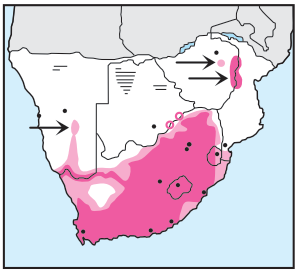
Distribution

Gallery

Cape Robin chat AI
behaviour

Behaviour

Breeding

Breeding

Habitat

Habitat

Occurs in the fringes of 'forest' at all levels (montane forests in eastern Zimbabwe), in riverine bush, patches of bush and rock on heath-covered hillsides – especially at the base of cliffs – and, in many regions, commonly in gardens.


behaviour

Best Locations

0 Cart