

Cape Gannet

Morus capensis

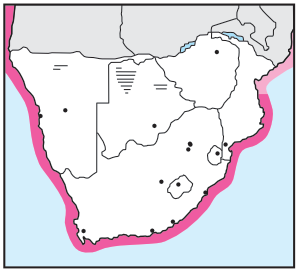
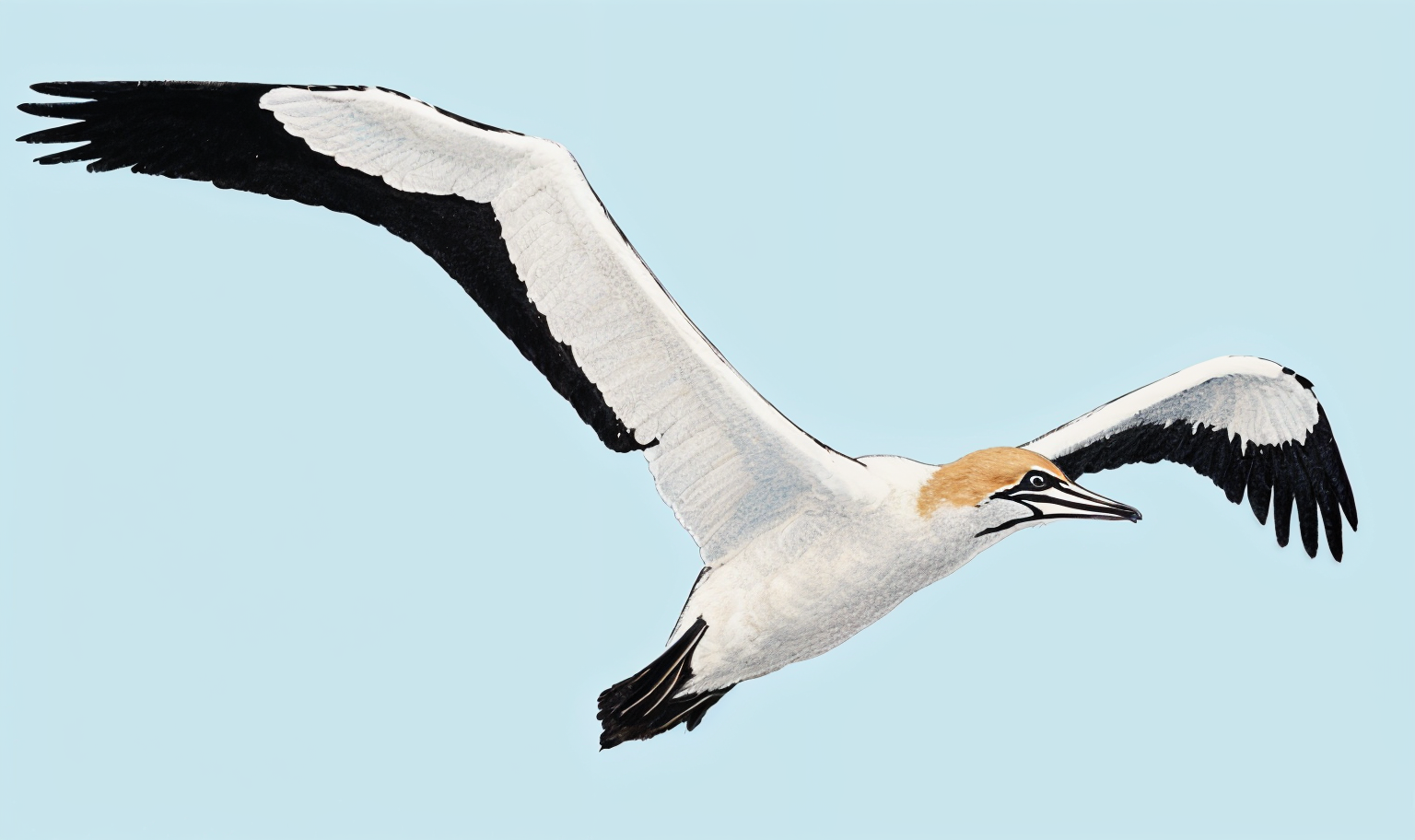
Coastal. This mostly white seabird has a distinctive yellow wash over its head and hind-neck.
Boobies, Gannets
EN
Near Endemic
Cape Gannet AI

Description

Common to locally abundant near-endemic resident. Unmistakable, large black and white seabird with yellow head and hindneck. At close range, distinctive black lines on the bill and face and a long black line down the centre of the throat are visible. Tail is normally black; rare individuals have white outer tail feathers. Immature all-dark, heavily spotted all over. Body, head and neck become white in that sequence; finally wings become white at about two years. Seen singly or in straggling flocks offshore; large aggregations over fish shoals. Individuals plunge-dive repeatedly. Roosts at night in colonies on offshore islands or at sea.

Quick Facts

size

Size

84-94 cm - VL

behaviour

Names

A: Witmalgas
Z: isicibamanzi
Ss: Seqwelo sa Kapa
G: Kaptölpel

Bird Family

Large, robust seabirds with *long, thick necks* and *straight, conical bills*. The smaller boobies have a tropical distribution, while gannets prefer a temperate climate. All *catch fish by plunge-diving* from about 20 m above the sea. Flight stiff-winged with powerful, fairly rapid wing beats, *head and neck stretched forward*.


White
Coastal

Distribution

Gallery

Cape Gannet AI
behaviour

Behaviour

Breeding

Breeding

Habitat

Habitat

Roosts at night in colonies on offshore islands or at sea.

behaviour

Best Locations

0 Cart