

Cape Bunting

Emberiza capensis

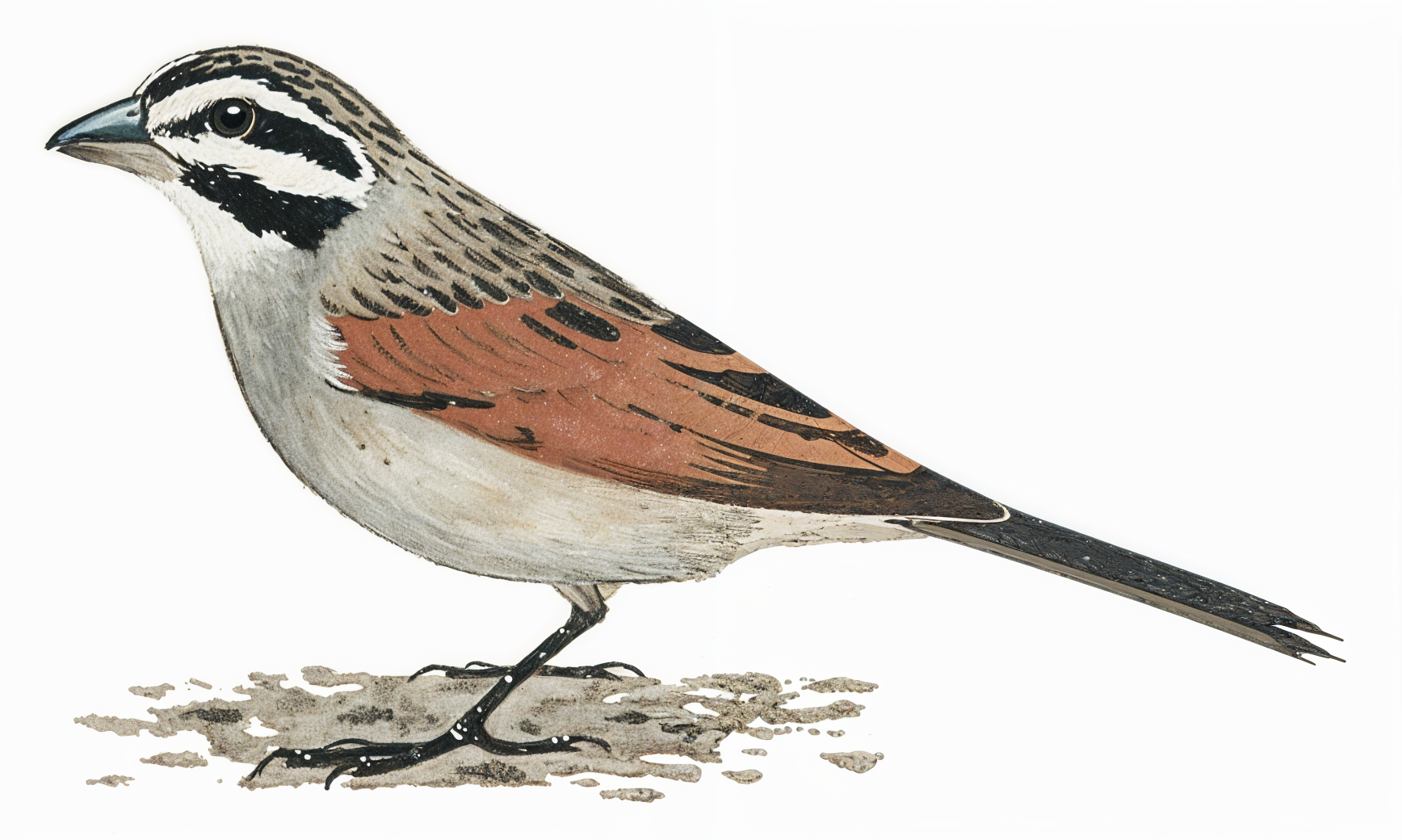
Various dry habitats. Black-and-white streaked head; rufous wings, crown, mantle; below washed grey-brown.
Buntings, Canaries, Siskins
LC
Near Endemic
Cape Bunting

Description

Common, near-endemic resident. Regionally variable, but differs from [Cinnamon-breasted Bunting] in pale throat and paler, duller underparts. Sexes are alike. Immature is duller. Call is a distinctive ‘cheriowee’. The song, uttered from a rock or bush top, is ‘cheep, cheep, tip, cheeucheeu, tip-cheeu-tip-cheeu’. Occurs singly, in pairs or in flocks in a variety of semi-arid, coastal montane regions, coastal sand dunes with sparse scrub, rocky hillsides in the Karoo and Zimbabwe, broad-leaved woodland in Zimbabwe plus suburbia in many regions.

Quick Facts

size

Size

16 cm - S

behaviour

Names

A: Rooivlerkstreepkoppie
Z: usokhandamidwonsundu
Ss: Mmaborokwane-Nyaopedi
G: Kapammer

Bird Family

Sparrow-sized or smaller songbirds. Canaries and siskins have strong conical bills, usually notched tails and undulating flight. Buntings are strongly terrestrial and have weaker, narrower bills. Many species are nomadic.


Black & White
Nama Karoo

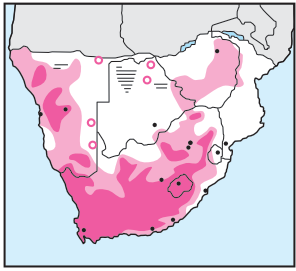
Distribution

Gallery

Cape Bunting
behaviour

Behaviour

Breeding

Breeding

Habitat

Habitat

Occurs singly, in pairs or in 'flocks' in a variety of semi-arid, coastal montane regions, coastal sand dunes with sparse scrub, rocky hillsides in the 'Karoo' and Zimbabwe, 'broad-leaved woodland' in Zimbabwe plus suburbia in many regions.


behaviour

Best Locations

0 Cart