

Bokmakierie

Telophorus zeylonus

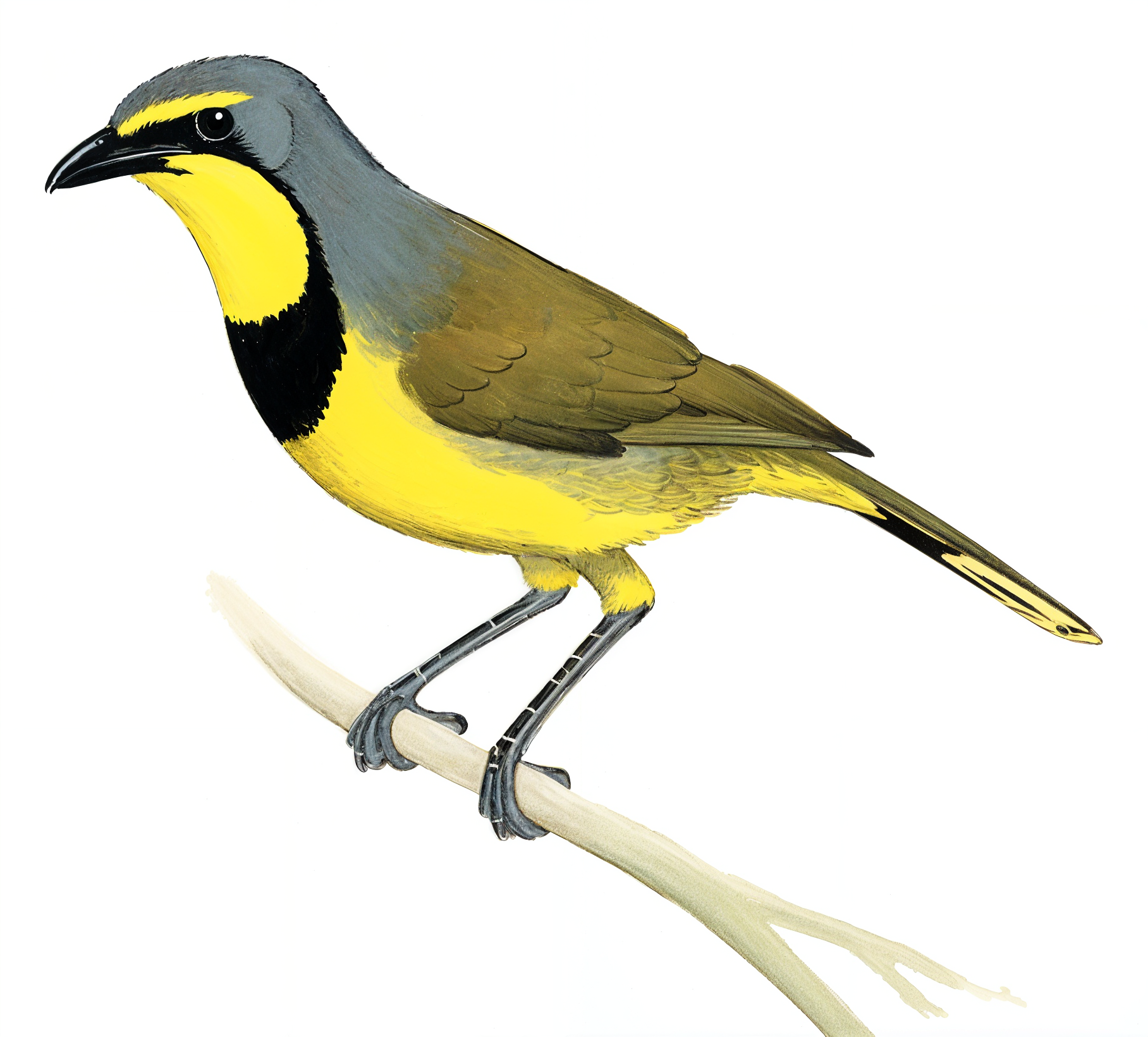
Suburbia. Grey crown and mantle; rest green above, yellow below; bold black breast-band.
Bush-Shrikes
LC
Near Endemic
Bokmakierie AI

Description

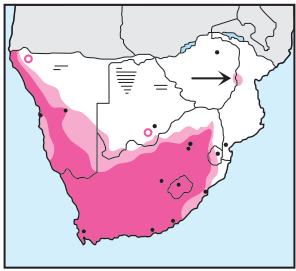
Common, near-endemic resident. Distinguished from Yellow-throated Longclaw by grey-and-green upper parts and stronger bill. In flight shows much yellow on tail-tip. Immature lacks the black gorget. The calls are duets and are variable: ‘bok-makiri’, ‘kok-o-vik’, ‘bok-bokchit’, ‘wit, wit-wit’ or ‘pirrapee-pirrapoo’, each sequence repeated at about three-second intervals. Pairs occur in a wide range of habitats from montane foothills to the coast, in bush patches in grassland or on rocky hillsides and in semi-arid regions in the west; common in suburbia in most regions. Feeds on the ground.

Quick Facts

size

Size

23 cm - M

behaviour

Names

A: Bokmakierie
Z: iNkovu
Ss: Ptjemptjete
G: Bokmakiri

Bird Family

Colourful shrikes with olive-green and grey upperparts and yellow or orange-yellow underparts. Most inhabit dense bush, making them difficult to see, continuously hopping from branch to branch. Their diet is mainly insects, although some will eat fruit or small animals. All have distinctive calls, which aids identification.


Grey
Savanna Bushveld

Distribution

Gallery

behaviour

Behaviour

Breeding

Breeding

Habitat

Habitat

Pairs occur in a wide range of habitats from montane foothills to the coast, in bush patches in 'grassland' or on rocky hillsides and in semi-arid regions in the west; common in suburbia in most regions.


behaviour

Best Locations

0 Cart