
Black Cuckooshrike

campephaga flava

Woodland. Dull olive-brown above with yellow wing-feathers and tail edges; below banded black on white.
Cuckooshrikes
LC
Not Endemic
Black Cuckooshrike

Description

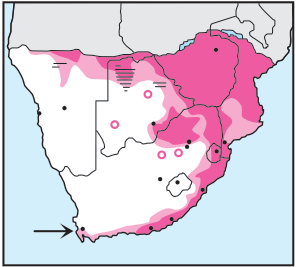
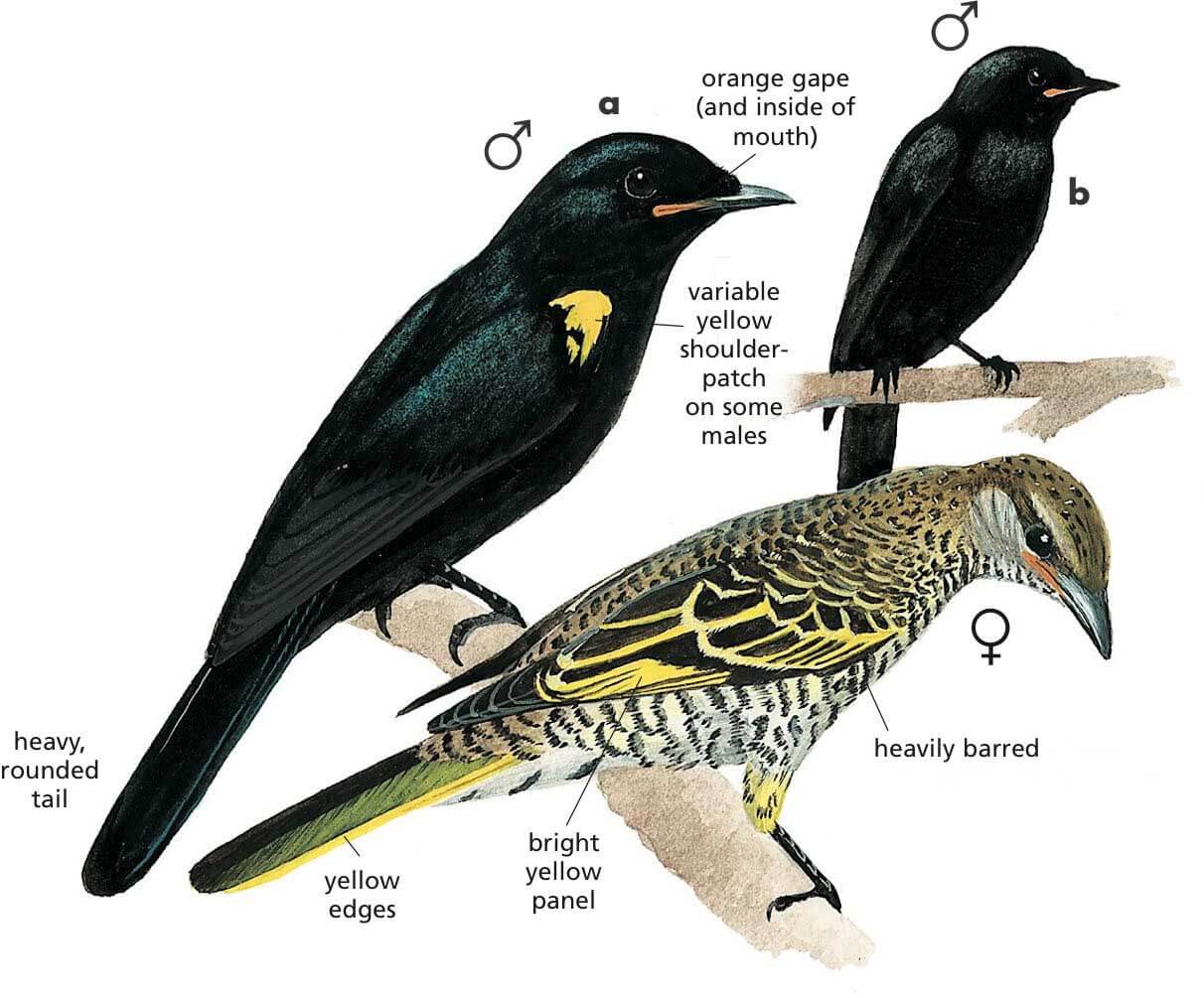
Uncommon summer resident. Only the male is black, differing from similar black birds in having a rounded tail and prominent orange-yellow gape. See [Fork-tailed Drongo], [Southern Black Flycatcher] and [Common Square-tailed Drongo] for comparison of male with other similar black birds. About half of South African male birds show the yellow shoulder (a); in Zimbabwe and Botswana most males lack this (b). Female is strikingly different, cuckoo-like as illustrated. Immature like female, young males with increasing areas of black. The call, not often heard, is a soft, high-pitched trill ‘trrrrrrrr…’. Pairs occur sparsely in a variety of wooded habitats, thornveld, mixed bushveld, broad-leaved woodland and coastal bush. Unobtrusive unless calling, frequenting the mid stratum. Often joins bird parties.

Quick Facts

size

Size

22 cm - M

behaviour

Names

A: Swartkatakoeroe
Z: iNhlangu
Ss: Rankwetsidi
G: Kuckuckswürger

Bird Family

A large family of slender, medium-sized birds with sturdy bills, neither related to Cuckoos nor Shrikes, despite some species having a superficial resemblance to both. They are found in pairs or small, loose groups in the larger trees of forest fringes, riparian forest and woodland. They feed on insects (caterpillars in particular) and, occasionally, fruit.


Yellow
Savanna Bushveld

Distribution

Gallery

Black Cuckooshrike
behaviour

Behaviour

Breeding

Breeding

Habitat

Habitat

Pairs occur sparsely in a variety of wooded habitats, thornveld, mixed bushveld, 'broad-leaved woodland' and coastal bush.

behaviour

Best Locations

0 Cart