
Bat Hawk

Macheiramphus alcinus

Well-wooded rivers. Whitish eyes, legs and chin. Flies at dusk.
Hawks
EN
Not Endemic
Bat HAwk AI

Description

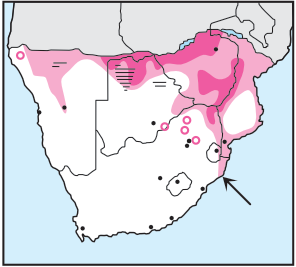
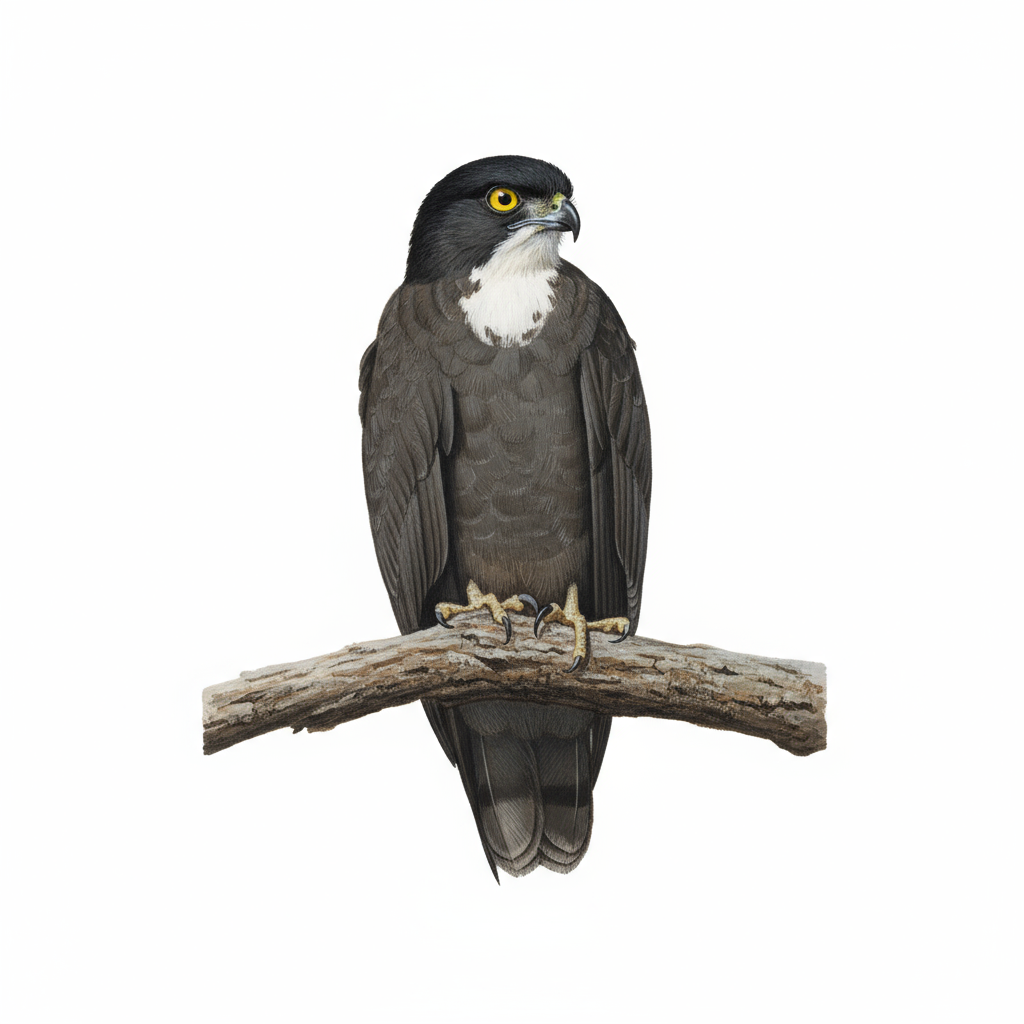
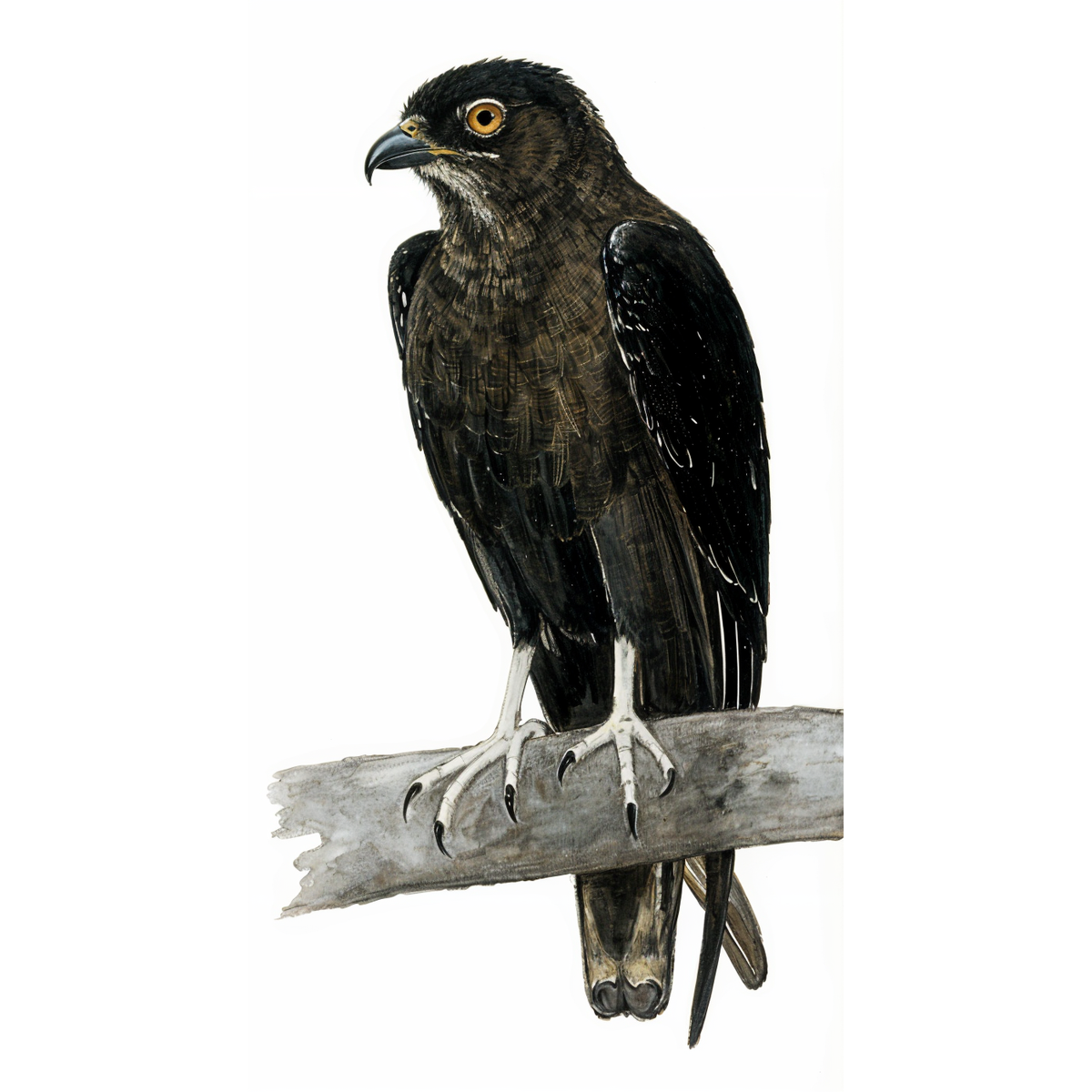
Uncommon and sparsely distributed ,crepuscular, resident. A dark-brown hawk with pale yellow eyes and white legs and feet. At close range, dark centre line on pale throat, two white spots on the back of the head and white eyelids diagnostic. In flight appears sharp-winged, falcon like but with bulkier body than falcon, the flight rapid. Immature has white underparts with dark streaking on the breast, a dark patch on the lower breast and a variable amount of white spotting on the underwings. When displaying in the evening, adult may call a high-pitched ‘kikkik-kik-kik-keee’. By day roosts well concealed in a leafy tree, emerging to hunt bats and small birds only at dusk and into the night or, in dull weather, also in the early morning, consuming food on the wing. Frequents riparian forests, evergreen forest and other heavily wooded regions, preferring light barked trees such as baobabs, mahogany including the edges of exotic plantations. Nests are deep platform of sticks and twigs on outer branches. 600-650 g.

Quick Facts

size

Size

45 cm - L

behaviour

Names

A: Vlermuisvalk
Z: umahlwthilulwanei
Ss: Fiolo Ya Mmankgane
G: Halsband-Feinsänger

Bird Family

A group of specialised hunters, larger than most Sparrowhawks and Goshawk. As with that group their lower legs are unfeathered, and the females larger than the males. Typically remain silent and, with the exception of the African Harrier Hawk, fairly secretive, often remaining perched for most of the day.


Black
Savanna Bushveld

Distribution

Gallery

Bat HAwk AI
behaviour

Behaviour

Breeding

Breeding

Habitat

Habitat

Frequents riparian forests, evergreen 'forest' and other heavily wooded regions, preferring light barked trees such as baobabs, mahogany including the edges of exotic plantations.
behaviour

Best Locations

0 Cart