

African Cuckoo Hawk

Aviceda cuculoides

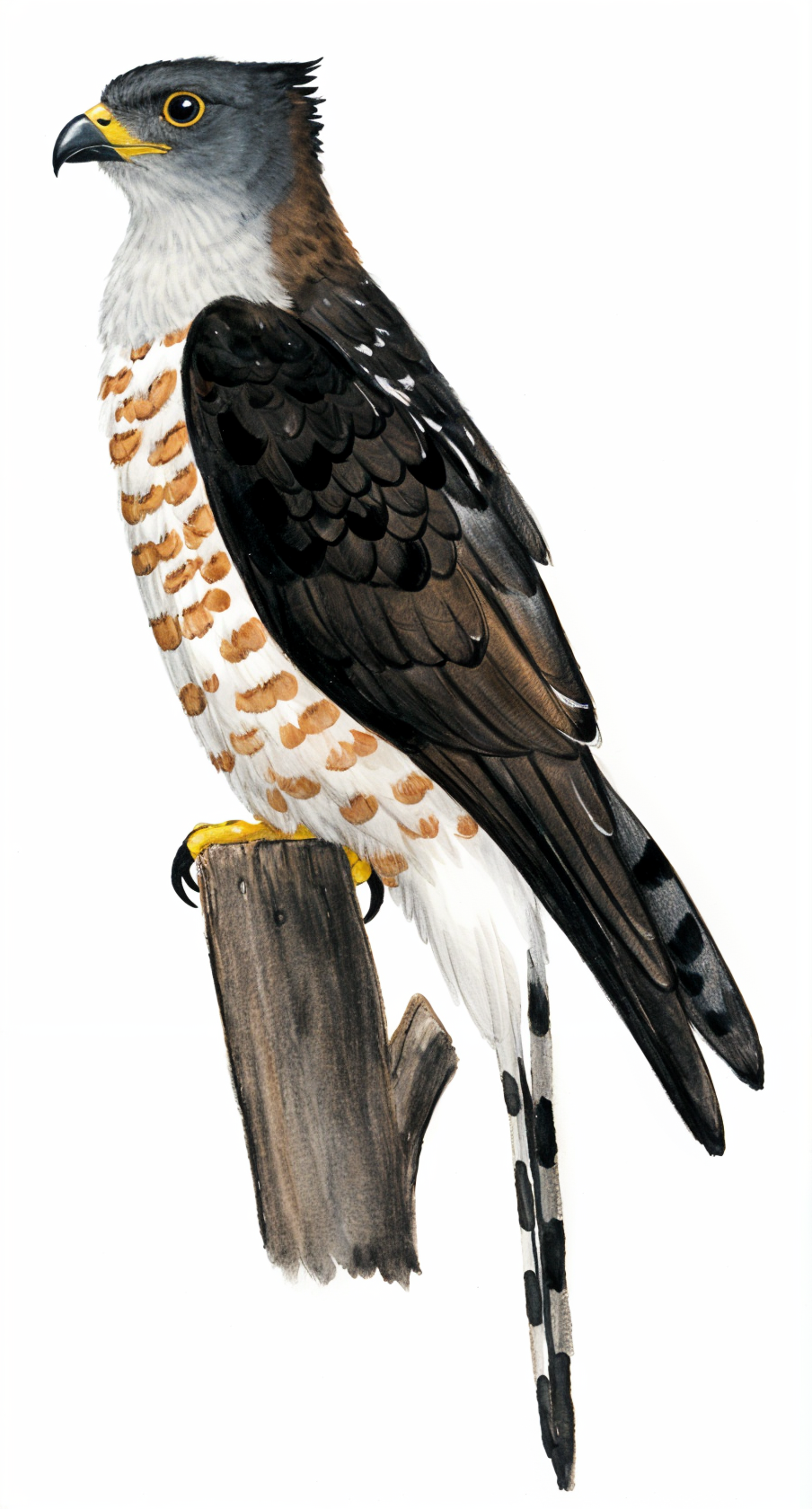
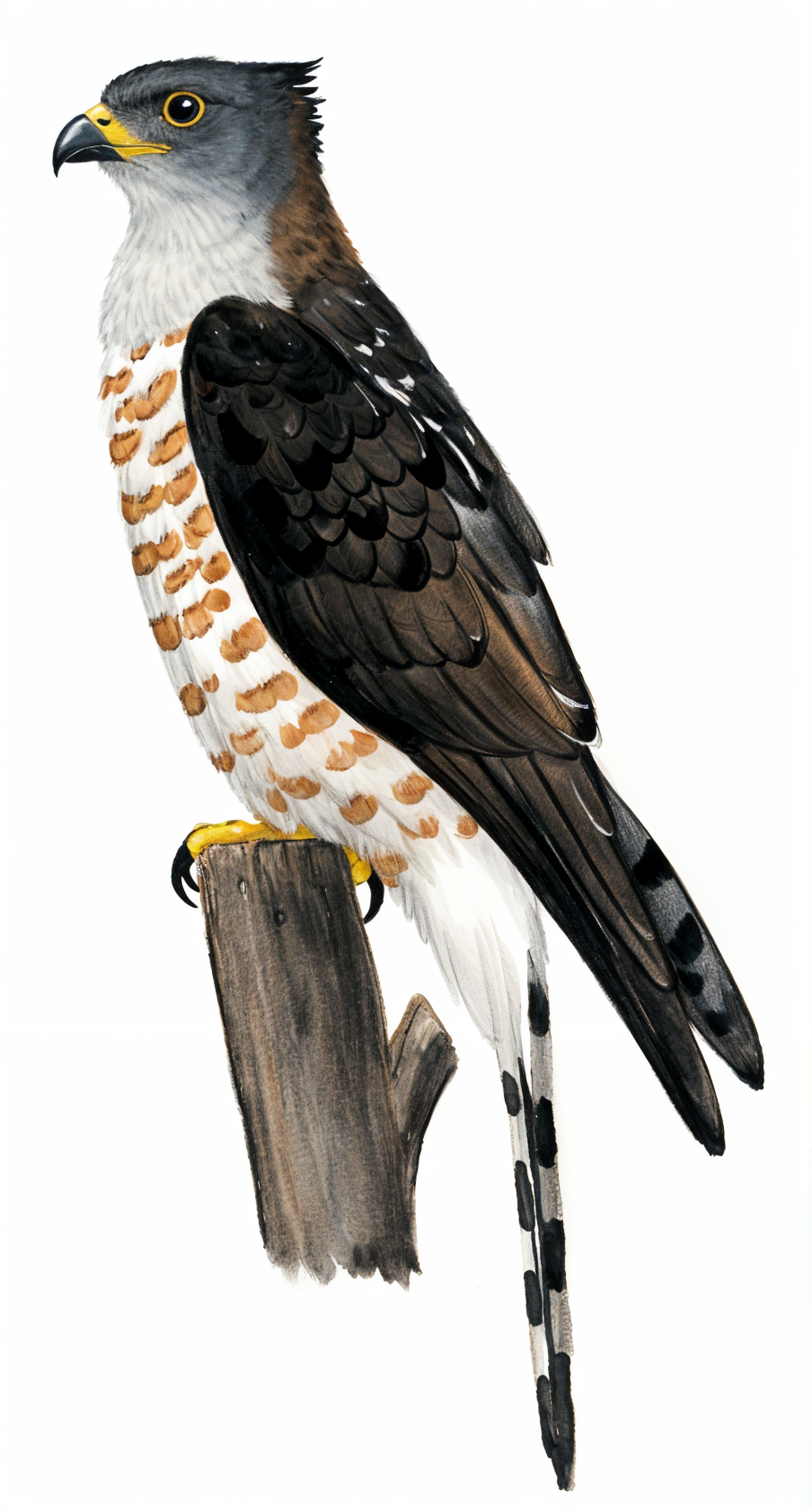
Riverine forests. Dark brown above with crested greyish head; throat pale grey; breast and belly broadly barred chestnut.
Hawks
LC
Not Endemic
African Cuckoo Hawk AI

Description

Uncommon, secretive resident. Recognised by its short legs, crested grey head – the grey extending to neck and upper breast – and boldly rufous-barred underparts and wing coverts. In flight appears harrier-like with long wings and tail with trailing edge to wings and barred tail. Bill is grey with yellow Cere, Male has red orange eye and Female has yellow eye. Flight action is buoyant and leisurely, wing beats slow with spells of gliding recalling a Milvus kite. Immature also has crested head, its white underparts with heart-shaped spots. Easily confused with [African Goshawk] in flight. Calls ‘ticki-to-you’ repeated slowly; also a high ‘peeeoo’. Males perform ‘U Shaped fluttering display flights while calling. Spends much time perched on a conspicuous vantage point but also makes occasional soaring flights. Usually occurs singly near forest fringes, riparian forests, mixed woodland and plantations mainly in the eastern half of the region. Feeds on chameleons, large insects and caterpillars (preference to green coloured insects), also nestlings and fish. Nests are platform of twigs and leaves built high in the canopy. 220-300 g.

Quick Facts

size

Size

40 cm - M

behaviour

Names

A: Koekoekvalk
Z: usomthende
Ss: Fiolo-lehopoho
G: Kuckucksweih

Bird Family

A group of specialised hunters, larger than most Sparrowhawks and Goshawk. As with that group their lower legs are unfeathered, and the females larger than the males. Typically remain silent and, with the exception of the African Harrier Hawk, fairly secretive, often remaining perched for most of the day.


Dark Brown
Savanna Bushveld

Distribution

Gallery

behaviour

Behaviour

Breeding

Breeding

Habitat

Habitat

Usually occurs singly near 'forest' fringes, riparian forests, mixed woodland and plantations mainly in the eastern half of the region. Nests are platform of twigs and leaves built high in the canopy.


behaviour

Best Locations

0 Cart