
Yellow-rumped Tinkerbird

Pogoniulus bilineatus

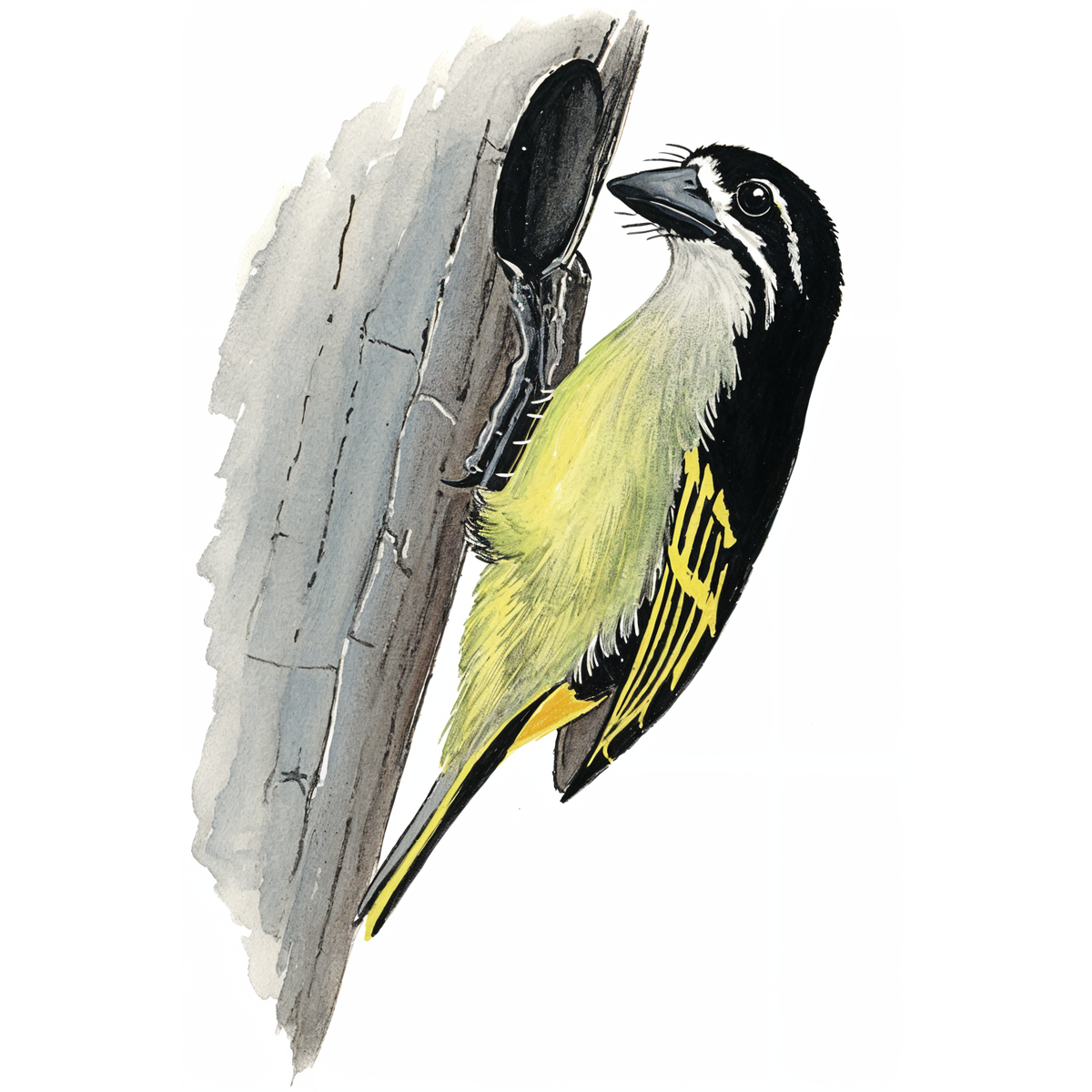
Forests. Black above with yellow wing edges and rump; whitish below with yellow belly.
LC
Not Endemic

Description

Common resident. Similar in size and general appearance to [Yellow-fronted Tinkerbird] and [Red-fronted Tinkerbird]. Told by black crown and back and white stripes on the sides of its head. Folded wing shows bold yellow feather edges. In flight, its yellow rump is visible. The immature has yellow-tipped back-feathers. The call is ‘poop poop poop poop poop’, usually in a series of five or six notes. An active, noisy species. Occurs in coastal and montane forest (mostly below 1 000 m) and riverine forests. It frequents the canopy and mid stratum singly or in pairs.

Quick Facts

size

Size

10 cm - S

behaviour

Names

A: Swartblestinker
Z: isipopop
Ss: Modisatsatsi Wa Phatlantsho
G: Goldbürzel-Bartvogel

Bird Family

Stout-billed, robust and often colourful relatives of the woodpeckers, with loud, characteristic calls. They feed on fruits and insects and excavate nest-holes in trees. The smaller species are called tinkerbirds from the likeness of their calls to the metallic sound of a hammer on an anvil. Immatures are duller than adults.
Yellow
Forest

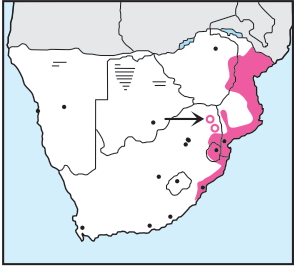
Distribution

Gallery

behaviour

Behaviour

Breeding

Breeding

Habitat

Habitat

Occurs in coastal and montane 'forest' (mostly below 1 000 m) and riverine 'forest's. It frequents the canopy and mid stratum singly or in pairs.


behaviour

Best Locations

0 Cart