

White-winged Tern

Chlidonias leucopterus

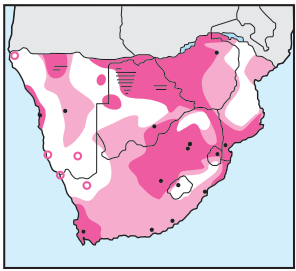
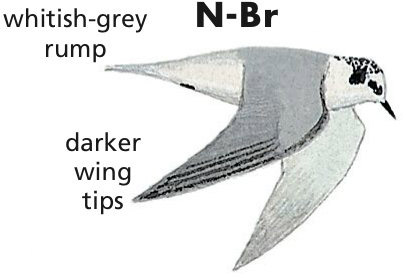
Inland waters. Non-breeding bird has white upper tail; black spot behind eye; blackish nape.
LC
Not Endemic

Description

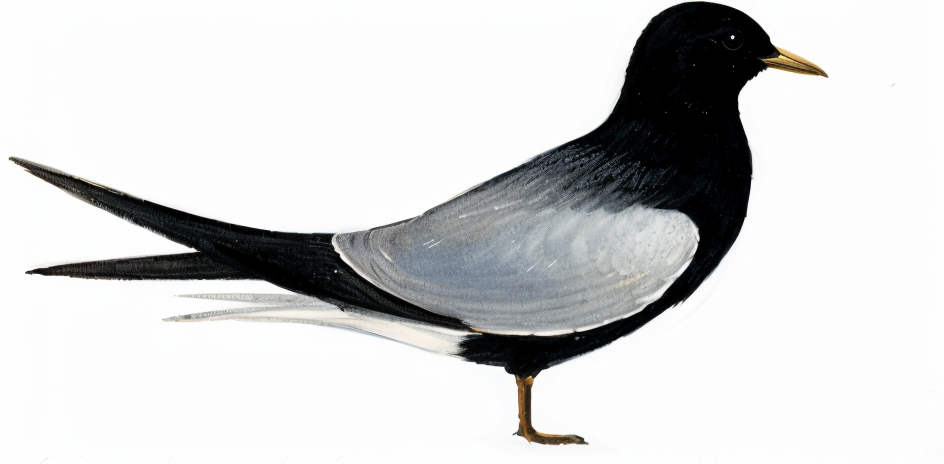
Common summer visitor. Unmistakable in breeding plumage, with wholly black body and underwing coverts and pale grey to white wings. In non-breeding plumage differs from [Black Tern]in paler head, whitish-grey rump, the tail being paler than the back and lack of dark smudges on sides of breast. Its buoyant flight, more contrasting upper wings, paler rump, weaker bill and black ear-spot distinguish it from[Whiskered Tern]. Occurs over fresh water, sometimes in large numbers.

Quick Facts

size

Size

23 cm - M

behaviour

Names

A: Witvlerksterretjie
Z: unochibi
Ss: Lepheulane La Lepheosweu
G: Weißflügel-Seeschwalbe

Bird Family

More slender, more agile than gulls and, in most species, with deeply forked tails. The majority feed at sea, plunge-diving for fish. A few, such as the marsh terns, feed mainly on insects caught in dipping flight or plucked from the surface of inland ponds, lakes and rivers. Calls are mostly similar and rather nondescript, typically ‘kee-vit' or ‘krit'.


Black & White
Wetlands

Distribution

Gallery

behaviour

Behaviour

Breeding

Breeding

Habitat

Habitat

behaviour

Best Locations

0 Cart