

White-starred Robin

Pogonocichla stellata

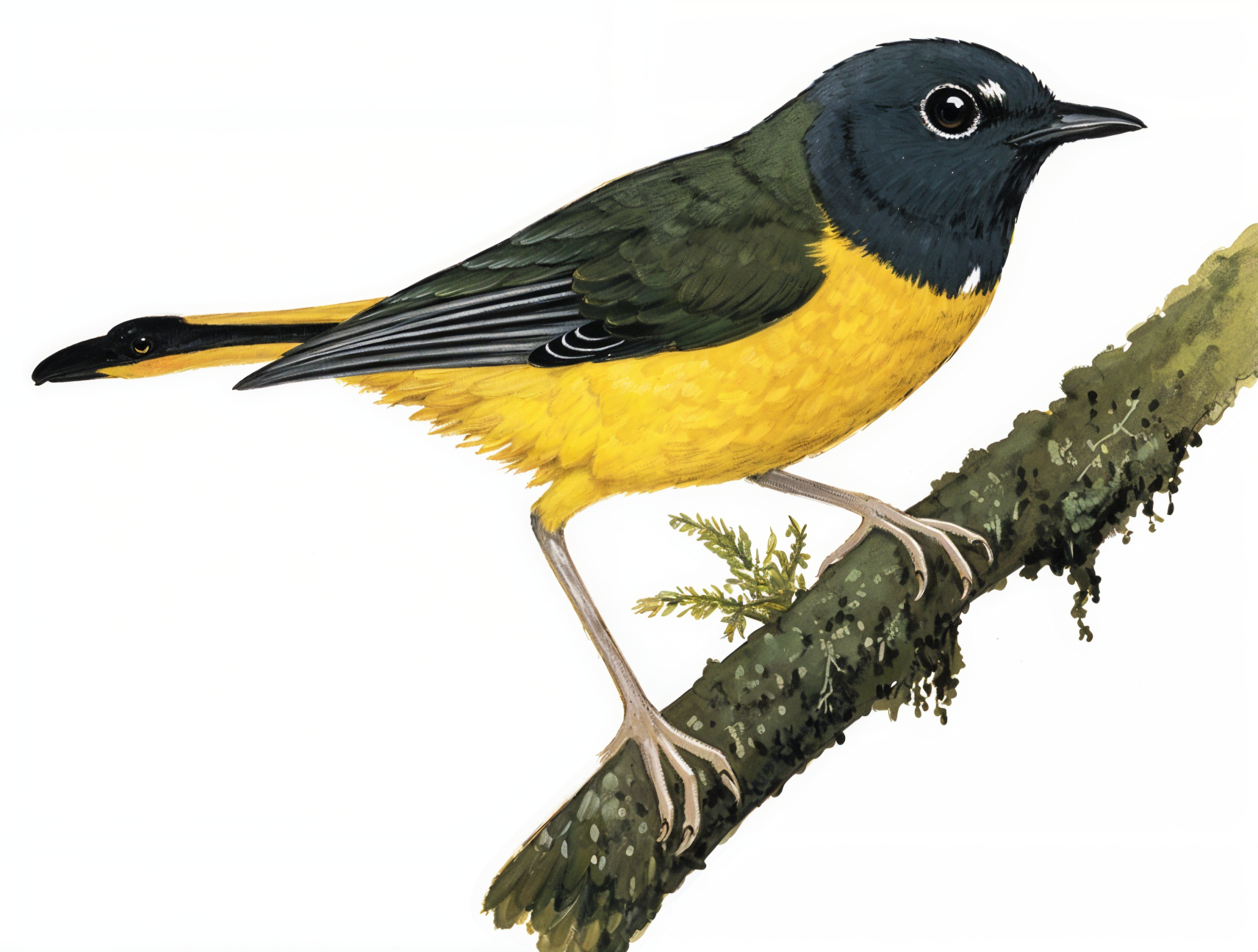
Forests. Underparts yellow; head grey; rest deep olive-green.
LC
Not Endemic

Description

Common resident. Told by entirely grey head, greenish upper parts and orange-yellow underparts. White ‘stars’ before eyes and on central breast evident only when the bird is excited or alarmed. Immature fledges with typical spotted appearance of young robins; later attains lemon-yellow underparts for one year (see illustration). The call in coastal areas is a piping ‘too-twee’ frequently repeated, in montane areas a repeated ‘pee, du-du WHEEE…’, the accent on the last syllable, which has a whip-like quality. Also has a subdued, piping song. Occurs in the lower stratum of coastal and montane evergreen forest. A quiet, lively species but not secretive.

Quick Facts

size

Size

15-16 cm - S

behaviour

Names

A: Witkoljanfrederik
Z: usonkanyezi
G: Sternrötel

Bird Family

Largely terrestrial, insectivorous or frugivorous birds that sing from trees, some robins rating as among our finest songsters. The sexes are alike unless otherwise stated, while immatures usually have the feathers of the upperparts pale-edged, the underparts spotted.

Yellow
Forest

Distribution

Gallery

behaviour

Behaviour

Breeding

Breeding

Habitat

Habitat

The call in coastal areas is a piping ‘too-twee' frequently repeated, in montane areas a repeated ‘pee, du-du WHEEE...', the accent on the last syllable, which has a whip-like quality. Occurs in the lower stratum of coastal and montane evergreen 'forest'.

behaviour

Best Locations

0 Cart