
White-headed Vulture

Trigonoceps occipitalis

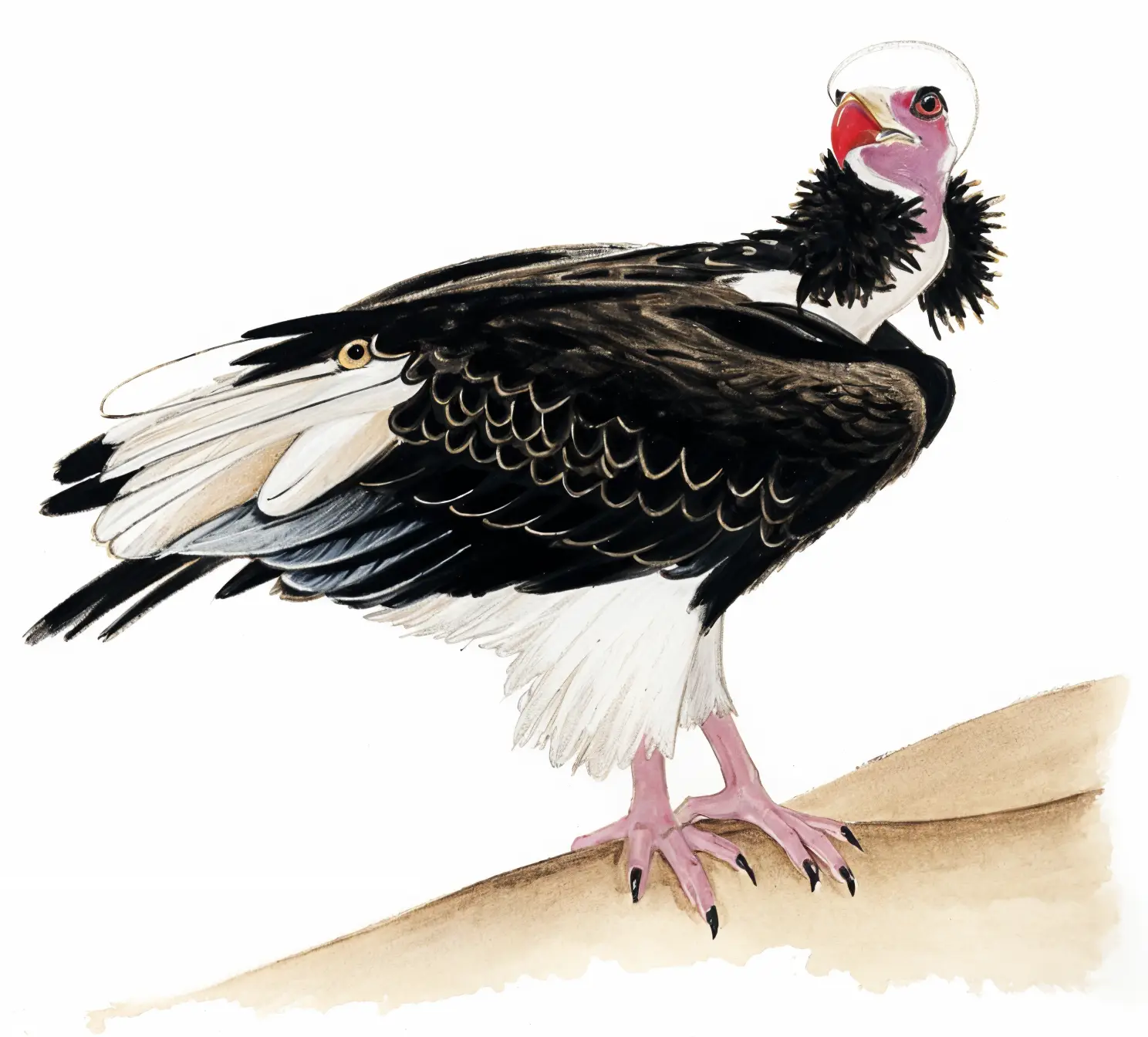
Game regions. Dark brown back, wings and upper breast; crown, nape and below white (female has white inner secondaries); bare parts pink; bill blue and red.
CR
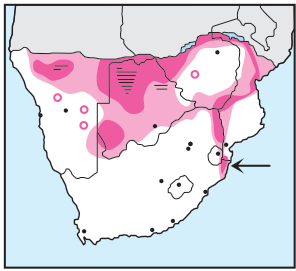
Not Endemic
White headed Vulture AI

Description

Uncommon resident. Distinguished by large size, white head, neck and underparts, heavy red and blue bill and pink face and legs. Female differs from male in having white inner secondary wing feathers visible both at rest and in flight. Immature much browner on underparts; head feathers tawny. Often first at carrion sites but will feed sedately, on carrion and bone fragments, away from feeding melee, usually seen in pairs, greatly outnumbered by other vultures. Found in woodland and savanna, prefers baobabs for nesting sites. Has been known to kill own food. 3-5,4 kg

Quick Facts

size

Size

85 cm - VL

behaviour

Names

A: Witkopaasvoël
Z: ukhandelimhlope
Ss: Lenong La Hlohosweu
G: Wollkopfgeier

Bird Family

Vultures are diurnal birds and, like other birds of prey are characterised by hooked bills suited to a mainly carnivorous diet. Vultures are typified by their large size, heavy, hooked bills, necks wholly or partially devoid of feathers (the exception being the aberrant Bearded Vulture) and, for birds of prey, relatively weak feet not suited to grasping prey. Vultures feed on carrion, soar with ease during much of the day and bathe in ponds and rivers. They are normally silent, but hiss and squeal when squabbling over food.


Dark Brown
Savanna Bushveld

Distribution

Gallery

White headed Vulture AI
behaviour

Behaviour

Breeding

Breeding

Habitat

Habitat

Found in woodland and savanna, prefers baobabs for nesting sites.
behaviour

Best Locations

0 Cart