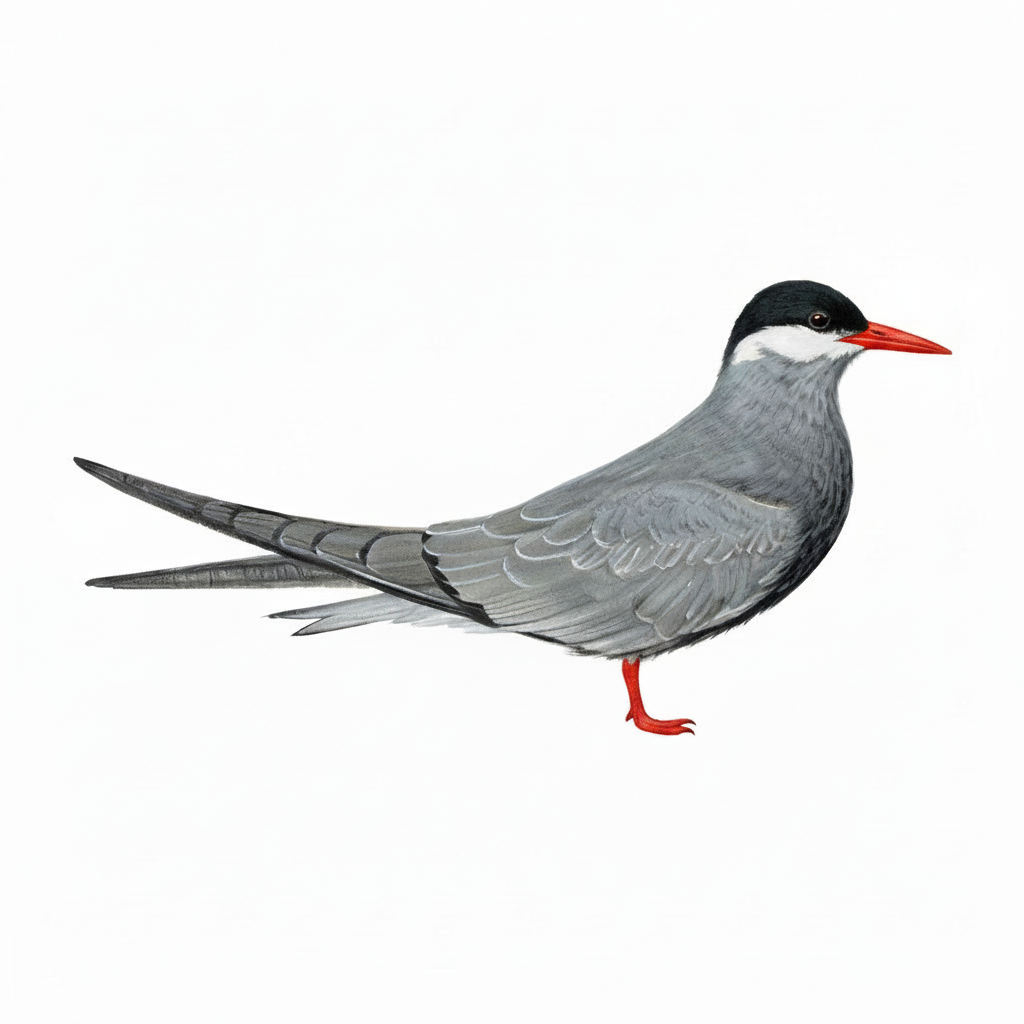


Whiskered Tern

Chlidonias hybrida

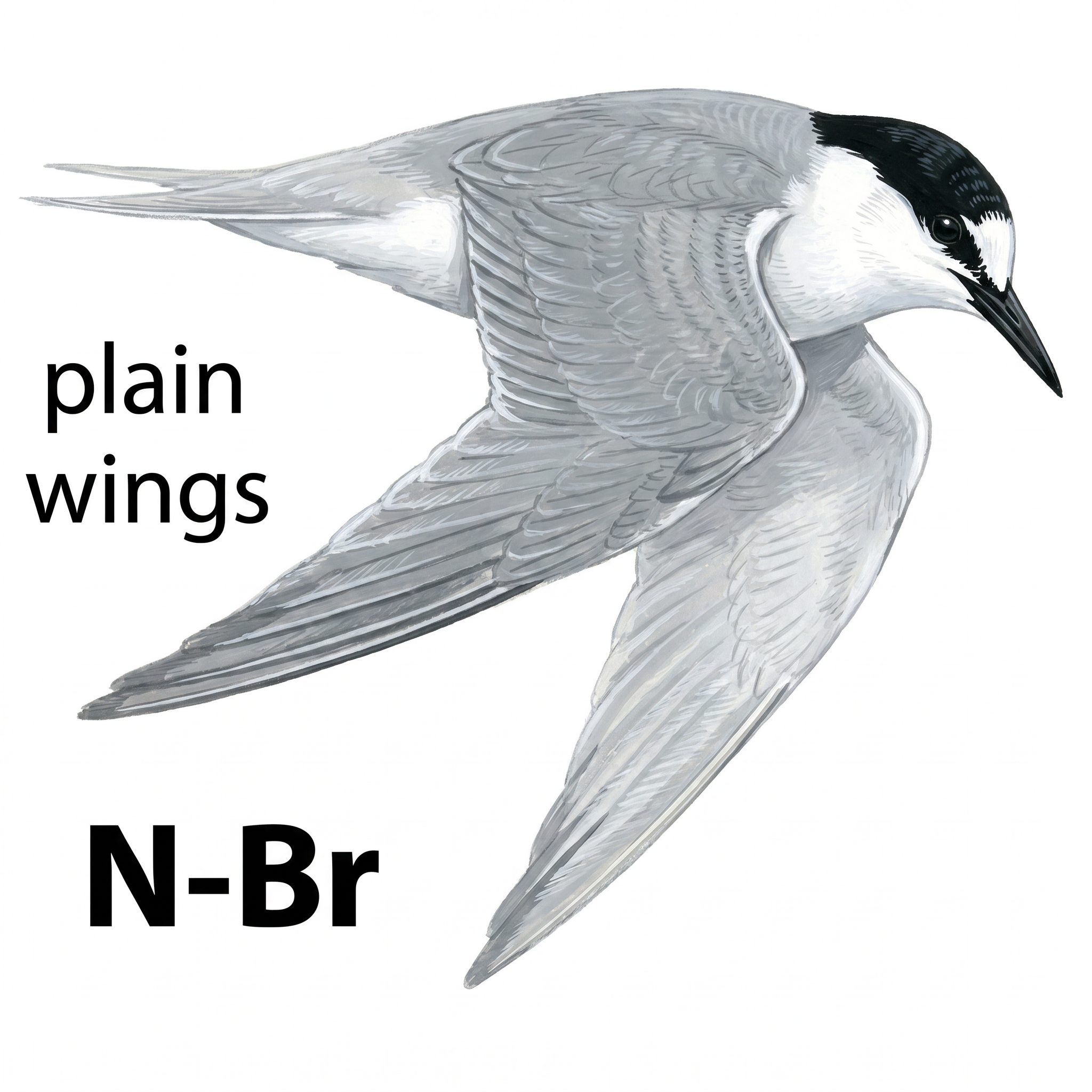
Inland waters. Non-breeding bird has pale grey upper tail and black line behind eye to black nape.
LC
Not Endemic
Whiskered Tern Br Newman's Birds

Description

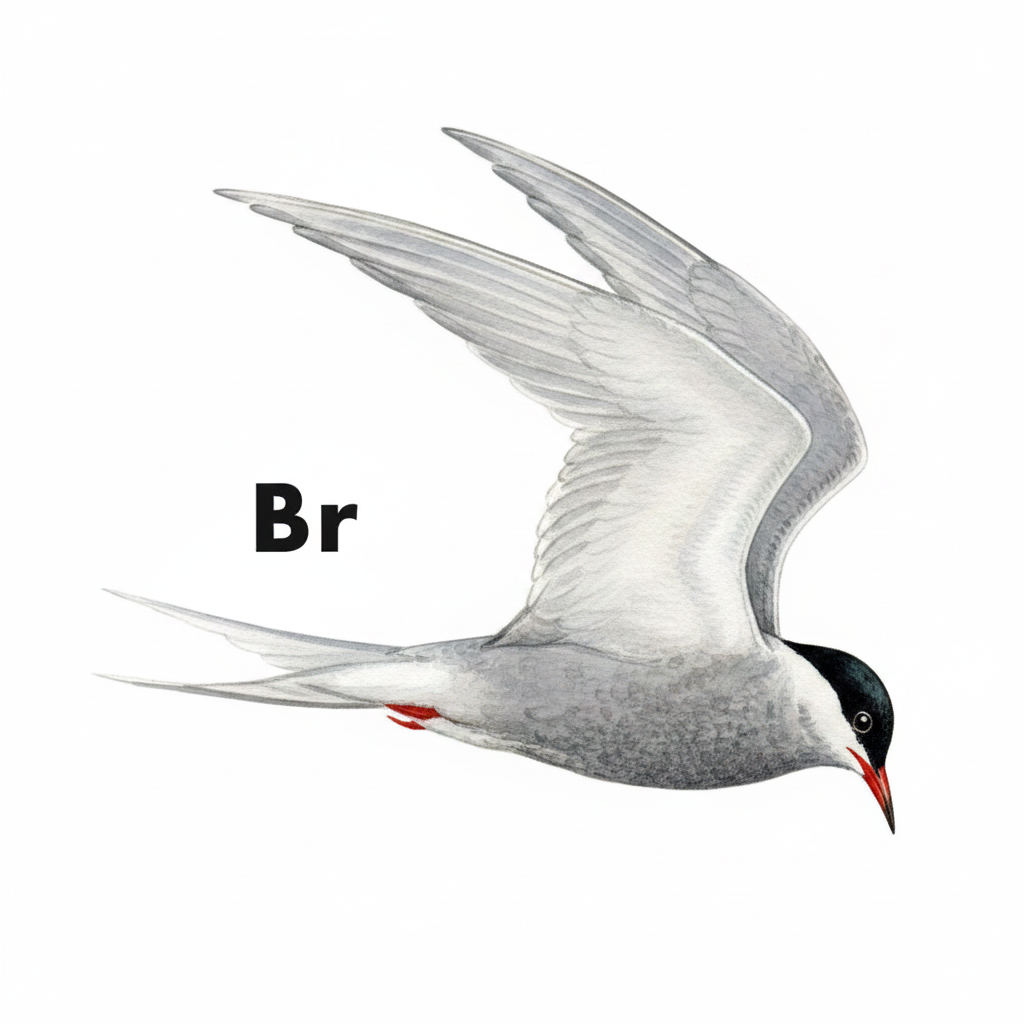
Uncommon resident. In breeding plumage differs from[White-cheeked Tern]in short tail with a shallow fork and white vent; from[Antarctic Tern]in short grey (not white) tail. In non-breeding plumage differs from other marsh terns in less extensive black on head, planer upper wings, pale grey (not white) rump, thicker, heavier bill and less buoyant flight. Call is a characteristic dry ‘kerk’. Occurs (and occasionally breeds) on freshwater pans and lakes.

Quick Facts

size

Size

23 cm - M

behaviour

Names

A: Witbaardsterretjie
Z: umachibini
Ss: Lepheulane La Ditedusweu
G: Weißbart-Seeschwalbe

Bird Family

More slender, more agile than gulls and, in most species, with deeply forked tails. The majority feed at sea, plunge-diving for fish. A few, such as the marsh terns, feed mainly on insects caught in dipping flight or plucked from the surface of inland ponds, lakes and rivers. Calls are mostly similar and rather nondescript, typically ‘kee-vit' or ‘krit'.


Black & White
Wetlands

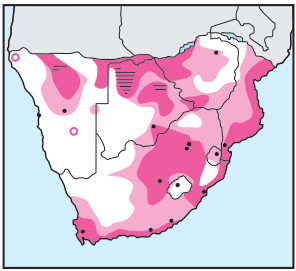
Distribution

Gallery

Whiskered Tern Br Newman's Birds
behaviour

Behaviour

Breeding

Breeding

Habitat

Habitat

Occurs (and occasionally breeds) on freshwater pans and lakes.

behaviour

Best Locations

0 Cart