

Wattled Crane

Grus carunculata

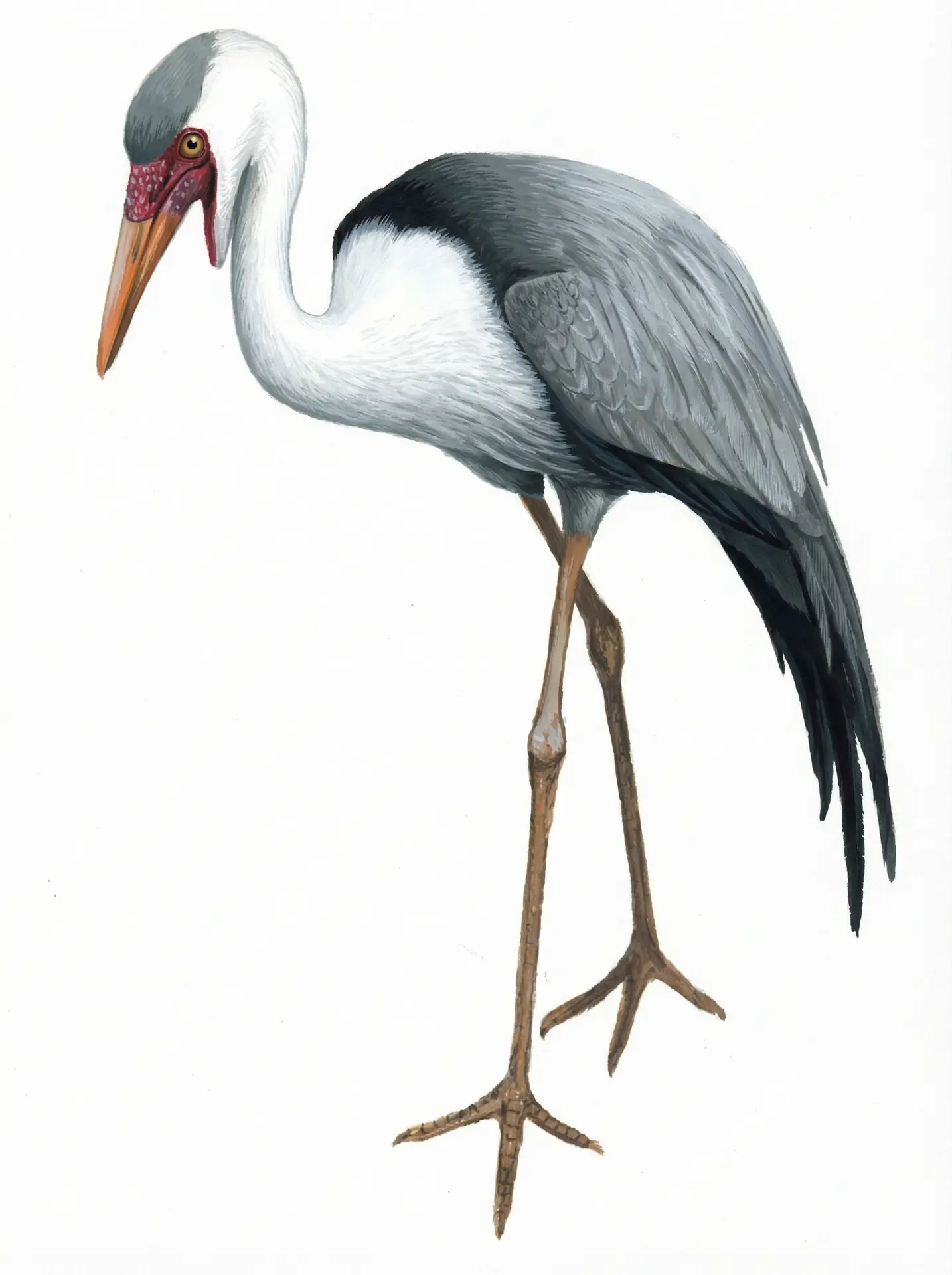
Grasslands, floodplains. Crown, back and wings grey; head, neck, mantle and below white. Bill yellow; wattles deep red.
Cranes
CR
Not Endemic
Watteled Crane Newman's Birds

Description

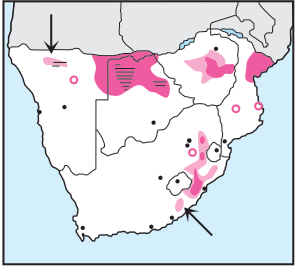
Uncommon resident; vulnerable. A very large crane with distinctive wattles hanging either side of the chin. Immature lacks wattles. Seldom vocal but can utter a loud, drawn-out, bell-like ‘horuk’. Pairs and small groups are sparsely distributed in vleis, swamplands, fringes of large lakes and high-altitude grassland. Most frequent in northern wetlands of Botswana and central Mozambique. Often wades in shallow water while feeding. Wary and difficult to approach.

Quick Facts

size

Size

120 cm - VL

behaviour

Names

A: Lelkraanvoël
Z: uBhamukwe
Ss: Motlathomo
G: Klunkerkranich

Bird Family

Large, long-legged terrestrial birds, differing from storks in having short bills and being quite vocal. Like storks, they fly with heads and necks outstretched. They indulge in elaborate dancing displays with wings outstretched when courting, sometimes involving more than two birds. The South African populations of all three crane species have declined markedly in recent years. Whereas these cranes may be fairly common in some parts of southern Africa, their numbers have become very reduced in South Africa and all three species should be regarded as vulnerable.


Grey
Wetlands

Distribution

Gallery

Watteled Crane Newman's Birds
behaviour

Behaviour

Breeding

Breeding

Habitat

Habitat

Most frequent in northern 'wetlands' of Botswana and central Mozambique.

behaviour

Best Locations

0 Cart