
102 cm - VL
A: Wildemakou
Z: ihhoye
Ss: Letshikgwi
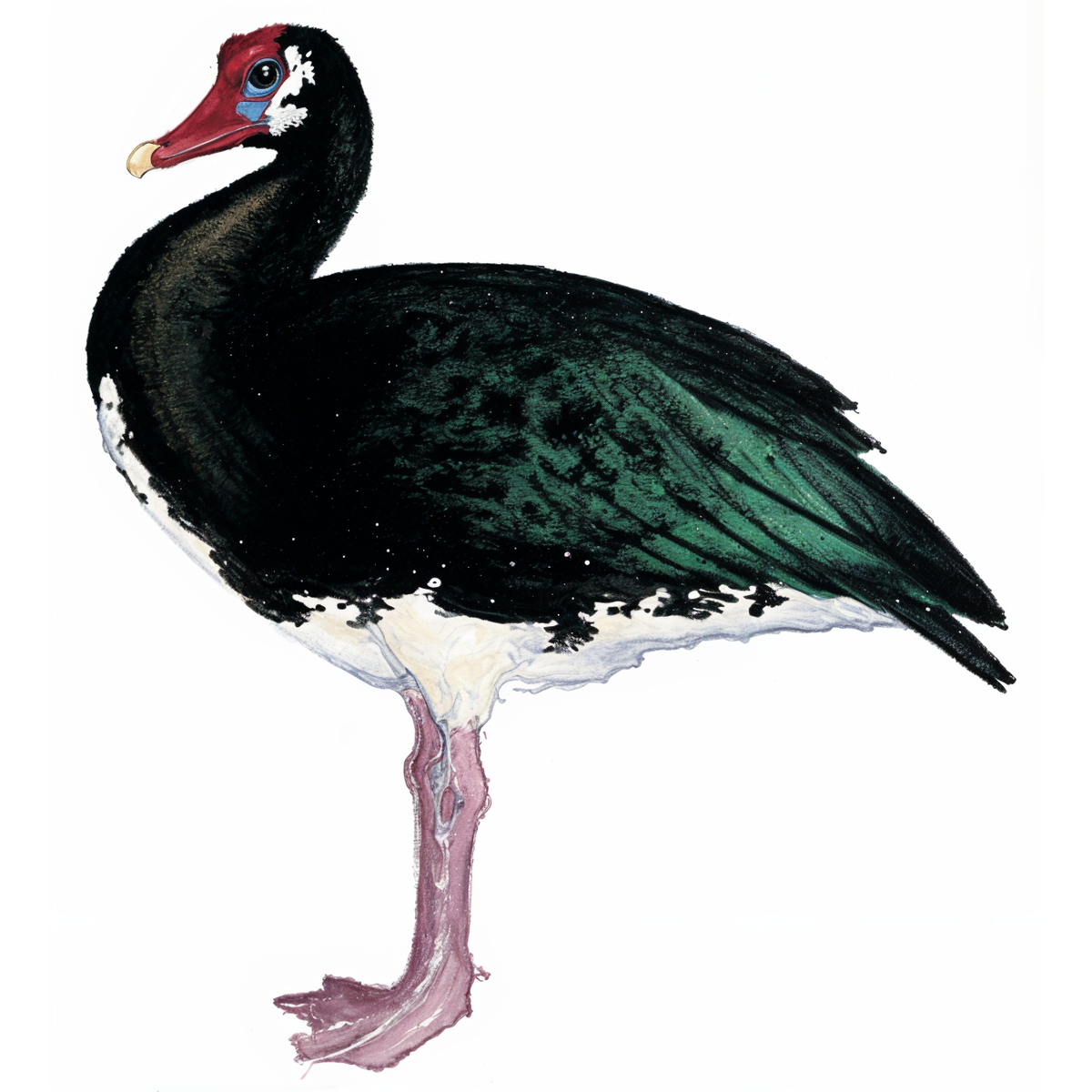
G: Sporengans

Most of the region's ducks are either migratory to some extent or locally nomadic, their movements being dictated by food, rainfall and breeding requirements. Many show marked plumage differences between the sexes. Ducks and geese undergo a flightless four-to-eight-week period each year when they moult all their flight feathers simultaneously. The large Spur-winged and Egyptian Geese differ from geese of the northern hemisphere in having longer bills and legs, the African Pygmy-Goose being our only representative of the ‘true' geese. Ducks of the genus *Dendrocygna* (whistling ducks), which include the White-faced and Fulvous whistling ducks, differ from those of other genera in having close-set legs placed well back on the body. This enables them to stand erect and walk without waddling. In addition they show no sexual dimorphism and have whistling voices. In contrast, ducks of the genus *Anas*, often referred to as dabbling ducks, have widely spaced legs placed centrally on the body. This causes them to stand with the body horizontally and to walk with a waddle. They are further typified by quacking voices.

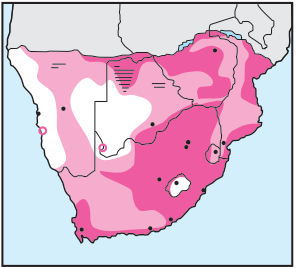

Occurs in 'flocks' in a variety of 'wetlands' in bushveld, especially favouring floodplains.