

Sentinel Rock Thrush

Monticola explorator

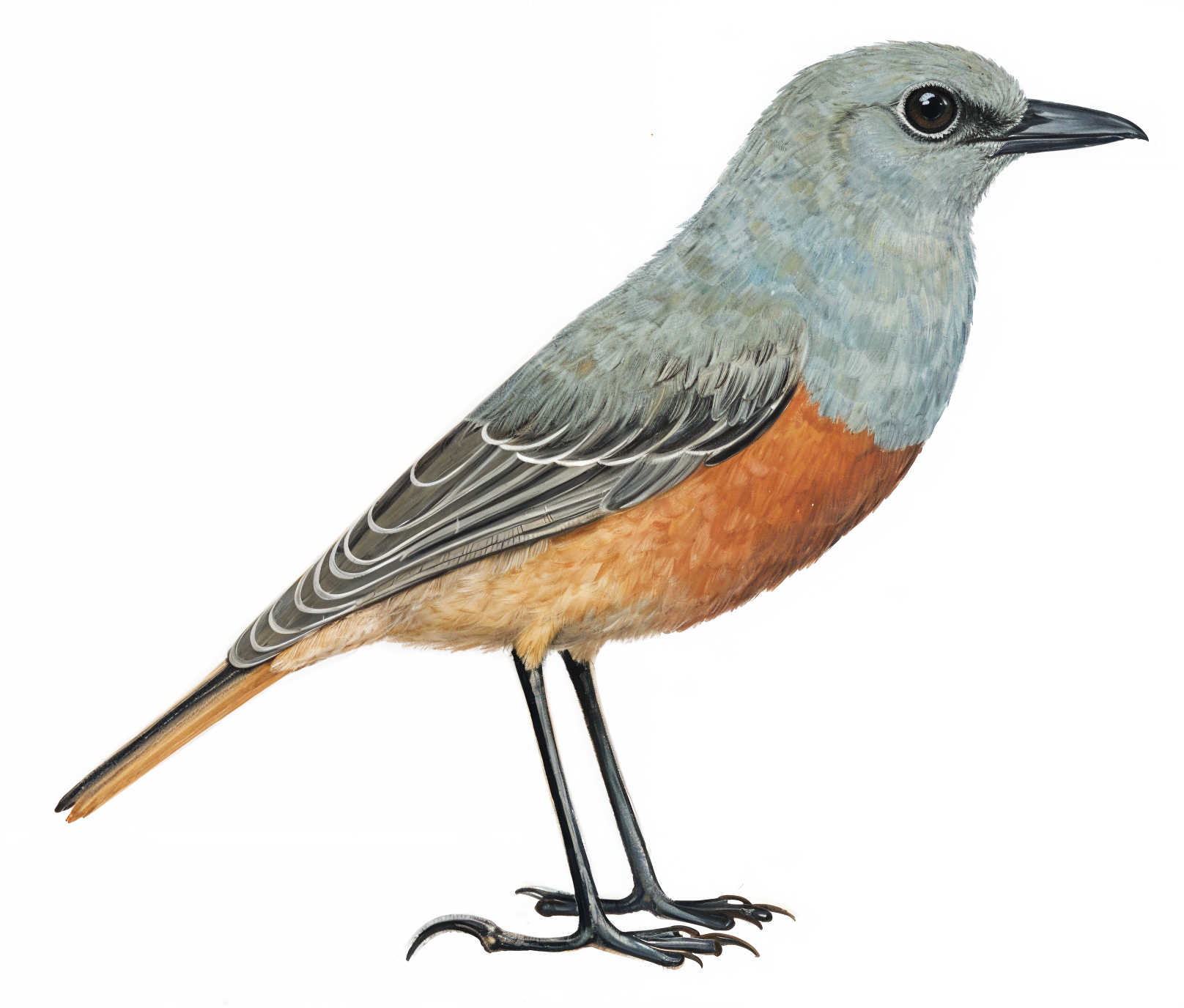
Rocky uplands. Grey head, mantle and breast; lower breast to vent rufous.
Chats, Robins, Thrushes
NT
Endemic
Sentinel Rock Thrush Newman's Birds

Description

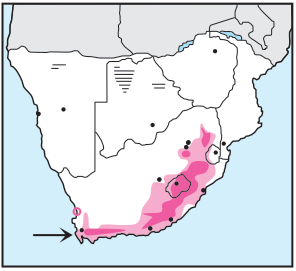
Common, localised endemic resident. Male differs from other male rock-thrushes in the blue-grey of the head extending to the mantle and onto the breast. Female likewise shows more extensive mottled area on breast. Has a lively, melodious song beginning ‘chu-chu-chu-chee-chree, chee-chroo-chi-chi-chee-troo-tree…’, followed by a sequence of warbles, trills and chattering phrases. Female utters a shorter, harsher version of the initial sequence. Alarm call is a rapid, descending ‘tre-e-e-e-e-e-e’. Pairs frequent rocky uplands and montane grasslands in summer; in winter they move to lower levels and then favour Karoo vegetation, fynbos and grassland. Perches prominently with erect stance.

Quick Facts

size

Size

21 cm - M

behaviour

Names

A: Langtoonkliplyster
Z: ikhwelemarsheni
G: Langzehenrötel

Bird Family

Largely terrestrial, insectivorous or frugivorous birds that sing from trees, some robins rating as among our finest songsters. The sexes are alike unless otherwise stated, while immatures usually have the feathers of the upperparts pale-edged, the underparts spotted.


Rufous
Rocky Areas

Distribution

Gallery

Sentinel Rock Thrush Newman's Birds
behaviour

Behaviour

Breeding

Breeding

Habitat

Habitat

Pairs frequent rocky uplands and montane 'grassland's in summer; in winter they move to lower levels and then favour Karoo vegetation, 'fynbos' and 'grassland'.


behaviour

Best Locations

0 Cart