

Ruddy Turnstone

Arenaria interpres

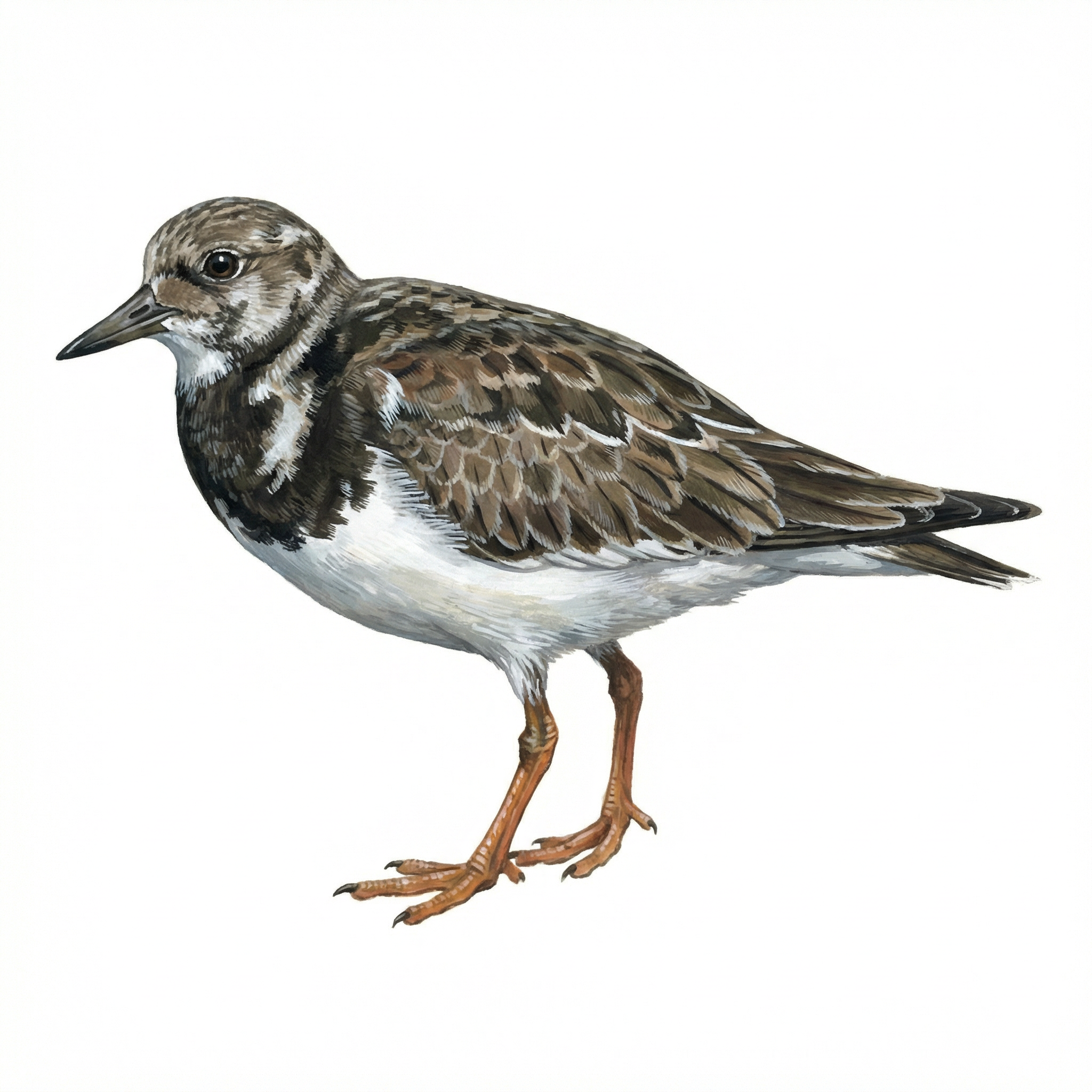
Shorelines. Chestnut above with black and white about head, neck and breast; white below.
Allied Waders, Sandpipers
LC
Not Endemic
Ruddy Turnstone Newmans Birds

Description

Common summer visitor. Characterised by long body, hunched, head-in shoulders appearance, horizontal stance and striking plumage pattern; all stages between full breeding and non-breeding plumages occur. In flight reveals extensive white back and wing-bars. Flight or contact call ‘ktuk-a-tut’. Flocks of five to 20 frequent coastal mudflats and shorelines, especially rocky shores; occasionally on inland waters. Feeds by turning over small stones, shells, caked mud and debris. If flushed, flies off low.

Quick Facts

size

Size

22 cm - M

behaviour

Names

A: Steenloper
Ss: Lekitinyane
G: Steinwälzer

Bird Family

A group of small birds usually found along shorelines and wading in shallow water. They usually have longish legs and bills for probing mud, feeding on small insects and invertebrates. Species breed in northern regions and during this time the males assume richly coloured plumage. They migrate south in drab non-breeding plumage at the start of the southern hemisphere summer. Illustrations depict the species in non-breeding plumage, unless otherwise indicated.


Speckled
Coastal

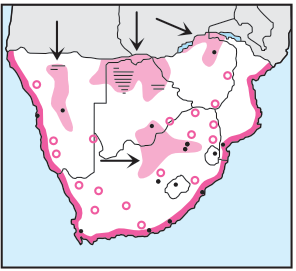
Distribution

Gallery

Ruddy Turnstone Newmans Birds
behaviour

Behaviour

Breeding

Breeding

Habitat

Habitat

Flocks of five to 20 frequent coastal mudflats and shorelines, especially rocky shores; occasionally on inland waters.


behaviour

Best Locations

0 Cart