18 cm - S
A: Draaihals
Z: unongilobomvu
Ss: Molalareteleha
G: Braunkehl-Wendehals, Rotkehl-Wendehals

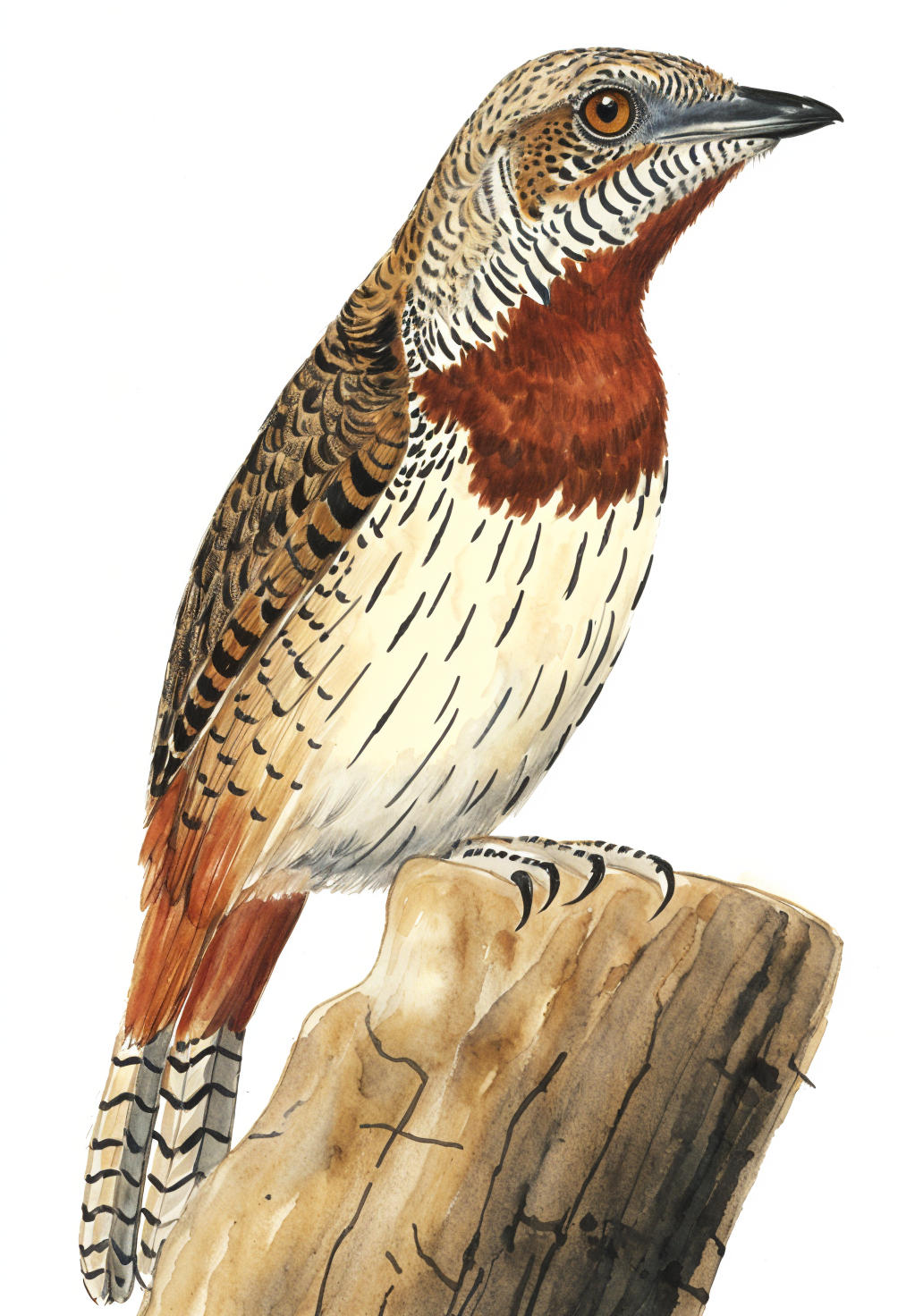
Although related to woodpeckers, wrynecks to not excavate nests but use natural tree cavities or the disused nests of barbets and woodpeckers. They feed on ants and termites, using their long tongues to extract grubs from holes and bark. Wrynecks, like woodpeckers, have two toes facing forward and two backwards, enabling them to climb and creep along branches while foraging for food; however, they lack the strong, supportive tails of woodpeckers so tend to perch more. Wrynecks can turn their heads almost 360º, from which their common name derives.


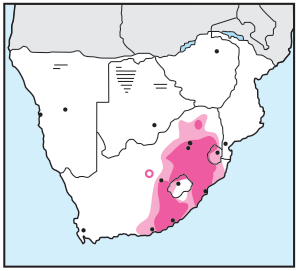
Occurs singly or in pairs in various types of woodland and in suburbia, often in wattle trees (Australian 'Acacia' spp.).