
Red-backed Shrike

Lanius collurio

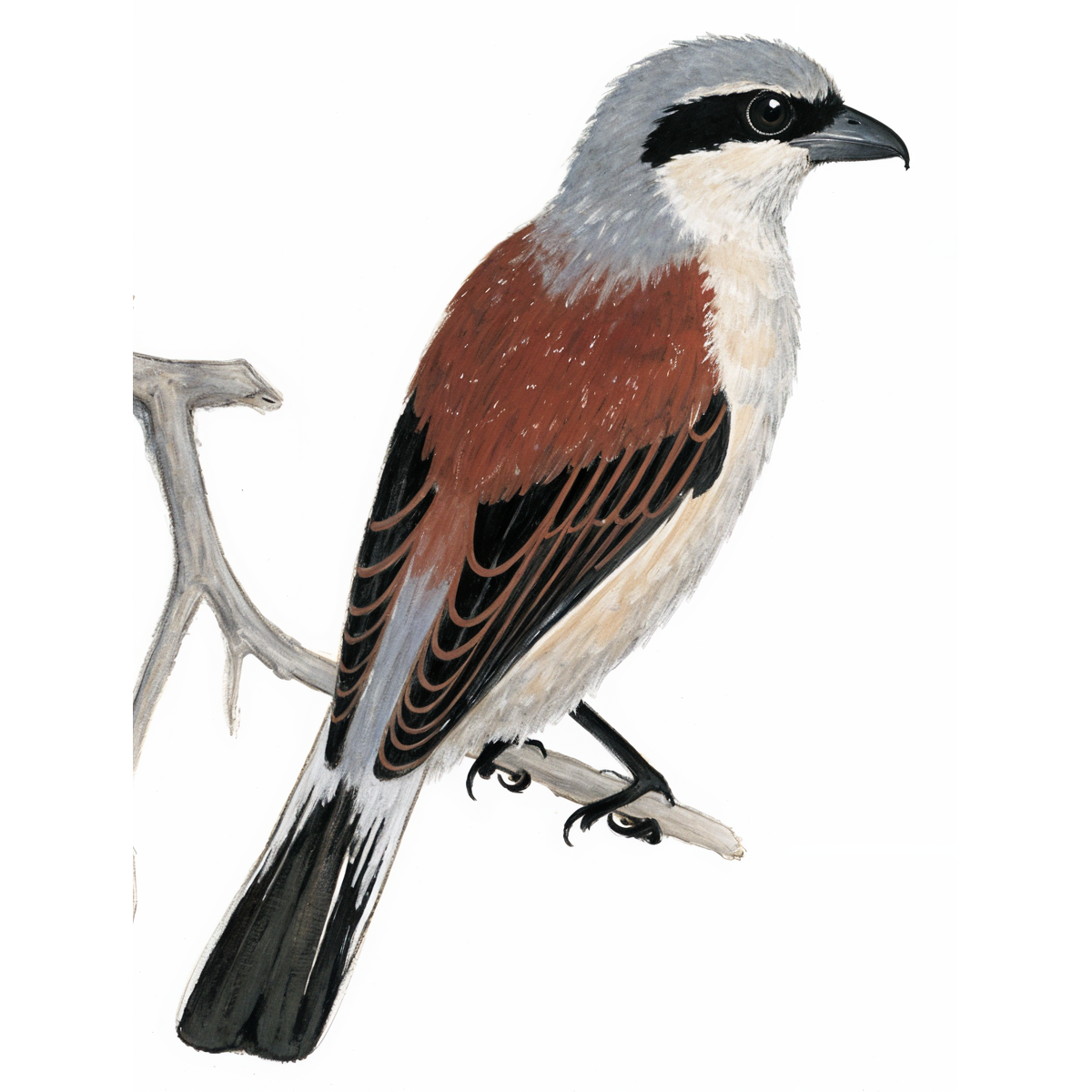
Bushveld. Grey head, nape and rump; black mask; rufous mantle and back; white underparts.
Shrikes
LC
Not Endemic
Red-backed Shrike Newman's Birds

Description

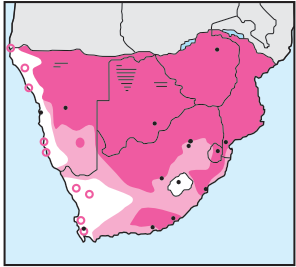
Common summer visitor. Sexes differ as illustrated. Female differs from immature [Southern (Common) Fiscal] in more rufous upper parts and lack of white wing-bars. Rarely, male occurs with white wing-bars, then resembles Souza’s Shrike but differs in more rufous unbarred mantle and clearer grey cap. Mostly silent; sometimes utters a harsh ‘chak, chak’ when alarmed or a soft scratchy song easily mistaken for that of a warbler. Solitary in a variety of wooded habitats, preferring mixed bushveld and thornveld; most common in the central Kalahari. Perches conspicuously on a low branch and still-hunts. Arrives late Oct–Nov, departs early Apr.

Quick Facts

size

Size

18 cm - S

behaviour

Names

A: Rooiruglaksman
Z: umathithibala
Ss: Tshemedi-Kgunong
G: Neuntöter

Bird Family

Insectivorous or partially carnivorous birds with stout, hooked or slightly hooked bills. They are sometimes known as ‘butcher birds' (genus *Lanius* means ‘butcher') because of their habit of sometimes impaling insects or small animals on a thorn or fence wire, returning later to eat. Habitat preference is for open woodland, where they will still-hunt from a perch.


Rufous
Savanna Bushveld

Distribution

Gallery

Red-backed Shrike Newman's Birds
behaviour

Behaviour

Breeding

Breeding

Habitat

Habitat

Solitary in a variety of wooded habitats, preferring mixed bushveld and thornveld; most common in the central Kalahari.


behaviour

Best Locations

0 Cart