
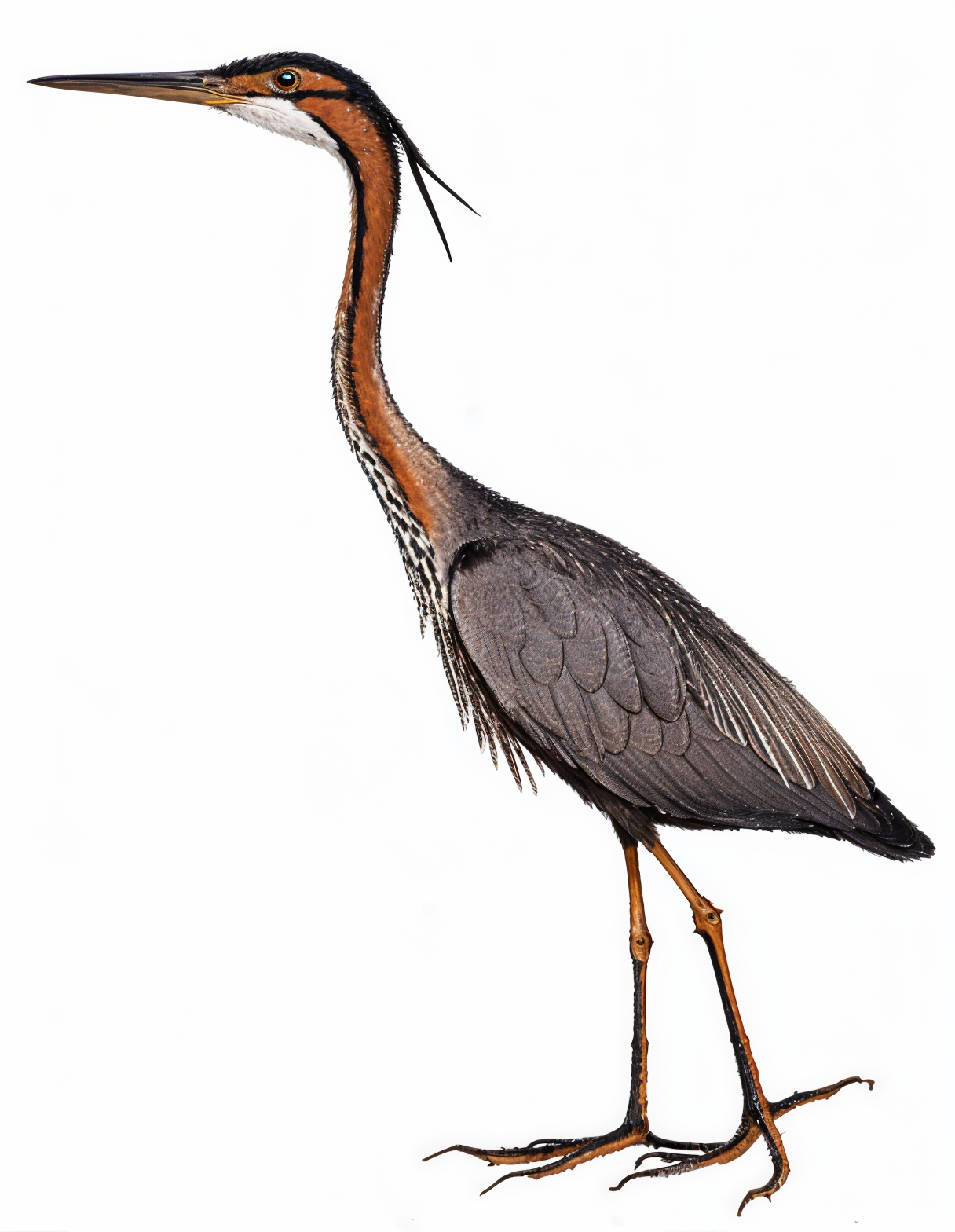

89 cm - VL

A: Rooireier
Z: unokhoboyi
Ss: Kokolofitwe Ya Molalafubedu
G: Purpurreiher

Water-associated birds with long bills and necks and long legs. When breeding, many species have long, filamentous plumes on their back or lower breast (or both), while others have more or less permanent long plumes on their napes. In flight, they tuck their heads into their shoulders, thus differing from storks, ibises and cranes. They seldom soar. Many herons are solitary in habit and secretive; others are gregarious and seen more frequently. Most perch in trees and nest in trees or reeds, or even on the ground. All have harsh, squawking voices heard mostly when flushed. Four comparative silhouettes represent (a): Dwarf Bittern; (b): Squacco Heron; (c): Little Egret; and (d): Grey Heron.

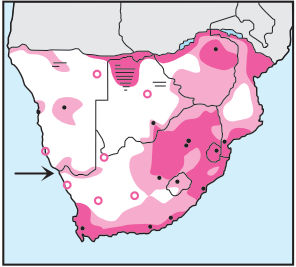


Solitary and secretive, preferring the shelter of reeds and other emergent vegetation fringing quiet dams, pans and marsh pools.