
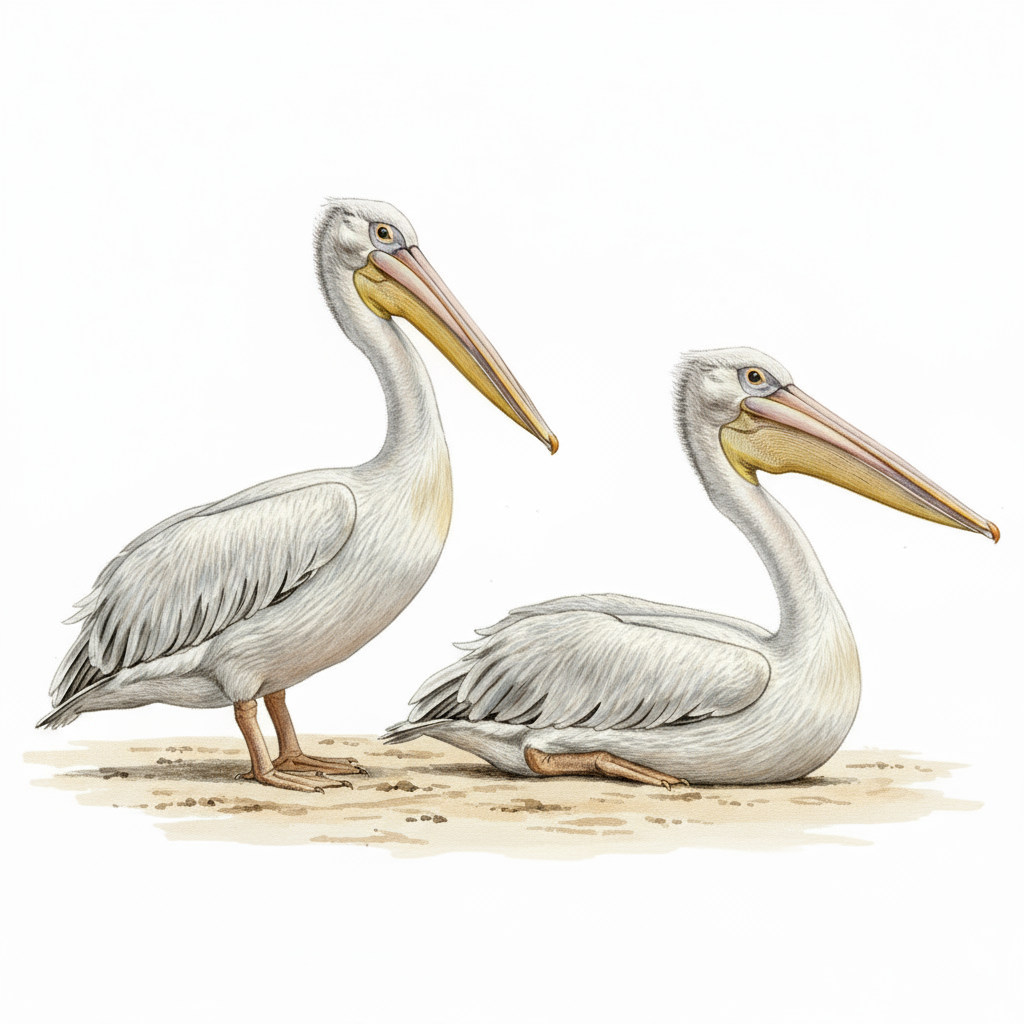


Pink-backed Pelican

Pelecanus rufescens

Inland waters. Non-breeding bird has grey wings. Paler when breeding.
VU
Not Endemic
pick backed Pelican Newman's birds

Description

Common, localised resident. Adult in non-breeding plumage told from[Pink-backed Pelican]by larger size and all-white appearance. The bill is pale yellow and pink, and the bill-pouch and legs are yellow. In flight the white underwings contrast with black flight feathers. Adult in breeding plumage has a pink flush to the body and a yellow patch on the upper breast; the upper mandible remains pink and grey and the pouch yellow, but the legs and feet turn pink. Head and neck of immature dusky in various degrees (darkest when young); has dark-brown wings and tail and yellowish underparts. Occurs in flocks on coastal islands (including artificial guano islands), estuaries, bays, lagoons and occasionally on large dams. Locally common in the vicinity of Cape Town, Walvis Bay and Swakopmund in Namibia and in northern Botswana.

Quick Facts

size

Size

135 cm - VL

behaviour

Names

A: Kleinpelikaan
Z: ivubelincane
Ss: Leya le lenyenyane
G: Rötelpelikan

Bird Family

Huge white waterbirds with large bodies, short legs with webbed feet, long necks, long bills and a naked distensible pouch beneath the lower mandible. They catch fish by gathering in flocks and driving the shoals into shallow water, where they scoop the fish up in their bill-pouches. They walk awkwardly but soar effortlessly, sometimes to great heights.


Grey
Wetlands

Distribution

Gallery

pick backed Pelican Newman's birds
behaviour

Behaviour

Breeding

Breeding

Habitat

Habitat

Occurs in 'flocks' on coastal islands (including artificial guano islands), estuaries, bays, lagoons and occasionally on large dams.


behaviour

Best Locations

0 Cart