
Olive Bushshrike

Chlorophoneus olivaceus

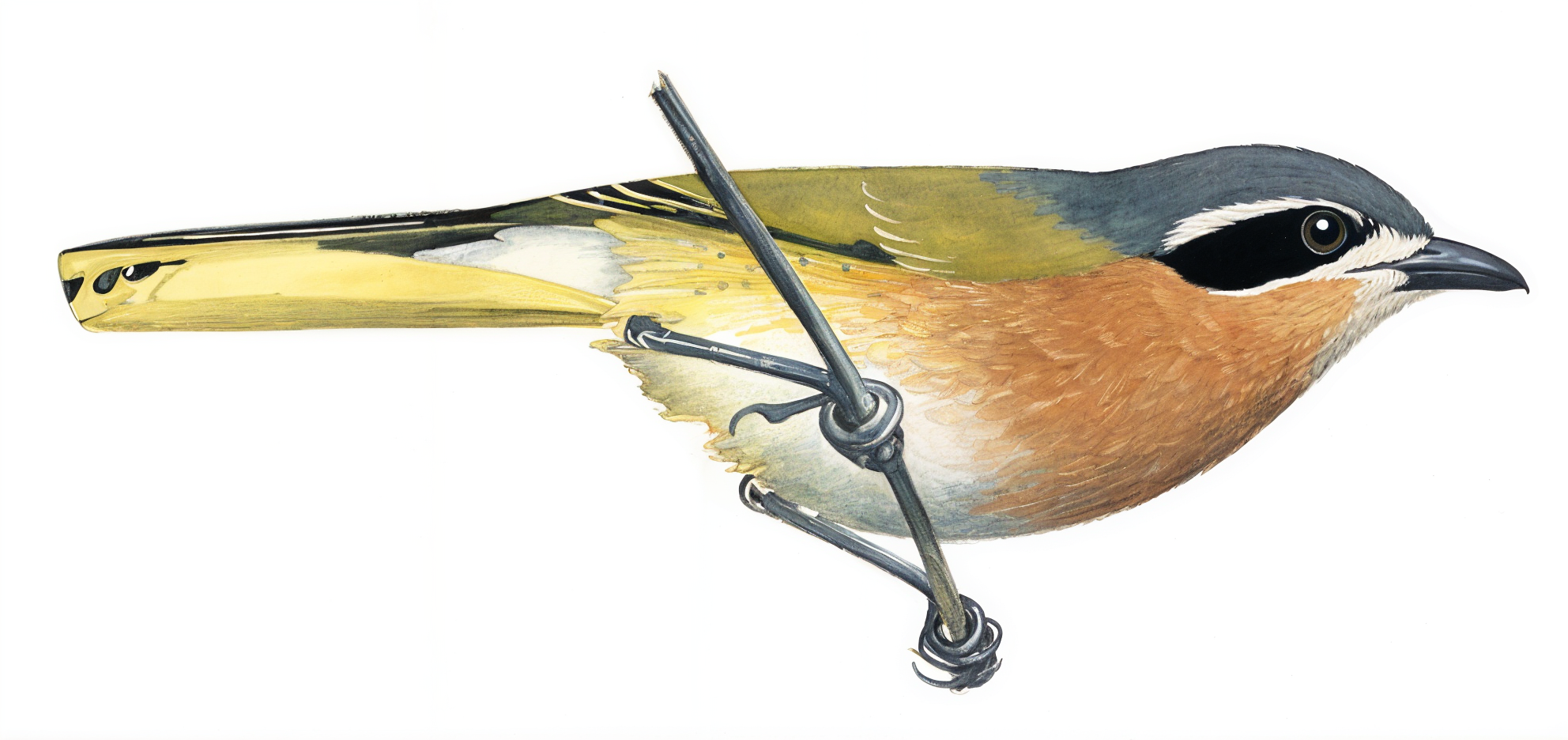
Forest thickets. Cinnamon yellow breast patch, grey cap, and olive-green upper parts.
LC
Near Endemic
Olive Bushshrike Newman's Birds

Description

Common, near-endemic resident. Two morphs: (a) with cinnamon breast (intensity variable), male with white eyebrow; (b) with entirely olive-green upper parts and yellow underparts in both sexes cf. [Orange-breasted Bushshrike] and [Black-fronted Bushshrike]. In both morphs, the black mask does not reach the base of the bill; cf. [Black-fronted Bushshrike]. Immature as illustrated. Calls include about six notes of varying pitch, sometimes preceded by a single higher note, ‘phwee-phwee-phwee-phwee-phwee-phwee’ or ‘tew-tew-tew-tew-tew’ or ‘tee-toy-toy-toy-toy’; also a descending cadence ‘CHE-che-che-che-che-che’ and a warbling trill. Pairs occur in coastal and montane forest thickets, montane scrub, dense bush and plantations. In bush habitats, it feeds on insects and fruit in the lower stratum, in forests in the mid and lower strata. Secretive at all times.

Quick Facts

size

Size

#VALUE!

behaviour

Names

A: Olyfboslaksman
Z: umabhashinhlayelohlaza
G: Olivwürger

Bird Family

Colourful shrikes with olive-green and grey upperparts and yellow or orange-yellow underparts. Most inhabit dense bush, making them difficult to see, continuously hopping from branch to branch. Their diet is mainly insects, although some will eat fruit or small animals. All have distinctive calls, which aids identification.


Orange
Forest

Distribution

Gallery

Olive Bushshrike Newman's Birds
behaviour

Behaviour

Breeding

Breeding

Habitat

Habitat

behaviour

Best Locations

0 Cart