

Narina Trogon

Apaloderma narina

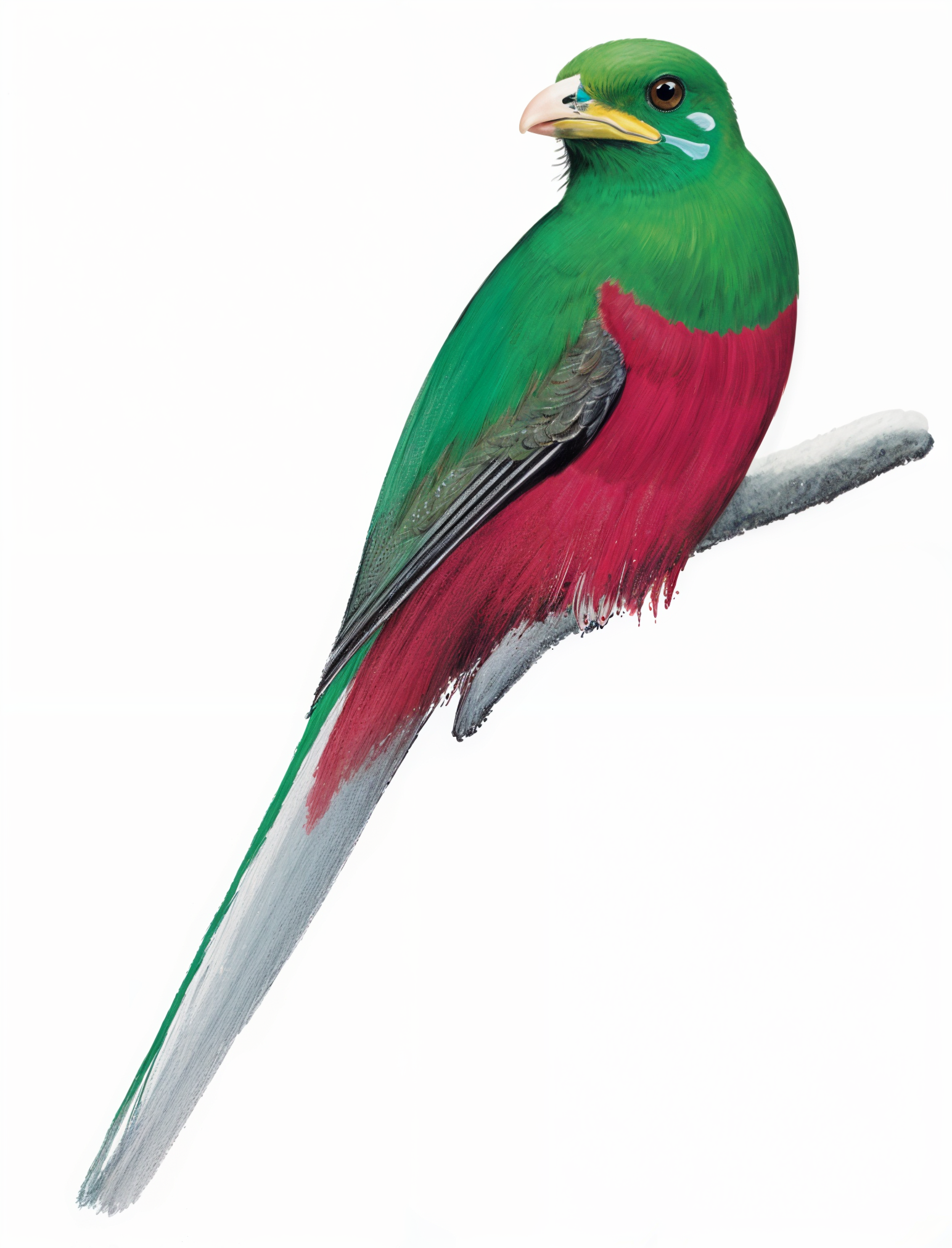
Forests. Glossy-green head, breast and upperparts; scarlet-red below. Female lacks green breast; bill greenish-yellow.
Trogons
LC
Not Endemic
Narina Trogon Newman's birds

Description

Fairly common resident. The only forest bird with scarlet underparts and iridescent green upper parts. The bill is pale yellow; the head shows turquoise-blue skin patches when breeding. Male inflates throat when calling. The immature resembles the female, but breast and shoulders lightly barred. In flight, the long, square-ended tail with striking white outer feathers is obvious. Difficult to locate in its forest habitat, since it often perches with its green back towards the observer. In the breeding season (Oct–Dec) it can be located by its call, a low ‘hoot-hoot… hoothoot… hoot-hoot’ repeated regularly and slowly. Usually occurs in pairs in evergreen forests or adjacent plantations (at high altitudes only in summer). Moves away from high-altitude haunts in winter; may then be encountered in lowland riverine forests and gardens.

Quick Facts

size

Size

29-34 cm - M

behaviour

Names

A: Bosloerie
Z: umjenenengu
Ss: Tsoko
G: Narina-Trogon, Zügeltrogon

Bird Family

Among the world's most colourful birds, trogons are found in Africa, America and Asia. They have weak feet with two toes directed forwards and two backwards. The skin of trogons is delicate and easily torn, while the feathers drop out easily if the bird is handled. In museum specimens, the red breast-coloration fades if exposed to light for long periods.


Green
Savanna Bushveld

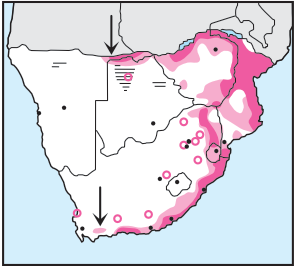
Distribution

Gallery

Narina Trogon Newman's birds
behaviour

Behaviour

Breeding

Breeding

Habitat

Habitat

Usually occurs in pairs in evergreen forests or adjacent plantations (at high altitudes only in summer).


behaviour

Best Locations

0 Cart