

Namaqua Sandgrouse

Pterocles namaqua

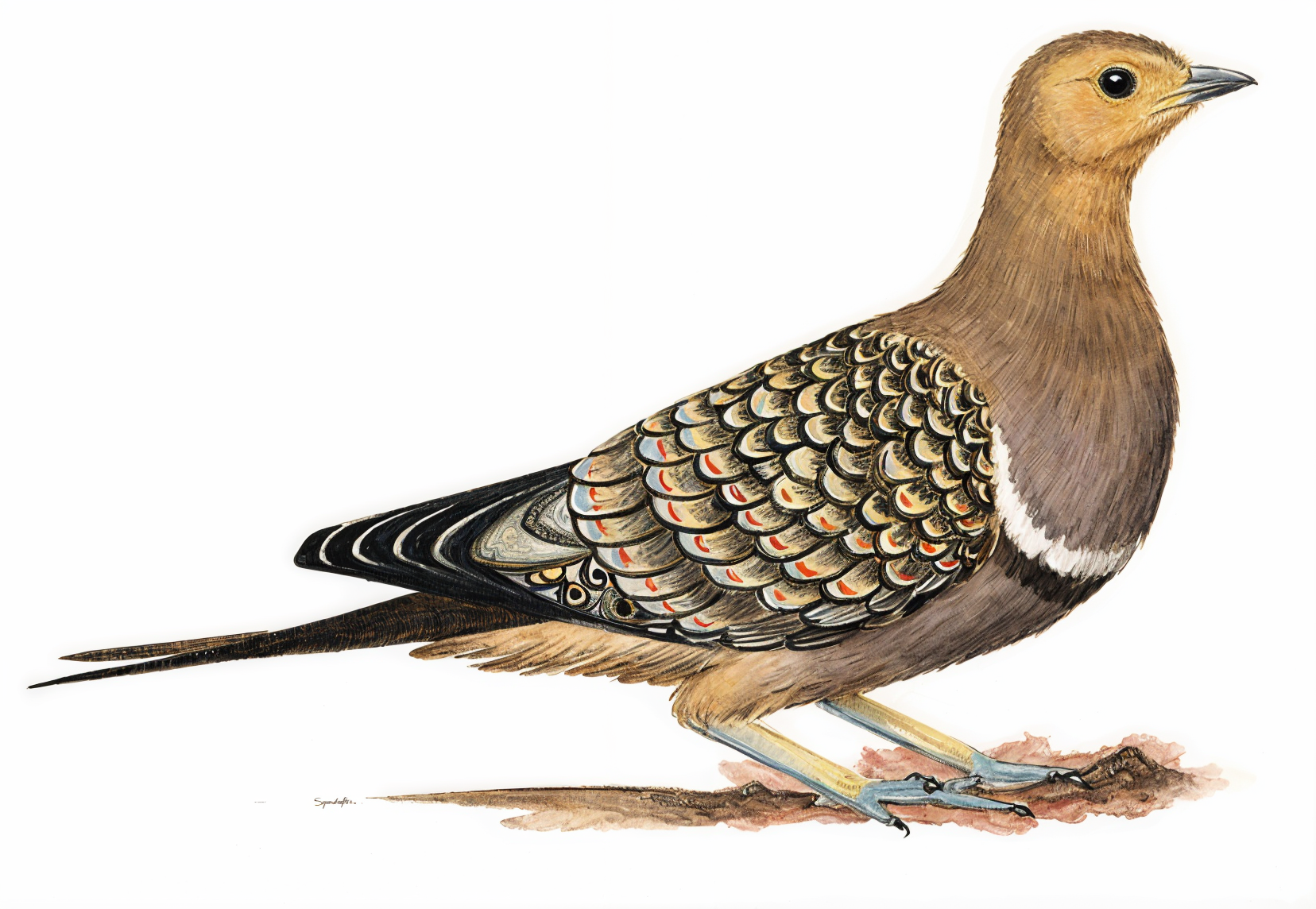
Desert. Longer, pointed tail than other sandgrouse; female has dense barring all over, apart from throat and underbelly. Both sexes have ochre heads and flock at waterholes mainly in morning.
Sandgrouse
LC
Near Endemic
Namaqua Sandgrouse Newman's birds

Description

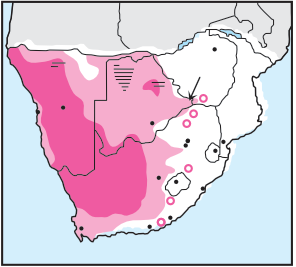
Common, near-endemic resident. Best told from other sandgrouse by its long, pointed tail. Male also told by plain cinnamon head and neck, female by densely streaked breast. Flight call ‘kelkiewyn’. Pairs or flocks occur in sandy or stony desert, Kalahari, Karoo, thornveld and grassland. Most abundant in the Karoo and Namibia. Frequently mixes with [Burchell’s Sandgrouse] at waterholes, drinking mainly in the mornings, one or two hours after sunrise.

Quick Facts

size

Size

28 cm - M

behaviour

Names

A: Kelkiewyn
Ss: Lekgwakgwa
G: Namaflughuhn

Bird Family

Pigeon-like birds with cryptic coloration, males more boldly patterned than females. They have pointed wings and short bills and legs, with the front of the tarsus feathered to the toes. Their walk is shuffling but their flight swift and powerful, the birds often covering considerable distances daily to reach water where, at certain favoured pools, they gather in great flocks morning or evening. All inhabit arid western regions, the Double-banded Sandgrouse ranging more easterly.


Speckled
Nama Karoo

Distribution

Gallery

behaviour

Behaviour

Breeding

Breeding

Habitat

Habitat

Pairs or 'flocks' occur in sandy or stony 'desert', Kalahari, 'Karoo', thornveld and 'grassland'.


behaviour

Best Locations

0 Cart