

Mosque Swallow

Cecropis senegalensis

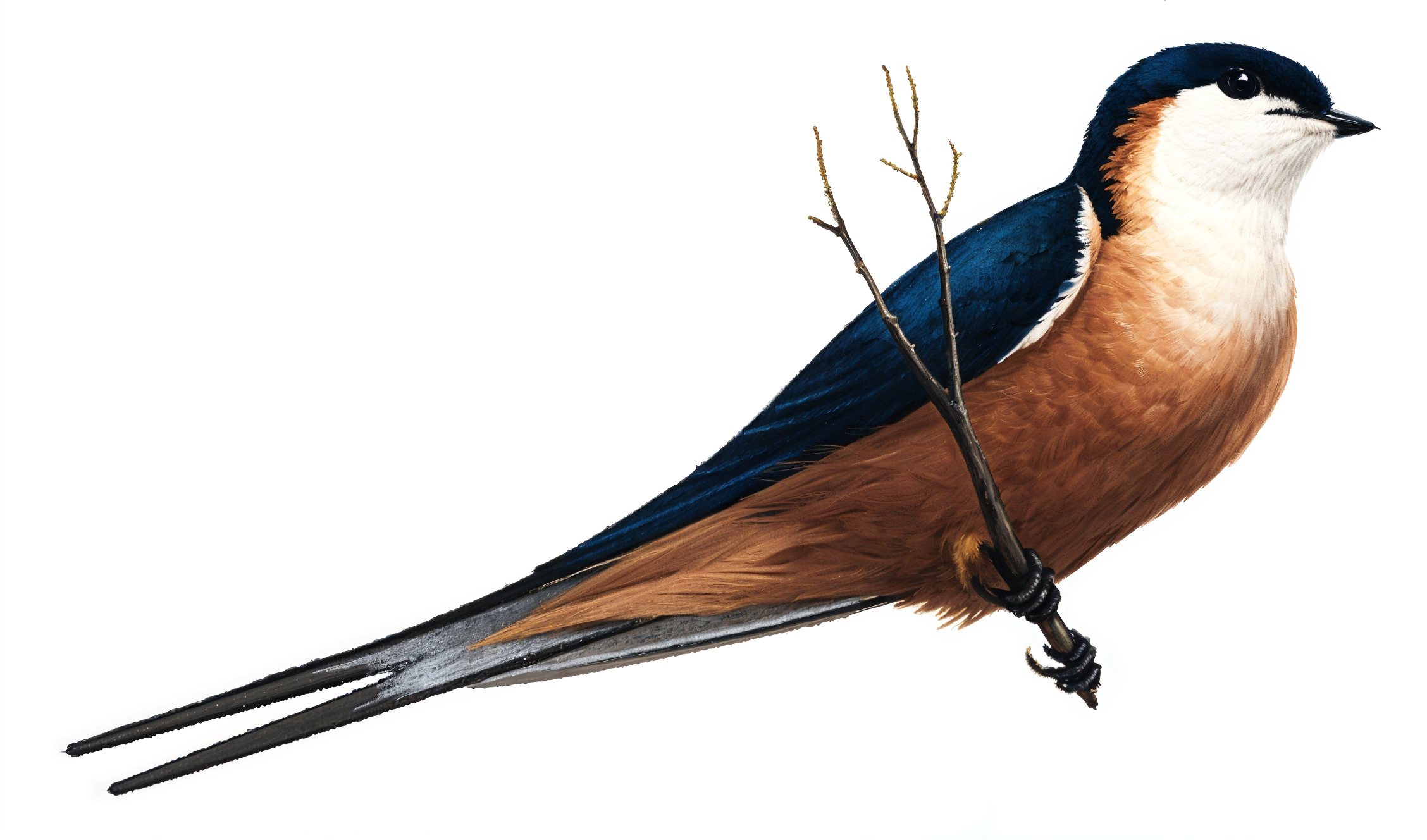
Woodland. Above metallic blue; throat, upper breast and underwings white; rest of underbody deep orange.
Swallows
LC
Not Endemic
Mosque Swallow Newman's birds

Description

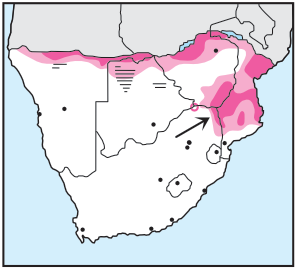
Fairly common, localised resident. Told from [Red-breasted Swallow] by white throat and upper breast; in flight by white underwing coverts and shorter tail-shafts. Utters a nasal, tin-trumpet-like ‘harrrp’, occasionally a guttural chuckling. Pairs and small flocks occur over large-tree woodland, mostly near water. Usually flies at some height, with bursts of fluttering flight followed by a glide. Frequently skims across dams and pans or perches in trees. Constructs a mud nest in a cavity of a large tree, and often in the vicinity of nesting trees (especially baobabs).

Quick Facts

size

Size

23 cm - M

behaviour

Names

A: Moskeeswael
Z: iNkonjane
G: Senegalschwalbe

Bird Family

Small, long-winged, aerial-feeding birds. Swallows have mostly glossy-blue upperparts (some with rufous caps) and whitish, rufous or streaked underparts; the blackish saw-wing swallows are an exception. Saw-wings have rough, saw-like leading edges to their primary feathers (not apparent in the field). In all species, immatures are duller than adults. They build nests with mud pellets or burrow tunnels in banks or cliffs; they drink and bathe in flight by skimming the surface of still water, and perch to rest. For comparison, see swifts.


Blue
Aerial

Distribution

Gallery

Mosque Swallow Newman's birds
behaviour

Behaviour

Breeding

Breeding

Habitat

Habitat

Pairs and small 'flocks' occur over large-tree woodland, mostly near water. Frequently skims across dams and pans or perches in trees.


behaviour

Best Locations

0 Cart