
Marico Sunbird

Cinnyris mariquensis

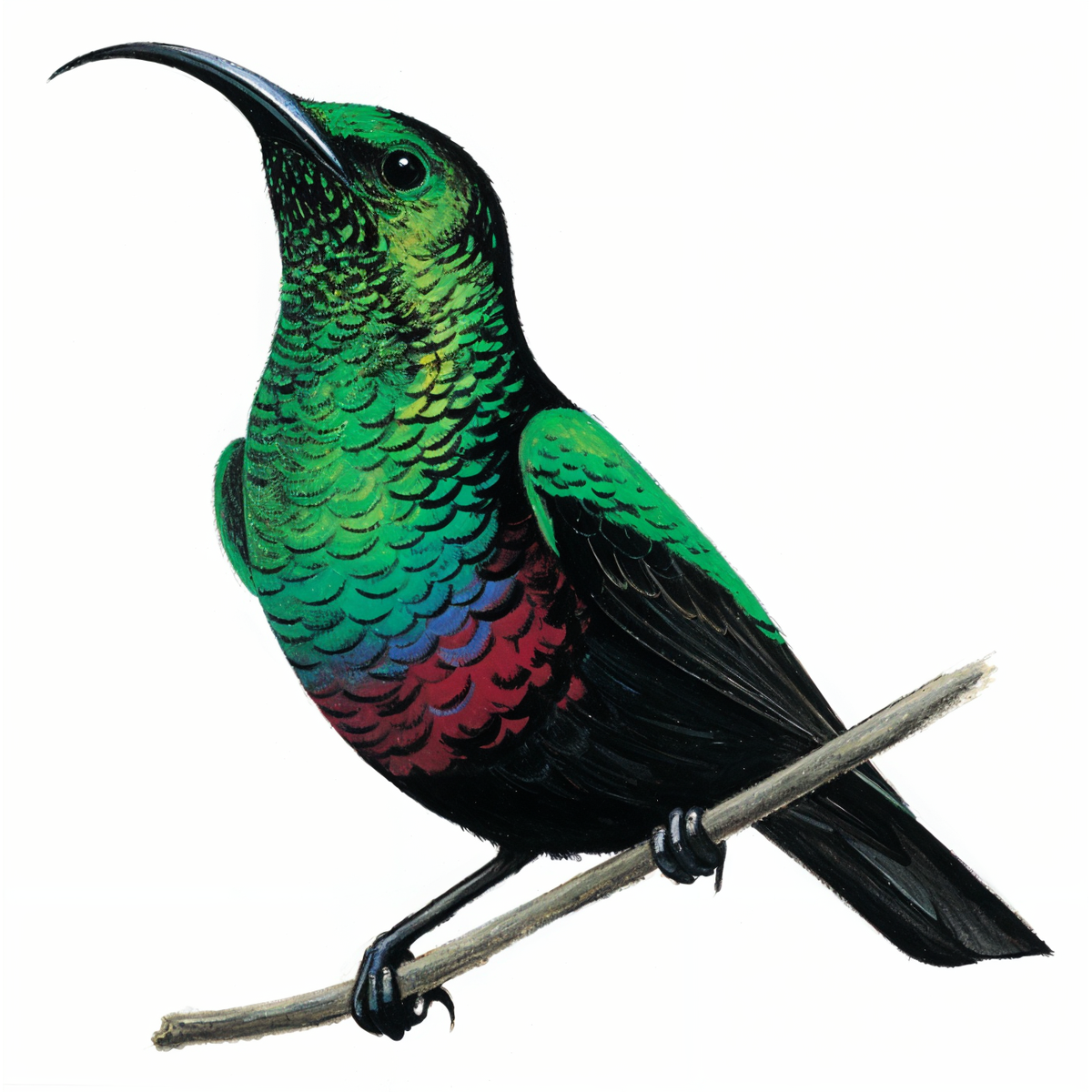
Bushveld. Glossy-green above, extending around neck; lower breast has purple and ruby-red breast-band; belly black.
Sunbirds
LC
Not Endemic
Marico Sunbird Newman's Birds

Description

Common resident. Sexes are alike. A nondescript species best identified by distinctive song and, when visible, red pectoral tufts. Southern race (a) has pink-grey underparts, northern race (b) has pale green-grey underparts. Call is a husky ‘zzip’ or ‘tsit-tswaysit’ and similar brisk notes; the song is loud, starting with single slow syllables and speeding up to a stuttering finish ‘styeep-styip-styip-styip, yip, yip, yip, yip, yipyipyip…’. Pairs occur in coastal forests, riverine forests and valley bush, feeding in both upper and lower strata. When singing often flicks its wings and displays its red pectoral tufts.

Quick Facts

size

Size

13-14 cm - S

behaviour

Names

A: Maricosuikerbekkie
Z: insonsi
G: Bindennektarvogel

Bird Family

Small, insectivorous and nectar-drinking birds with decurved bills adapted to flower-probing. Males have iridescent plumage and yellow, orange or red tufts on the sides of the breast (pectoral tufts) that are displayed in excitement. Some males undergo an annual eclipse when they adopt drab, non-breeding plumage resembling the normal plumage of the female. Immatures are like females, often with a dark throat. Their flight is swift and erratic, males spending much time chasing females and other males. They gather in numbers when favoured nectar-rich plants are in blossom.


Collars & Breast Bands
Savanna Bushveld

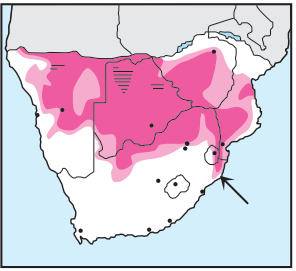
Distribution

Gallery

Marico Sunbird Newman's Birds
behaviour

Behaviour

Breeding

Breeding

Habitat

Habitat

Pairs occur in coastal 'forest's, riverine 'forest's and valley bush, feeding in both upper and lower strata.


behaviour

Best Locations

0 Cart